Table of Contents
- Nature as a teacher in Montessori education
- What science says about the impact of nature on children
- Montessori nature activities by developmental stage
- Final words: Nature as a teacher in Montessori education
- FAQ: Montessori and nature
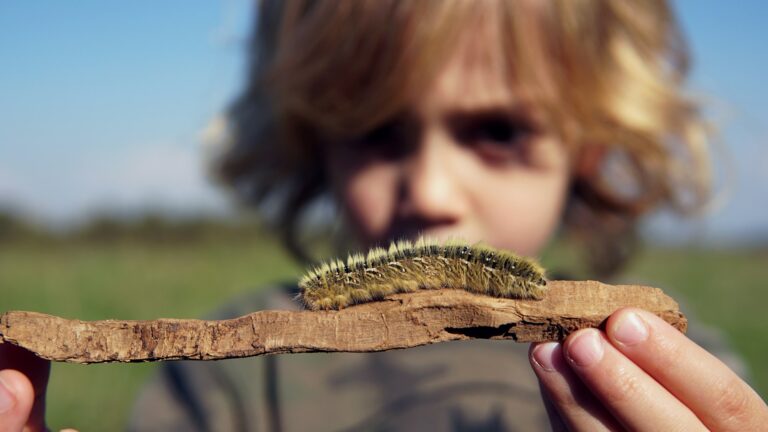
In Montessori education, nature is not a subject, a backdrop, or a teaching aid. It is a primary educator, alongside the prepared environment and the child’s inner developmental drive. If Montessori’s view of nature as a teacher were reduced to one sentence, it would be this: Nature educates because it does not adapt itself to the child — the child adapts to reality, and grows. And it’s the best way to grow.
Below, we explore why Montessori views nature as a teacher, what science reveals about its impact on child development, and how children of different ages can engage with nature in developmentally appropriate ways.
Nature as a teacher in Montessori education
When children encounter nature directly, learning does not depend on instruction — it emerges through interaction and adaptation. And it is education in the purest Montessori sense, where nature teaches without intention.
Why nature can teach where adults fail
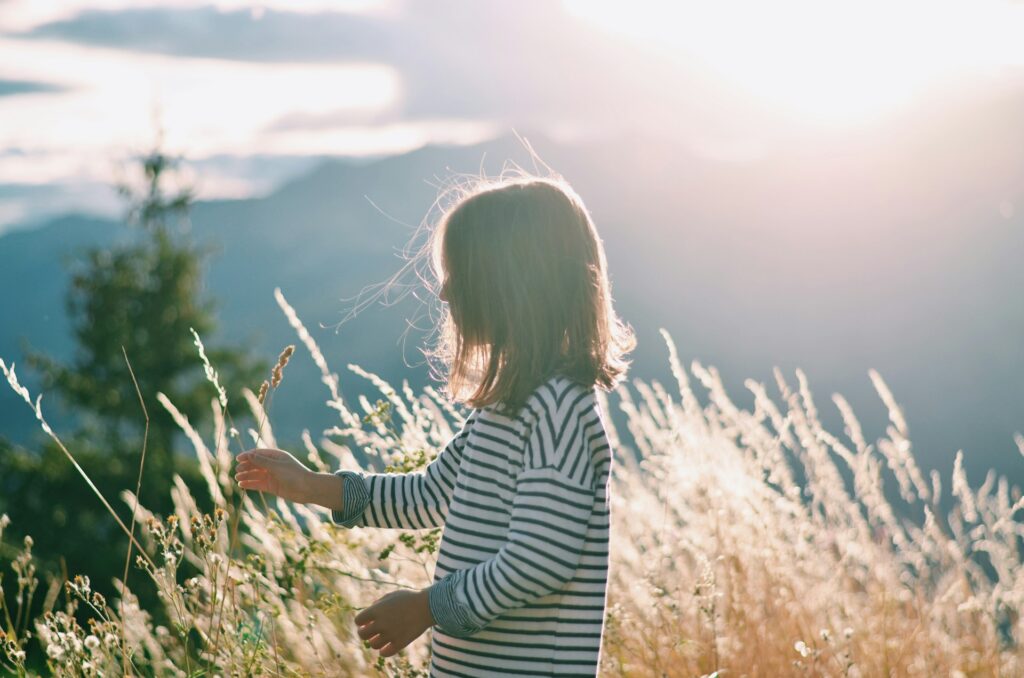
Montessori education rests on one radical assumption: development happens best when the child interacts directly with reality. Not with explanations of reality, not with representations of reality — but with reality itself.
From this perspective, nature satisfies every condition Montessori considered essential for authentic learning:
- It is objective. Nature does not adapt itself to the child’s preferences, emotions, or readiness. The child must adapt instead — and that adaptive effort is developmental.
- It is consistent. Natural laws do not change based on adult mood, educational trends, or desired outcomes. This consistency allows the child to build trust in the world as something reliable and intelligible.
- It is richly sensory. Nature engages all senses at once, not in isolation. Perception is layered, complex, and inseparable — as it is in real life.
- It is non-verbal. Nature does not explain itself. It requires observation, repetition, and interpretation. Meaning is discovered, not delivered.
- It is morally neutral. Nature does not praise, punish, or persuade. It allows children to draw conclusions independently, without adult judgment shaping interpretation.
An adult explains. Nature demonstrates.
This distinction matters deeply in Montessori pedagogy because explanation transfers knowledge, while nature as a teacher demonstrates, building understanding.
Nature and the Montessori view of intelligence
Maria Montessori did not define intelligence as the accumulation of facts or verbal proficiency.
She defined it as the ability to orient oneself in reality — to understand relationships, consequences, and order in the world.
Nature as a teacher supports this form of intelligence because it:
- Presents cause and effect without commentary;
- Reveals order, pattern, and interdependence without simplification;
- Resists fantasy and abstraction in early development;
- Demands attention, patience, and adaptation.
In nature, nothing happens because someone says so. Things happen because they must.
A child does not learn that seasons change through instruction. They learn because change is unavoidable, observable, and cumulative.
In this sense, nature trains reason before reasoning — the intuitive grasp of reality that later makes abstract thinking possible.
Sensory education: Nature as the original sensorial material
Montessori’s sensorial work exists because the senses are the foundation of cognition.
Before a child can classify, name, or abstract, they must first perceive accurately.
Nature is the original sensorial environment because it offers:
- Textures that cannot be standardized;
- Sounds that cannot be repeated on demand;
- Smells that resist precise categorization;
- Visual complexity that exceeds any designed material.
Unlike classroom materials, nature as a teacher does not isolate one quality at a time.
It presents the world as it actually is — layered, simultaneous, and interconnected.
This forces the brain to integrate perception, which is closer to real cognition than isolated sensory training.
This is why Montessori did not aim to replace nature with materials. Montessori materials exist to refine perception so the child can return to reality with sharper, more conscious awareness.
Movement, body, and intelligence
In Montessori education, movement is not separate from thinking. The body is not a vehicle for the brain — it is part of the cognitive system.
Nature as a teacher invites movement that cannot be reduced to repetition or instruction:
- Walking on uneven ground (especially if it is a child-led walk);
- Carrying real weight;
- Adjusting posture instinctively;
- Coordinating the whole body in response to the environment.
These movements refine proprioception, balance, and spatial awareness. Montessori understood these capacities as prerequisites for higher cognitive organization, not optional physical skills.
Through nature, the body learns how to orient itself in space, gravity, and effort.
The mind follows by organizing itself with the same coherence.
Nature teaches the body how to exist in the world, and intelligence emerges from that orientation.
Moral development without moral instruction
Maria Montessori rejected moralizing lessons for young children. She believed morality does not develop through instruction, but through real responsibility.
Nature offers moral education precisely because it cannot be negotiated. It:
- Responds honestly to care or neglect;
- Cannot be coerced or rushed;
- Reveals consequences without punishment.
A young child is given the responsibility for watering a small plant. No reminders are built into the task, and no praise or correction accompanies it. Some days, the plant is watered with great care. Other days, it is forgotten.
Over time, the child notices changes — leaves droop, soil dries, growth slows. When watering resumes consistently, the plant recovers, but not instantly. Some damage cannot be reversed.
No one explains what the child should feel. No one labels the behavior as right or wrong. The plant simply responds.
Through this repeated, real interaction, the child begins to adjust their actions — not to please an adult, but because they recognize a relationship. The lesson is not obedience. It is a responsibility discovered through consequence.
In nature, effort matters. Neglect matters. Time matters.
Through repeated contact with living systems, children internalize:
- responsibility
- patience
- humility
- respect for limits
No adult educator is required. Nature teaches through irreversibility — what is done cannot always be undone.
This creates an internal moral compass grounded in reality, not authority.
Nature and emotional regulation — The Montessori view
According to Montessori, children who struggle with concentration often lack grounding in reality, not motivation or intelligence. And nature as a teacher is the remedy. It stabilizes the nervous system because:
- It operates at a biological rhythm,
- It lacks artificial stimulation;
- It provides predictable variability rather than constant novelty
The natural world offers change without chaos, repetition without monotony.
In Montessori terms, nature supports normalization — the process by which children become calm, focused, and self-regulated through meaningful engagement.
Consider a situation when a child who is often restless at home joins their parent for a short walk along a forest path or an unpaved trail. There is no destination to reach and no activity to complete. The adult walks at the child’s pace.
At first, the child talks, runs ahead, then returns. After a while, movement slows. Steps become more even. The child begins to match their pace to the path — stepping over roots, adjusting balance on uneven ground, stopping briefly to look, then continuing.
By the time they return, the child is quieter. Not instructed. Not tired out. Simply regulated.
Nothing was taught.
Nothing was corrected.
The environment did the work.
This is not a therapeutic trick. It is developmental physiology observed long before modern neuroscience gave it terminology.
Nature regulates because it does not overstimulate, rush, or fragment attention.
What science says about the impact of nature on children
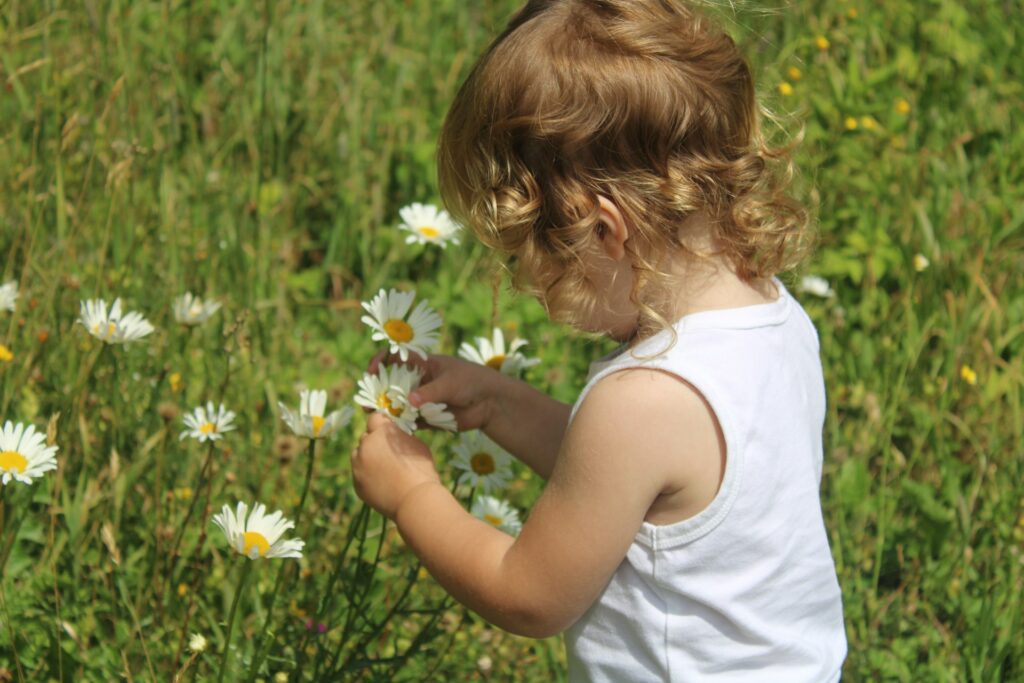
Modern developmental science increasingly confirms what Montessori observed through practice: regular contact with natural environments directly shapes how children regulate attention, emotion, cognition, and behavior. These effects are not explained by play, novelty, or exercise alone. Nature acts as a distinct developmental regulator.
Below are the key domains where research is most consistent.
Attention, concentration, and cognitive control
One of the most consistent findings in environmental psychology is that natural environments restore attention rather than compete for it. According to the Kaplans’ Attention Restoration Theory, nature engages what researchers call soft fascination — stimuli that hold attention gently, without effort or demand. This allows the brain’s directed attention system to recover instead of becoming fatigued.
This effect is not theoretical. In a landmark study, children diagnosed with ADHD showed significantly reduced symptoms after activities in green outdoor settings, compared to the same activities conducted indoors or in built environments.
Even brief exposure matters. Neurocognitive research demonstrates improved working memory and executive function after short walks in natural environments — outperforming urban walks of equal length.
Emotional regulation and stress physiology
Nature’s impact on children is not only psychological but physiological. Studies consistently show that access to green environments lowers baseline stress markers, including cortisol, the hormone associated with chronic stress.
Longitudinal research strengthens this picture. Children who grow up with regular exposure to natural environments show a reduced risk of anxiety and mood disorders later in life, suggesting that nature influences emotional development over time, not just momentary mood.
At the nervous-system level, natural settings activate parasympathetic responses associated with calm, regulation, and recovery — the opposite of the hyperarousal often produced by artificial stimulation.
Sensory integration and brain development
Numerous child development studies show that the brain integrates information most effectively in environments that provide rich, non-repeating sensory input. Nature as a teacher offers exactly this: variation without randomness, complexity without overload.
Research on outdoor learning environments also shows improvements in sensorimotor coordination and spatial awareness, both of which are closely tied to cognitive organization.
Moral development, empathy, and prosocial behavior
Nature’s influence extends beyond cognition into social and moral development. Experimental studies show that children exposed to natural environments demonstrate greater cooperation, empathy, and self-regulation compared to peers in non-natural settings.
Environmental psychology suggests that this effect is not driven by instruction, but by relationship. Living systems respond to care, neglect, and time — and children adjust their behavior accordingly.
Physical development, movement, and cognition
Movement in nature differs fundamentally from structured exercise. Uneven terrain, variable resistance, and spontaneous adjustment demand continuous motor planning and sensory feedback.
Natural movement environments improve balance, proprioception, and coordination, capacities directly linked to executive function and cognitive flexibility. Comparative studies of playground design reveal that natural environments produce richer movement patterns and deeper engagement than standardized play structures.
If thinking develops through movement, what kind of movement best supports thinking?
Montessori nature activities by developmental stage
Now that you are familiar with the impact of nature on child development, let’s proceed to the practical part. Outdoor work in Montessori is not designed to “keep children busy.” It exists to support development through real movement, real materials, and real consequences.
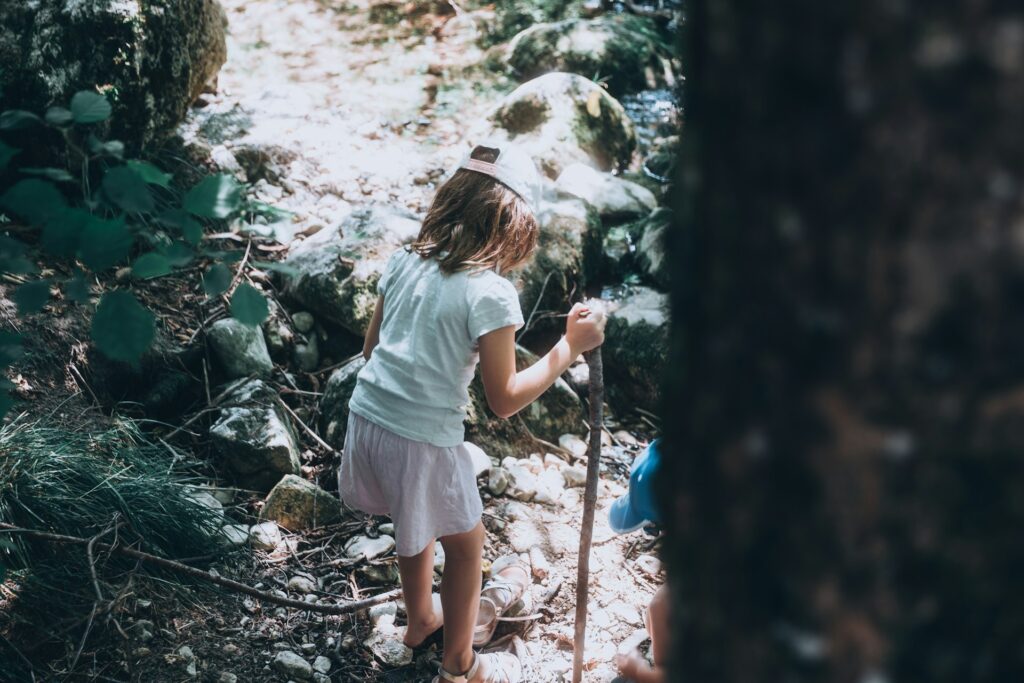
The activities below are grouped by age. They reflect the changing relationship between the child and the natural world as development unfolds. Each stage meets nature differently — first through the senses, then through action, responsibility, and finally understanding.
Babies (0–12 months): First contact with the real world
For infants, nature is not a place to do something. It is a place to feel, hear, and orient. At this stage, outdoor experiences support sensory integration, calm attention, and early body awareness. The goal is exposure that allows the nervous system to register the rhythms and textures of the real world without interruption or demand. Nature purely acts as a teacher at this stage.
| Activity | Type | Description |
| Grass touching | Sensory play | Baby lies or sits on a blanket and explores the grass texture with hands and feet, supporting tactile awareness and grounding. |
| Water splashing | Sensory play | Gentle splashing in a shallow basin develops cause-and-effect understanding and early hand control. |
| Leaf observation | Sensory play | Baby watches leaves move in the wind, supporting visual tracking and calm attention. |
| Outdoor tummy time | Gross motor | Practicing lifting the head and shifting weight on uneven natural surfaces strengthens core and coordination. |
| Sun and shade exploration | Sensory play | Experiencing light, shadow, and temperature changes builds early sensory discrimination. |
| Listening to nature sounds | Sensory play | Exposure to birds, wind, and rustling leaves supports auditory development without overstimulation. |
Toddlers (1–3 years): Movement with purpose
Toddlers meet nature through action. They carry, pour, dig, and repeat — not as play in the abstract sense, but as meaningful work that satisfies their growing need for independence. At this age, nature becomes a teacher that introduces outdoor activities to refine coordination, build concentration, and instruct responsibility through effort.
| Activity | Type | Description |
| Water pouring | Practical life skills | Pouring water between containers refines hand-eye coordination, control of movement, and concentration. |
| Mud kitchen | Sensory play | Mixing soil, water, and natural objects supports sensory integration and early symbolic thinking. |
| Leaf and stone collecting | Practical life skills | Carrying, sorting, and transporting objects supports order, classification, and purposeful movement. |
| Sweeping outdoor paths | Practical life skills | Real work that builds coordination, responsibility, and respect for the environment. |
| Digging with hands or tools | Gross motor | Strengthens hands and arms while offering deep sensory input through resistance and texture. |
| Walking barefoot on safe surfaces | Sensory play | Develops balance, proprioception, and body awareness through varied textures. |
Preschoolers (3–6 years): Responsibility and relationship
Preschool-aged children are ready to engage with nature as something that responds over time. Gardening, sorting, building, and observing allow them to experience order, cause and effect, and care. Nature as a teacher introduces a classroom where attention deepens, and responsibility begins to take root — quietly, through repetition.
| Activity | Type | Description |
| Gardening (planting, watering) | Practical life skills | Caring for living plants builds responsibility, patience, and understanding of natural cycles. |
| Nature sorting (leaves, seeds, stones) | Cognitive/sensorial | Classifying by size, color, or shape supports logical thinking and visual discrimination. |
| Carrying water with buckets | Practical life skills | Develops strength, coordination, and control of movement through purposeful effort. |
| Building with sticks and stones | Construction play | Encourages planning, spatial reasoning, and problem-solving using real materials. |
| Observing insects | Scientific observation | Supports curiosity, sustained attention, and respect for living systems. |
| Balancing on logs or stones | Gross motor | Refines balance, risk assessment, and whole-body coordination. |
Older children (6+ years): Understanding systems and interdependence
For older children, outdoor activity shifts from immediate action to planning, reflection, and connection. Nature is no longer just something to interact with, but something to understand. Through longer projects and observation, children begin to see patterns, relationships, and their own role within a larger system:
| Activity | Type | Description |
| Garden planning and harvesting | Practical life skills | Children plan, execute, and reflect on long-term work, strengthening executive function and responsibility. |
| Nature journaling | Cognitive/reflective | Drawing or writing observations deepens attention, memory, and analytical thinking. |
| Building shelters or simple structures | Problem-solving / practical life | Encourages teamwork, planning, and adaptation to real constraints. |
| Caring for animals or insects | Moral development | Fosters empathy, consistency, and understanding of interdependence. |
| Navigating trails or maps | Cognitive/spatial | Develops orientation skills, judgment, and independence in real environments. |
| Collecting and analyzing natural data | Scientific thinking | Measuring growth, weather, or soil conditions supports early scientific reasoning. |
To lern more about other activities and toys, read our guide to Montessori outdoor play.
Final words: Nature as a teacher in Montessori education
In Montessori education, nature as a teacher is not a metaphor — it is a developmental reality. Nature teaches because it is real, consistent, and indifferent to adult intention. It does not simplify itself for the child, and it does not rush development. Instead, it offers conditions in which children adapt, regulate themselves, and grow — physically, emotionally, morally, and cognitively.
Montessori understands nature as a primary educator, modern science confirms its impact on attention, emotional regulation, and brain development, and children of different ages relate to nature in distinct, developmentally meaningful ways. Across all stages, one pattern remains constant: when children interact directly with the natural world, learning does not need to be forced. It emerges.
Nature as a teacher demonstrates what no explanation can fully replace — cause and effect, limits, responsibility, rhythm, and interdependence. These lessons are not abstract. They are living. And because they are living, they form an internal foundation that no reward system or instruction alone can create.
If you would like to explore how nature as a teacher is integrated into real Montessori practice — through thoughtfully prepared environments, age-appropriate outdoor experiences, and a deep respect for child development — we invite you to visit Montessori Family Center. There, you can learn more about Montessori education, outdoor play, and how to support your child’s growth in harmony with nature.
FAQ: Montessori and nature
1. In what way does nature serve as a teacher?
Nature serves as a teacher by providing direct, unfiltered feedback through real consequences. It demonstrates cause and effect, limits, rhythm, and interdependence without explanation, allowing children to learn through adaptation rather than instruction.
2. Why is nature as a teacher important in Montessori education?
Montessori education is built on direct interaction with reality. Nature is one of the few environments that cannot be simplified, rushed, or controlled, making it an ideal teacher for developing attention, responsibility, and independent thinking.
3. How does nature support children’s concentration and focus?
Natural environments restore attention by reducing cognitive overload and engaging the brain through gentle, non-demanding stimulation. This supports sustained focus without rewards, correction, or adult pressure.
4. Can nature really help with emotional regulation in children?
Yes. Research shows that natural environments regulate stress physiology and nervous-system activity. Nature provides predictable rhythms and calm sensory input, helping children self-regulate without behavioral techniques.
5. Is outdoor play the same as nature as a teacher?
No. Outdoor play can be recreational or stimulating, while nature as a teacher refers to direct, meaningful interaction with natural systems where children observe, adapt, and take responsibility over time.
6. At what age does nature begin to influence child development?
Nature influences development from birth. Infants benefit through sensory grounding, toddlers through purposeful movement, preschoolers through responsibility, and older children through understanding systems and relationships.
7. How does nature contribute to moral development without rules?
Nature teaches morality through irreversible consequences. Caring for living things shows children that effort, neglect, and time matter, allowing values like responsibility and patience to emerge internally rather than through instruction.
8. Can nature replace traditional learning in Montessori?
Nature does not replace Montessori learning — it supports it. Montessori materials refine perception, while nature provides the reality those skills are meant to engage with. Together, they form a complete learning environment.