
Have you ever gone for a walk with your child and noticed how they get lost in the smallest details — watching bugs crawling, picking up rocks, or stopping to feel the texture of tree bark? While adults often focus on getting somewhere, children naturally explore the world with curiosity and wonder. A Montessori child-led walk embraces this instinct, allowing children to set the pace, choose the path, and lead the experience — all while developing essential life skills.
Unlike structured walks where parents dictate the route, a child-led walk fosters independence, problem-solving, and a deep connection with nature. It encourages children to observe, question, and interact with their surroundings, supporting everything from sensory development to emotional well-being. Whether your child is a baby absorbing sights and sounds, a toddler exploring textures, or a preschooler asking endless “why” questions, child-led walks provide a meaningful, hands-on learning experience.
So, how can you start? In this guide, we’ll explore the benefits of child-led walks, how they differ from parent-led walks, practical tips, and age-specific approaches to help you make the most of this incredible Montessori practice. Ready to let your child take the lead? Let’s begin!
What is a Montessori child-led walk?
Unlike traditional walks where adults set the pace and destination, a Montessori child-led walk shifts control to the child. They decide where to go, what to explore, and how long to linger. As adults, our role is to observe, support, and provide a safe environment while letting the child’s natural curiosity take the lead. But why is it so important?
In the Montessori philosophy, learning is rooted in independence, choice, and sensory experiences. A child-led walk is not just a stroll — it’s an opportunity for discovery, problem-solving, and deep connection with the world.
Imagine a walk without “hurry ups” and a fixed agenda. What would your child discover if they had all the time they needed?
By allowing your child to guide the experience, you empower them to develop autonomy, strengthen observation skills, engage all senses, build confidence, and so on. Let’s explore these and other benefits in more detail.
The benefits of a Montessori child-led walk
Step back and let your child explore at their own pace — don’t take away their freedom to learn naturally. This approach offers countless benefits, supporting their growth in multiple ways.
1. Independence and decision-making
One of the core principles of Montessori education is fostering independence. A child-led walk gives your child control over their journey, allowing them to decide which path to take, what to explore, and how long to linger.
❓ What happens when a child makes their own choices?
- They gain confidence in their decision-making skills.
- They learn to trust their instincts and explore their environment freely.
- They feel a sense of ownership and responsibility over their experience.
Every time a child chooses to follow a butterfly instead of sticking to the sidewalk, they are practicing autonomy — an essential skill for lifelong learning and problem-solving.
2. Sensory and cognitive development
Nature is the ultimate sensory playground! A child-led walk provides countless opportunities for children to engage their senses and sharpen cognitive skills through observation.
🌿 What will your child discover today?
- The smoothness of a pebble, the roughness of tree bark, the softness of grass.
- The chirping of birds, the rustling of leaves, the distant hum of a passing car.
- The bright colors of flowers, the movement of clouds, the tiny patterns on a ladybug’s back.
These rich sensory experiences lay the foundation for cognitive growth, focus, and deeper learning.
3. Language development
A child-led walk isn’t just about movement — it’s also a language-rich experience. As children point out new discoveries, parents have the perfect opportunity to introduce new vocabulary and concepts.
🗣 How can you use a walk to support language skills?
- Name objects and describe them: “That’s a maple tree. Look at its red leaves!”
- Ask questions: “What do you think made these footprints in the mud?”
- Introduce action words: “Can you stomp on that crunchy leaf? Let’s tiptoe past this puddle!”
When children connect words with real-world experiences, they retain language more effectively. Every walk becomes a conversation, a lesson, and a story waiting to unfold!
4. Emotional well-being
Did you know that unstructured time in nature can significantly reduce stress and anxiety in children? A child-led walk offers a chance to slow down, breathe deeply, and find joy in the simple moments.
🌞 Why are child-led walks so calming?
- No pressure, no rush — just pure exploration.
- Encourages mindfulness, allowing kids to focus on the present moment.
- Helps children self-regulate emotions through movement and fresh air.
By giving children the freedom to explore at their own pace, we create an environment that nurtures inner peace and confidence.
5. Gross and fine motor skills
A Montessori child-led walk is not just about walking — it’s about climbing, balancing, reaching, and grasping. These activities help strengthen both gross motor skills (like running and jumping) and fine motor skills (like picking up leaves or feeling textures).
👣 How does a child-led walk build motor skills?
- Walking on different terrains improves balance and coordination.
- Picking up rocks, touching tree bark, or tracing shapes in the dirt strengthens hand muscles.
- Climbing on small hills or stepping over tree roots enhances agility and strength.
The best part? Kids don’t even realize they’re developing these skills — they’re just having fun!
6. Stronger parent-child bond
What if the best part of a child-led walk isn’t just about the child, but also about you?
When you allow your child to take the lead, you’re showing them that their ideas matter. You’re engaging in shared discoveries, asking thoughtful questions, and celebrating their curiosity.
💛 How does this strengthen the parent-child bond?
- Your child sees you as a partner in exploration, not just a guide.
- You spend quality time together, free from distractions.
- You build a relationship based on trust, patience, and shared joy.
A child-led walk isn’t just about getting from point A to point B — it’s about the moments in between, the conversations, and the memories you create together. But what’s wrong with parent-led walks?
Montessori child-led walk vs. parent-led walk: What’s the difference?
One of the main drawbacks of a parent-led walk is that it revolves around adult expectations — maintaining a steady pace, sticking to a planned route, and focusing on reaching a destination. While this isn’t inherently harmful to children, it does come with limitations compared to a child-led walk.
| Montessori child-led walk | Parent-led walk | |
| Pace | Set by the child — slow, fast, or stopping frequently to explore. | Set by the parent — consistent and goal-oriented. |
| Direction | Child decides where to go, even if it means unexpected detours. | Parent chooses the route and ensures the child follows. |
| Focus | Driven by the child’s curiosity — stopping to touch, observe, or explore. | Focuses on reaching a destination or completing the walk. |
| Decision-making | Child practices independence by making choices about movement. | Parent decides how long the walk lasts and what’s explored. |
| Learning style | Hands-on, experiential learning — engaging all senses. | More structured, limited by parents, often passive observation only. |
| Emotional well-being | Encourages patience, confidence, and relaxation. | Can feel rushed or stressful if the child isn’t keeping up or cannot explore a desired destination. |
| Language development | Natural conversations about what the child finds interesting. | More adult-led, focusing on instructions and guidance. |
| Motor skills development | Balancing on logs, climbing small hills, picking up leaves. | Walking in a straight line with limited variation in movement. |
| Parent-child bond | Strengthens connection as the parent engages in the child’s discoveries. | More directive, with fewer shared spontaneous moments. |
Letting your child take control of a walk teaches them that their choices matter. It nurtures confidence, supports problem-solving, and allows them to experience the world in their own way.
The next time you head outside, pause before giving directions. Instead of saying, “Let’s go this way,” try asking, “Where would you like to go today?” You might be surprised at what you discover — not just about the world, but about your child and the way they see it.
Things to keep in mind during a Montessori child-led walk
While a Montessori child-led walk is an opportunity for your child to explore, make decisions, and develop independence, you need to ensure this experience is both enriching and stress-free.
The key is to embrace flexibility, stay present, and support rather than control. Here are some essential tips to help you make the most of your child-led walk.
1. Follow the child’s pace
Does your child stop every few steps to pick up a rock or watch an insect? That’s the beauty of a child-led walk! Instead of hurrying them along, allow them to explore at their own rhythm.
❓ What happens when we slow down?
- Children develop focus and observation skills by fully engaging with their surroundings.
- They feel respected and valued, knowing their curiosity is encouraged.
- They build confidence in decision-making as they determine the pace and direction.
Resist the urge to rush — this walk isn’t about getting from point A to point B; it’s about what happens in between.
2. Prepare for unpredictability
A child-led walk is anything but predictable. One day, they may be fascinated by leaves, and the next, they might want to spend the entire time watching birds.
🌱 How can you embrace the unexpected?
- Accept that detours are part of the adventure.
- Let go of any rigid plans — the goal is exploration, not completion.
- Be open to spontaneous learning opportunities — a puddle could turn into a science lesson on reflections!
The more flexible you are, the richer the experience will be for your child.
3. Dress for comfort and exploration
Comfort is key! Since child-led walks often involve pausing, touching, climbing, or even sitting on the ground, it’s important to dress your child appropriately.
🧣 What should they wear?
- Weather-appropriate layers — so they’re ready for any changes.
- Comfortable shoes — for walking on different surfaces.
- Clothes that can get messy — because real exploration means getting hands-on with nature.
And don’t forget a hat, sunscreen, or rain gear — because the best walks happen rain or shine!

4. Encourage, don’t direct
Instead of leading the way, become an active observer. Your role is to support curiosity rather than dictate what your child should notice.
🔍 How can you encourage exploration without taking over?
- Instead of saying, “Look at that flower,” ask, “What do you see?”
- If they pick up a rock, invite deeper thinking: “How does it feel? Is it smooth or rough?”
- Let them take the lead in problem-solving: “How do you think we can get around this big puddle?”
By asking open-ended questions, you’re fueling their curiosity while still letting them discover on their own.
5. Be present and patient
Ever caught yourself checking your phone during a walk? We’ve all been there! But a child-led walk is an opportunity to slow down and connect.
💡 How can you stay engaged?
- Practice mindfulness — observe with fresh eyes, just like your child does.
- Enjoy the small moments — a ladybug crawling on a leaf or the sound of rustling trees.
- See the world through your child’s perspective — what captures their attention? What excites them?
Being fully present shows your child that their discoveries are important, which makes the experience even more meaningful.
6. Safety first, but avoid over-intervening
It’s natural to want to protect your child, but being overly cautious can limit exploration. The goal is to create a safe but open environment where they can test their abilities.
⚠️ What’s the balance between freedom and safety?
- Choose safe walking areas — parks, nature trails, or quiet streets.
- Let them climb, jump, and explore — as long as risks are reasonable.
- Trust their instincts — kids often assess risks naturally when given the chance.
Instead of saying, “Be careful!” try, “Watch your footing on that log — how do you think you can balance?” This empowers them to think critically about their actions.
Montessori child-led walks by age group
Every child-led walk is unique, just like every stage of childhood. A six-month-old experiences the world differently than a three-year-old, and a preschooler will have entirely different interests than a toddler. Understanding these developmental differences can help you tailor the experience to our child’s needs — ensuring that each walk is not only enjoyable but also developmentally enriching.
So, what should a Montessori child-led walk look like for different age groups? Let’s explore!
Babies (0–12 months): Early sensory exploration
At this stage, babies absorb the world around them, even if they aren’t yet walking. While they may not take steps on their own, they can still engage in rich sensory experiences that build early connections to nature.
👶 How can you introduce a Montessori-style walk for babies?
1. Babywearing walks – observing the world from a parent’s perspective
For younger babies, being carried in a wrap or carrier allows them to experience the outdoors from the safety of a parent’s arms.
- Talk to them about what you see: “Look at the blue sky! Do you feel the warm sun?”
- Point out moving elements — leaves swaying, birds flying, dogs walking.
- Allow them to feel light wind or gentle raindrops on their skin.
2. Ground exploration – crawling and tummy time in nature
When possible, give babies safe opportunities to touch the earth. Lay down a blanket in a park or a grassy area and let them experience nature up close.
- Let them touch soft grass, explore smooth stones, or feel the bark of a tree.
- Encourage tummy time outdoors, helping them observe movement in nature — ants marching, leaves rustling.
3. Gentle sensory experiences – engaging their senses
Babies at this stage are highly sensory learners. The outdoors provides an endless supply of natural stimuli:
- Listening to birds chirping or wind rustling leaves.
- Feeling the cool morning air or the warm sunlight.
- Smelling flowers, pine trees, or fresh earth.
Have you ever watched how mesmerized a baby becomes just by staring at a tree’s swaying branches? That’s their natural curiosity in action!

Toddlers (1–3 years): Independent exploration begins
Toddlers are little explorers by nature! This is the perfect stage to encourage hands-on discovery while supporting their newfound independence.
🚶♂️ What does a child-led walk look like for toddlers?
1. Slow walks with frequent stops – following their curiosity
- A toddler’s idea of a “walk” might include stopping every few feet to look at rocks, bugs, or leaves. That’s okay!
- Let them take breaks to observe, touch, and interact with their surroundings.
- Avoid saying, “Hurry up!” Instead, ask: “What do you see? What does it feel like?”
2. Sensory play and collection – engaging with textures
Encourage toddlers to gather small treasures from nature:
- Smooth stones, crunchy leaves, tiny flowers.
- Sticks of different sizes — how do they feel? Heavy? Light?
- Mud or sand — encourage them to draw shapes with their fingers.
This hands-on learning builds sensory awareness and fine motor skills.
3. Early language development – expanding vocabulary
Toddlers are in a critical phase of language development. Use the walk as an opportunity to introduce new words:
- Name objects: “That’s a butterfly! It has orange and black wings.”
- Introduce descriptive words: “The bark is rough. The grass is soft.”
- Ask questions: “Where do you think the squirrel is going?”
4. Introduction to choice – small decisions build confidence
Giving toddlers small choices fosters independence. Let them:
- Choose between two paths (“Do you want to go left or right?”).
- Pick a rock or leaf to bring home.
- Decide when it’s time to stop and explore something new.
Even these tiny choices help toddlers feel empowered and confident in their abilities.
Preschoolers (3–6 years): The scientists of the outdoors
By preschool age, children begin to observe, ask questions, and make connections between their experiences. They are eager learners who benefit from guided conversations and physical challenges.
🔎 How can you enrich a preschooler’s child-led walk?
1. Observation-based learning – looking closely at nature
Encourage preschoolers to pay attention to details and observe patterns.
- Watch ants carrying food — where are they going?
- Look at clouds — do they change shape?
- Observe flowers — what colors and shapes do they have?
These small observations turn into science lessons in real-time!
2. Early scientific thinking – asking “why?”
Preschoolers are natural scientists — they want to know why things happen.
🤔 Encourage their curiosity with questions like:
- “Why do you think leaves change color?”
- “How does the wind make the tree branches move?”
- “Where do you think the bird is flying?”
Instead of giving quick answers, let them think through possibilities — this strengthens critical thinking!
3. Building endurance and confidence – walking longer distances
By this age, children enjoy challenges. Let them:
- Walk on uneven terrain — grass, gravel, or forest trails.
- Climb small rocks or balance on logs.
- Jump over puddles or navigate natural obstacles.
This builds coordination, strength, and confidence in their physical abilities.
4. Independent problem-solving – encouraging decision-making
Encourage preschoolers to figure things out on their own.
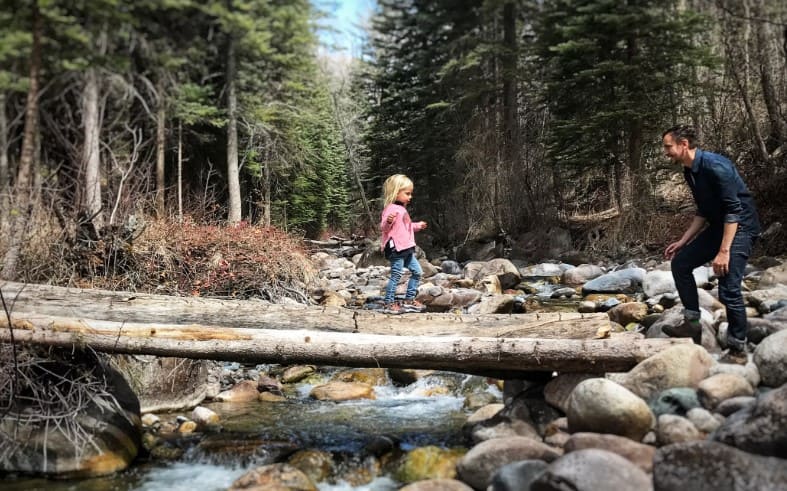
- If they want to cross a fallen tree, ask: “How can you do it safely?”
- If a path is muddy, challenge them: “What’s the best way to get across?”
- Let them lead the walk and decide where to explore next!
This promotes independent thinking and problem-solving skills — a core value in Montessori education.
Although a Montessori child-led walk looks different at every stage, the goal remains the same: to let children explore, learn, and grow through outdoor experiences.
Final thoughts: The long-term impact of Montessori child-led walks
A Montessori child-led walk is more than just a simple outdoor activity — it’s a foundation for lifelong curiosity, confidence, and independence. By letting children explore at their own pace, we’re teaching them that their choices matter, their observations are valuable, and the world is full of discoveries waiting to be made. Every leaf they examine, every puddle they step in, and every detour they take shape the way they interact with the world. This kind of exploration fosters problem-solving skills, resilience, and a deep connection with nature — qualities that will stay with them far beyond childhood.
Imagine the difference it makes when a child grows up knowing they are free to explore, question, and lead their own learning. Isn’t that what we all want for our children? A child-led walk might seem like a small shift, but its impact is profound. It teaches patience, encourages mindfulness, and turns an everyday routine into an adventure. Instead of focusing on reaching a destination, it allows us to slow down and see the world through our child’s eyes.
Ready to try a Montessori child-led walk? Give it a go and watch how your child takes the lead — guiding not just the walk, but their learning journey. Whether it’s a daily habit or a weekly ritual, embracing this practice can transform the way you and your child experience the outdoors together. And why stop there? Montessori principles extend far beyond walks. At Montessori Family Center, you’ll find even more ways to support your child’s natural development through enriching activities, mindful parenting techniques, and hands-on learning experiences. Explore more ways to nurture your child’s independence today!
FAQ: Montessori child-led walks
1. What is a Montessori child-led walk?
A Montessori child-led walk is an outdoor experience where the child sets the pace, chooses the path, and explores freely. Unlike structured walks led by adults, this approach encourages independence, curiosity, and hands-on learning, allowing children to discover nature at their own rhythm.
2. How does a child-led walk benefit my child’s development?
Child-led walks support decision-making, sensory exploration, and emotional well-being. They also enhance gross and fine motor skills, improve focus, and provide opportunities for natural language development as children describe what they see and experience.
3. How do Montessori child-led walks differ from regular walks?
A regular walk is often parent-directed, with a set destination, steady pace, and minimal stops. A Montessori child-led walk, on the other hand, allows the child to take control — pausing to explore, choosing where to go, and engaging with their surroundings in a way that fosters deep learning and creativity.
4. What is the best age to start Montessori child-led walks?
You can start at any age! Babies benefit from sensory-rich babywearing walks, toddlers thrive on slow exploration and hands-on discoveries, and preschoolers develop problem-solving and observational skills through self-guided exploration.
5. How do I encourage my child to take the lead on a walk?
Simply step back and follow their curiosity! Avoid directing their path or rushing them. Instead, ask open-ended questions like, “Where do you want to go?” or “What do you see?” to foster their sense of control and engagement.
6. What should my child wear for a Montessori child-led walk?
Dress them in weather-appropriate, comfortable clothing that allows for movement and mess! Opt for layers, sturdy shoes, and outfits that can handle dirt, water, or rough surfaces—because real exploration can get messy!
7. How do I ensure safety while still allowing independence?
Choose a safe environment like a park, garden, or nature trail. Instead of saying “Be careful,” guide them with questions like, “How do you think you can climb this safely?” This way, they learn to assess risks independently while still being protected.
8. How long should a Montessori child-led walk last?
There’s no fixed duration — let your child’s interest determine the length. Some days, they may explore for an hour, while other days, they may lose interest after 15 minutes. The key is to prioritize quality over duration.
9. Can I do a child-led walk in an urban environment?
Absolutely! While nature is ideal, city environments also offer rich learning opportunities. Your child can observe cars, buildings, street signs, textures, and people — turning the city into a real-world learning lab.
10. How often should I do Montessori child-led walks?
Making it a daily or weekly routine can be incredibly beneficial. Even short walks can help children build independence, confidence, and a deeper connection to their surroundings. The key is consistency and allowing freedom in exploration.
References and further reading
For more insights on Montessori child-led walks, sensory exploration, and the benefits of outdoor learning, check out these resources:
- Montessori Academy – How to Enjoy a Montessori Child-Led Walk
- The Montessori Room – Summer Sensory Walks for Ages 1–6
- French Family Montessori – Toddler-Led Nature Walks
These articles provide practical tips, real-life experiences, and expert insights into how to create meaningful child-led walks. Happy exploring!