
Table of Contents
- What is early literacy?
- Why is early literacy important?
- The 5 pillars of early literacy
- Benefits of early literacy for children
- When to start early literacy activities
- Early literacy skills by age
- Early literacy tips for parents and caregivers
- Activities to encourage early literacy at home
- Common challenges and how to address them
- Final thoughts: Early literacy as a foundation for lifelong learning
- FAQ about early literacy for kids
Early literacy does not begin with letters, worksheets, or the moment a child learns to read. It begins much earlier — in the rhythm of spoken language, in shared attention, in the quiet exchange of sounds, gestures, and meaning between a child and their environment. Long before books are read independently, children are already building the foundations that make reading and writing possible.
This article explores early literacy from a developmental and Montessori-informed perspective. You will learn what early literacy truly means, why it plays a critical role in brain development and school readiness, how the five pillars of early literacy work together, and how early literacy skills appear at different ages.
Besides, we prepared practical, respectful ways to support early literacy at home, and guidance for navigating common challenges along the way. For guides like this, follow this link: Montessori parenting tips.
What is early literacy?
Early literacy refers to the foundational skills children develop long before they learn to read or write in a formal way. It begins at birth and unfolds naturally through everyday interactions — listening to voices, responding to sounds, watching mouths move, holding books, and making sense of symbols in their environment.
In Montessori-informed practice, early literacy is not taught as a subject. Instead, it emerges through language, movement, and meaningful experience. When a baby babbles and waits for a response, when a toddler points at pictures in a book, or when a preschooler pretends to “read” a familiar story, early literacy skills are already at work.
These skills include:
- understanding spoken language
- recognizing sounds and patterns in words
- building vocabulary through real conversation
- noticing that symbols and marks carry meaning
Importantly, early literacy is not about pushing children to read early. It is about preparing the mind.
Why is early literacy important?
In short, early literacy is important because it supports how children think, communicate, and relate. Now, let’s break it down.
The true value of early literacy is in the way it shapes how a child’s brain learns to process language, meaning, and relationships. Long before letters appear on a page, the brain is already building neural pathways through sound, rhythm, repetition, and interaction. These early experiences lay the groundwork for learning across all areas, not only literacy.
Language comprehension
From a developmental perspective, language is one of the brain’s primary organizing tools. When children hear rich, responsive speech, their brains learn how to sequence information, recognize patterns, and connect ideas. This directly supports language comprehension — the ability to understand not just words, but intention, context, and nuance. Reading later becomes an act of understanding, not decoding.
School readiness
Early literacy also supports school readiness, though not in the narrow sense of knowing letters ahead of time. Children who have strong early literacy foundations tend to listen with purpose, follow multi-step instructions, express their needs clearly, and engage with stories and ideas. These abilities make the transition to structured learning environments calmer and more confident.
Emotional and social maturity
Equally important are the emotional and social dimensions. Shared reading, conversation, and storytelling create moments of connection. Children learn that communication is relational — that words are used to share feelings, solve problems, and make sense of the world together. This strengthens emotional regulation, empathy, and a sense of belonging.
The 5 pillars of early literacy
Early literacy is not a single skill that appears suddenly when a child learns to read. It is built gradually through a small number of interconnected abilities that develop over time. These abilities are often described as the 5 pillars of early literacy — a framework that helps parents and educators understand what children are actually learning long before formal reading begins.
Each pillar supports the others. When one is strengthened, the whole system becomes more stable.
1. Oral language
Oral language is the foundation of all literacy. It includes listening, understanding, and expressing thoughts through spoken words. From the first days of life, children absorb language by hearing it used in meaningful ways — through conversation, songs, stories, and daily routines.
Strong oral language helps children organize their thoughts, follow narratives, and make sense of what they hear and later read. In Montessori environments, this develops through rich, respectful conversation rather than simplified or directive speech.
2. Phonological awareness
Phonological awareness is the ability to notice and work with the sounds in spoken language. This includes recognizing rhythms, syllables, rhymes, and eventually individual sounds within words.
Importantly, this pillar develops before children see letters. Clapping syllables, playing with rhymes, and noticing sound patterns in songs all strengthen phonological awareness and prepare the brain for reading without formal instruction.
3. Print awareness
Print awareness is the understanding that written symbols carry meaning. Children begin to notice that books are read in a certain direction, that signs communicate messages, and that marks on a page represent words.
This awareness grows naturally when children handle books, see adults read and write, and observe print as part of everyday life. It is not about memorizing letters, but about understanding the purpose of written language.
4. Vocabulary development
Vocabulary development refers to the number of words a child understands and uses, as well as how deeply those words are understood. A rich vocabulary allows children to follow stories, express ideas clearly, and connect new information to what they already know.
Vocabulary grows best through real experiences and precise language — naming objects accurately, describing actions, and expanding on a child’s interests rather than relying on simplified or generic terms.
5. Motivation to read
Motivation to read is often overlooked, yet it is one of the most critical pillars. It reflects a child’s interest in language, stories, and books — the desire to engage with written and spoken narratives.
When reading is associated with warmth, connection, and curiosity rather than pressure, children develop a natural inclination toward books. This intrinsic motivation cannot be taught directly, but it can be carefully protected and encouraged.
Together, these five pillars explain why early literacy is not about pushing academic skills too soon. It is about building a strong, balanced foundation that allows reading and writing to emerge with confidence and meaning when the child is ready.
Benefits of early literacy for children
Now, let’s summarize the benefits that early literacy introduces. Teaching literacy early offers a range of advantages for young children, including:
- Enhanced language skills: Early exposure to sounds and words helps expand vocabulary and improves communication.
- Strengthened memory and concentration: Learning to connect sounds with letters and words trains focus and recall.
- Increased curiosity and creativity: Books and stories spark imagination and encourage exploration.
- Academic confidence: A solid foundation in literacy prepares children for school and boosts self-esteem.
When to start early literacy activities
Early literacy does not have a fixed starting point. It begins naturally from birth. The question is not when children should learn to read, but when it makes sense to offer literacy-rich experiences that match their development.
Rather than age, what matters most is readiness — a combination of cognitive, linguistic, and attentional skills that gradually emerge in early childhood.
Children may be ready for more intentional early literacy activities when they begin to show signs such as:
- memory — the ability to recognize familiar words, sounds, objects, or images
- language — using and understanding basic words and phrases in everyday conversation
- concentration — staying engaged with a book, song, or activity for short periods of time
These signs often appear at different moments for different children, sometimes as early as toddlerhood. This does not mean formal reading instruction is needed. Instead, it signals an opportunity to follow the child’s interest, offer appropriate materials, and allow literacy to grow through experience rather than pressure.
Early literacy thrives when activities are introduced gently, in response to curiosity — not as a goal to reach, but as a process to support.

Early literacy skills by age
Children do not move through early literacy skills in a straight line, and progress often appears in small, easily overlooked moments. This age-based overview is not meant to define milestones or create expectations, but to help you recognize what literacy looks like at different stages — often long before it resembles reading or writing.
Early literacy skills from birth to 2 years
In the first two years of life, early literacy is rooted in listening, connection, and sound exploration. Babies learn language through repeated exposure and responsive interaction.
At this stage, early literacy skills may include:
- reacting to voices and familiar sounds
- babbling and experimenting with tone and rhythm
- recognizing familiar words and names
- showing interest in pictures, faces, and simple books
- turning pages, mouthing books, or pointing to images
These behaviors reflect the brain learning how communication works — that sounds carry meaning, and that interaction is reciprocal.
Early literacy skills for toddlers (2–3 years)
Toddlers begin to move from absorbing language to actively using it. Their early literacy skills expand rapidly as vocabulary grows and understanding deepens.
Common signs at this stage include:
- using short phrases or sentences
- naming objects and actions
- enjoying repetitive stories and songs
- recognizing familiar books by cover
- pretending to read or narrate pictures
Toddlers may request the same book repeatedly. This repetition is not boredom — it is how meaning, structure, and language patterns become internalized.
Early literacy skills for preschoolers (3–5 years)
Preschoolers start to connect spoken language with symbols and structure. Their thinking becomes more narrative, and their relationship with books and stories grows more intentional.
Early literacy skills at this age often include:
- understanding story sequence and cause-and-effect
- asking questions about stories and characters
- recognizing some letters or sounds without formal instruction
- experimenting with drawing, marks, or letter-like shapes
- using language to explain ideas, feelings, and plans
At this stage, children are not “behind” if they are not reading yet. What matters most is that language feels meaningful, enjoyable, and connected to real experience.
Early literacy skills are not checkpoints to pass, but signals of development unfolding. When parents observe rather than compare, they can support literacy in a way that respects both the child’s pace and their natural curiosity.
Early literacy tips for parents and caregivers
Starting early literacy is a gradual process that should feel natural and enjoyable. Here are some tips:
- Make it fun: Begin with playful activities to make learning exciting. Songs, rhymes, and interactive games can introduce children to sounds and letters.
- Start small: Introduce just three simple sounds at first, such as “a,” “m,” and “s.” This helps avoid overwhelming your child.
- Teach sound blending: Show children how combining sounds forms words. For example, blending “m-a-m-a” makes the word “mama.” Use simple, familiar words to build confidence.
- Use visual and tactile materials: Hands-on tools like Montessori sandpaper letters allow children to trace letters while learning their sounds. Picture books, flashcards, and puzzles are also great for engaging young learners.
- Be consistent and patient: Short, regular sessions work best. Praise your child’s efforts and celebrate small milestones to keep them motivated.
Activities to encourage early literacy at home
Early literacy grows best in familiar, meaningful contexts. At home, children learn through everyday interaction, purposeful play, and shared moments with books — not through structured lessons. The goal of early literacy activities is to invite language, attention, and curiosity into daily life in ways that feel natural and respectful. So, incorporate these activities into your daily routine:
- Read aloud daily: Choose age-appropriate books and read with enthusiasm, using expressive voices and gestures to capture your child’s attention.
- Phonics games: Play sound-matching games or use toys to introduce letters and their sounds.
- Word-building: Use magnetic letters or tiles to form simple words, encouraging your child to blend sounds.
- Drawing and “writing”: Provide crayons and paper for children to practice scribbling and drawing, which develops pre-writing skills.
Now, let’s be more specific.
Everyday literacy activities
Everyday routines are powerful literacy environments. When adults speak clearly, listen attentively, and name the world as it unfolds, children absorb language effortlessly.
Simple everyday literacy activities include:
- talking through daily tasks using precise, real vocabulary
- describing actions and emotions as they occur
- pausing to allow the child to respond, even before words are fully formed
- involving the child in practical life activities and narrating what is happening
These moments help children understand that language is a tool for communication, connection, and meaning.
Play-based literacy activities
Play allows children to experiment with language freely. Through pretend scenarios, repetition, and exploration, early literacy skills develop without direct instruction.
Examples of play-based literacy activities include:
- singing songs and rhymes with rhythm and repetition
- engaging in pretend play that involves dialogue and storytelling
- using objects to represent ideas or roles
- playing sound and word games that highlight patterns in language
In Montessori-aligned settings, play is purposeful but child-led, giving language room to develop organically.
Book-based literacy activities
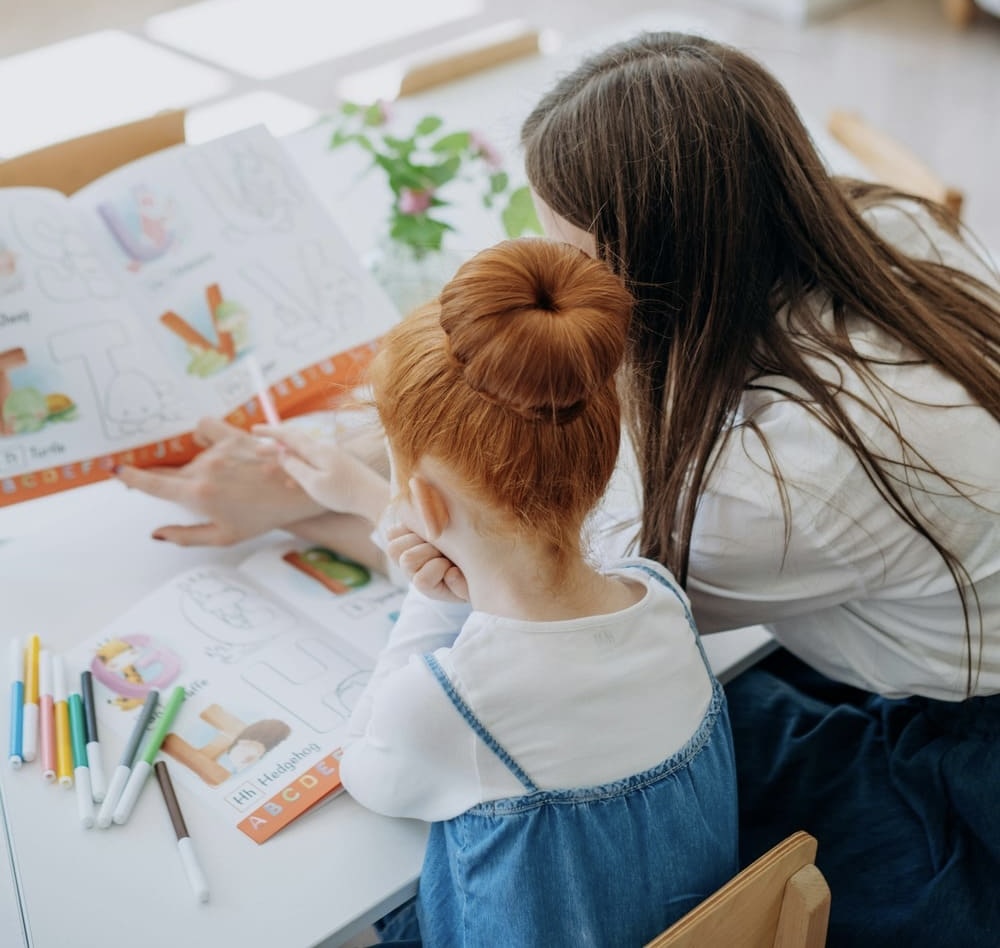
Books offer a rich, structured form of language exposure, especially when reading is shared rather than performed. The way books are introduced matters more than how many are read.
Support early literacy through books by:
- reading aloud slowly and expressively
- allowing the child to choose books and control the pace
- talking about pictures instead of focusing on text alone
- rereading favorite stories to deepen understanding
When books are associated with closeness, curiosity, and enjoyment, children build a lasting relationship with reading.
Common challenges and how to address them
Supporting early literacy is a process, and it rarely unfolds without moments of uncertainty. Challenges are not signs of failure — they are signals that a child needs a different pace, approach, or environment. The goal is not to eliminate difficulty, but to respond thoughtfully and adjust support.
Below are some common early literacy challenges parents encounter, along with ways to address them while preserving curiosity and confidence.
- Short attention spans — Young children naturally focus in brief bursts. Keep activities short, varied, and flexible. Follow the child’s rhythm, and allow movement, repetition, or pauses rather than expecting sustained attention.
- Lack of interest in books or language activities — Interest grows from relevance. Choose topics that reflect your child’s real interests, whether that is animals, vehicles, everyday tools, or family routines. Sometimes the right book — or the right moment — makes all the difference.
- Frustration or resistance — Frustration often appears when expectations exceed readiness. Step back, simplify the activity, or return to familiar ground. A positive emotional experience matters more than any specific outcome.
- Comparing to other children — Development varies widely. Comparing literacy progress can create unnecessary pressure and undermine confidence. Focus on your child’s individual growth rather than external benchmarks.
- Delayed speech or limited vocabulary — Some children take longer to express language verbally. Continue speaking clearly, reading aloud, and offering rich language without forcing responses. If concerns persist, guidance from a qualified professional can be helpful.
- Overreliance on passive screen content — Screens may expose children to words, but they do not replace responsive, interactive engagement. Learn how much screen time is recommended for each age: Toys vs touchscreens: A parent’s guide to choosing wisely.
- Adult-led instruction too early — Introducing structured teaching before a child is ready can reduce motivation. Prioritize exploration, conversation, and play over correction or drills.
- Inconsistent routines — Literacy thrives on repetition and predictability. Establish small, regular moments for reading or conversation rather than relying on occasional long sessions.
Early literacy grows best in an environment where children feel capable, respected, and free to engage at their own pace. So, when challenges arise, the most effective response is often not to push harder, but to observe more closely.
Final thoughts: Early literacy as a foundation for lifelong learning
Early literacy is not a race toward reading, but a relationship with language that forms over time. Through conversation, play, shared stories, and attentive presence, children gradually build the skills that allow reading and writing to emerge with confidence and meaning. When adults focus on readiness rather than results, literacy becomes something children grow into — not something done to them.
Small, consistent moments matter more than structured lessons. A calm voice, a well-chosen book, a pause to listen — these are the experiences that shape how children understand language and, ultimately, how they understand themselves as learners.
At Montessori Family Center, we support early literacy as part of the child’s broader developmental journey. Our Montessori programs for children aged 1 to 6 are thoughtfully prepared for different stages of early childhood and guided by authentic Montessori principles and materials.
Beyond structured lessons, our center offers a warm, welcoming environment for families looking for meaningful indoor activities in Düsseldorf. Our Montessori-inspired indoor playground provides space for movement, exploration, and social interaction — ideal for toddlers and young children.
When home and environment work together, children receive the continuity they need to thrive. We invite you to visit Montessori Family Center to explore how we can support your child’s early literacy, curiosity, and confidence — in a space designed for growth, connection, and joy.

FAQ about early literacy for kids
1. At what age should I start teaching my child literacy skills?
Early literacy begins long before formal teaching. Many children are ready for simple literacy activities around age 2, once they show basic abilities such as memory, language understanding, and short periods of focus. Rather than following an age rule, observe your child’s readiness and keep experiences playful and pressure-free.
2. How can I make literacy learning fun for my child?
Literacy is most effective when it feels like play. Songs, rhymes, storytelling, and interactive games naturally introduce sounds and language. Hands-on materials such as picture books, puzzles, and tactile letters invite curiosity and keep children engaged without turning learning into a task.
3. What are the benefits of teaching literacy at an early age?
Early literacy supports language development, concentration, memory, and communication skills. It also builds confidence and curiosity, helping children approach learning with ease. These early foundations contribute to smoother transitions into school and lifelong learning.
4. What if my child loses interest or becomes frustrated?
Loss of interest often signals that the activity or timing needs adjustment. Try shorter sessions, follow your child’s interests, or return to familiar activities. Avoid pressure and focus on positive experiences — enjoyment is more important than progress at this stage.
5. How can Montessori materials support early literacy?
Montessori materials are designed to engage multiple senses. Tools like sandpaper letters, movable alphabets, and phonics-based activities help children explore sounds, symbols, and language through touch and movement, supporting natural skill development without memorization.
6. How can I tell if my child is ready to start learning to read?
Readiness often shows through interest rather than ability. Children may enjoy books, recognize familiar sounds or letters, follow simple instructions, or pretend to read. These signs suggest they are building the foundations for reading, even if they are not decoding words yet.
7. Is early literacy the same as early reading?
No. Early literacy focuses on building the skills that make reading possible, such as listening, vocabulary, sound awareness, and comprehension. Early reading may emerge later, once these foundations are firmly in place.
8. Do children need to learn letters before they can develop early literacy skills?
Letter knowledge is only one part of literacy and does not need to come first. Children develop early literacy through conversation, storytelling, sound play, and meaningful interaction long before they recognize or name letters.
9. Can screen-based apps help with early literacy?
While some digital tools may introduce language concepts, they cannot replace real interaction. Early literacy develops best through responsive communication, shared reading, and hands-on experiences where children actively participate rather than passively observe.
10. What is the most important thing parents can do to support early literacy at home?
The most important support is presence. Talking with your child, reading together, listening attentively, and creating a language-rich environment all help early literacy grow naturally. Consistent, warm interaction matters more than any specific method or material.