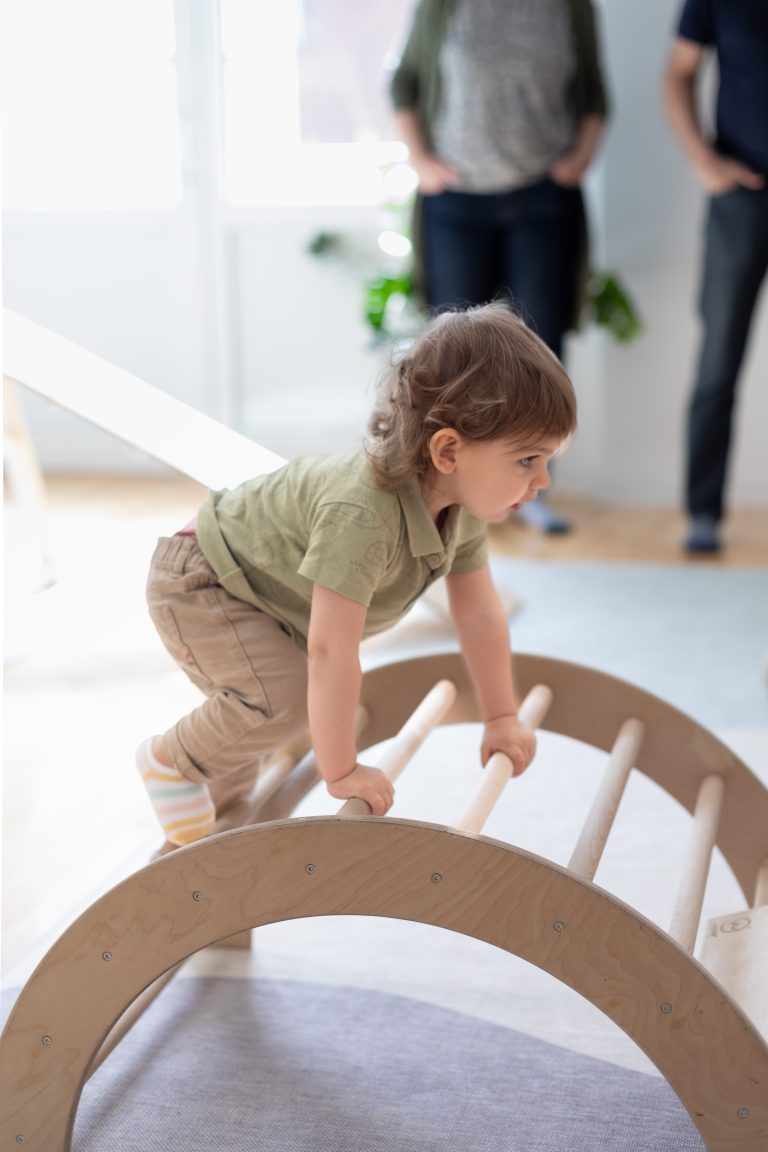
Let’s take a closer look at a topic that is present in our daily lives: Movement!
This topic deserves more attention, as it goes beyond enabling children to be active; it involves laying the essential foundations for their overall development.
Maria Montessori, an expert in child development, believed that movement wasn’t just about physical activity but a vital force driving children’s growth and development. She even had a term for it: “horme.” This isn’t just some fancy word—it’s the driving force behind a child’s inner urge to explore, learn, and interact with their environment.
Think about it: when a baby reaches out to grab a toy, or a toddler takes those first wobbly steps, that’s horme in action. Montessori recognized that the innate drive to move, explore, and learn is the foundation of early childhood development.

But don’t just take my word for it—science backs up Montessori’s insights. A study published in the Journal of Motor Learning and Development found that movement-based learning activities in early childhood improve physical skills and enhance cognitive development, including problem-solving and decision-making abilities.
So, what’s the takeaway here? Movement isn’t just something kids do for fun (although it is fun!). But a fundamental development aspect that shapes their brains, bodies, and futures.
There are many opportunities for children to engage in indoor activities in Düsseldorf or other cities that support their development through movement. Across NRW, families can find a variety of indoor playgrounds or a Montessori playground that offer environments where children can explore and learn through physical activity. These spaces often cater to children of all ages, with dedicated areas for babies and toddlers, like an indoor playground for babies. Playrooms for children are also ideal environments where kids can interact, develop motor skills, and have fun. For younger children, an indoor playground for toddlers or an indoor playground from 1 year old provides safe and engaging spaces for movement and play.
Overall, whether it’s in a kids café or an indoor playground in NRW, the importance of movement in early childhood cannot be overstated. These places not only encourage physical activity but also support cognitive and social development, ensuring that children have the foundation they need for healthy growth.
Bibliography:
● Montessori, Maria. “The Absorbent Mind.” Kalakshetra Publications, 1949.
● Journal of Motor Learning and Development, vol. 6, no. 2, 2018, pp. 215-230.
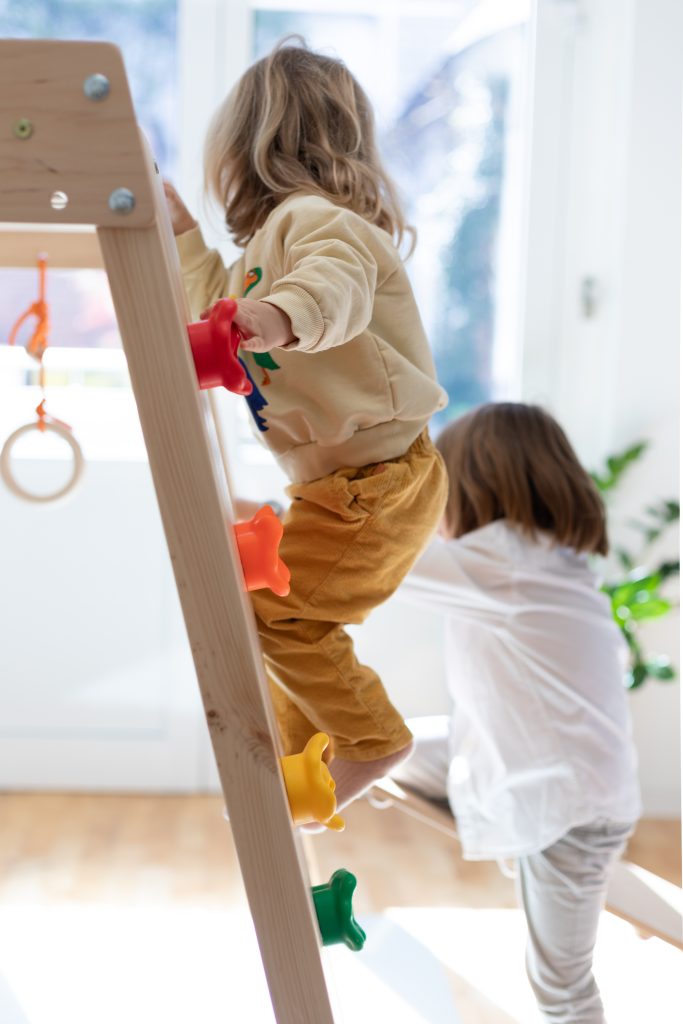
Discover our Movement Room ⬇