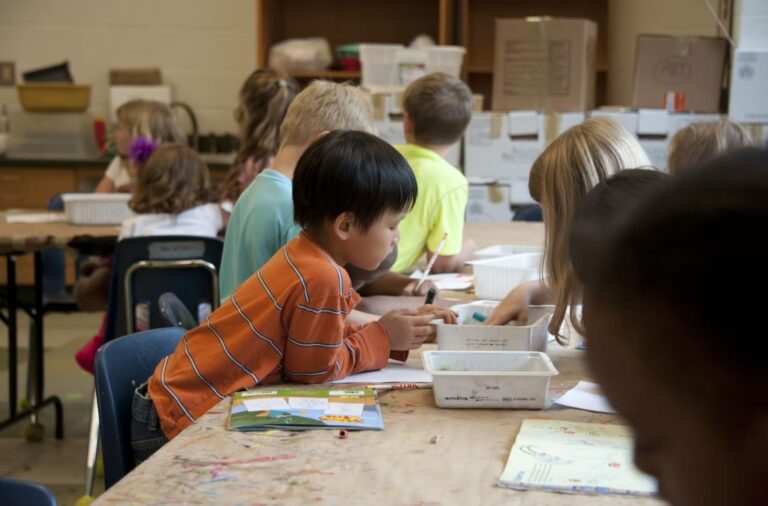
The Montessori curriculum is more than a list of subjects. It’s a thoughtful journey tailored to how children grow, explore, and learn. In a Montessori setting, lessons go beyond memorization. Instead, children dive deep into real experiences that build independence and a love of learning.
Each Montessori curriculum area — math, language, art, music, and science — follows a clear, hands-on path. Lessons build from simple to complex, always respecting the child’s pace. But what exactly is the Montessori curriculum, and how does it shape daily life in the classroom?
This guide walks you through each subject used in Montessori schools. You’ll discover how academic learning blends with creativity, and why this child-centered approach supports both skill and joy. Whether you’re a parent, teacher, or simply curious, start here.
Let’s explore the Montessori school curriculum and how it brings out the best in every child.
What is the Montessori curriculum: Foundations of a child-led approach
The Montessori curriculum is not a checklist of lessons or a rigid academic script. It’s a flexible, child-led approach built on the belief that children learn best when they are free to explore at their own pace. Rooted in Dr. Maria Montessori’s observations of child development, this method respects each child’s natural rhythm and readiness for learning.
In a Montessori classroom, learning happens through hands-on materials that turn abstract ideas into something tangible. Children don’t just memorize — they touch, move, experiment, and discover. For example, math isn’t introduced with flashcards but with beads and rods that let children physically see quantities and operations.
One of the core ideas behind the Montessori school curriculum is the prepared environment. Every material and activity is carefully chosen to support independence, focus, and curiosity. Children are free to choose their work within this structured space, developing responsibility for their own learning.
The Montessori curriculum areas, such as language, math, and science, cover more than academic content. They support the growth of the whole child: intellectually, socially, emotionally, and physically.
So, what is the Montessori curriculum really about? Let’s explore its key areas to find the answer.
Montessori curriculum areas: The building blocks of learning
In the Montessori classroom, learning isn’t divided into disconnected lessons. It unfolds through integrated, hands-on experiences across thoughtfully prepared subject areas. Each Montessori curriculum area is designed to nurture specific aspects of development, while supporting the child’s natural drive to explore and understand the world.
The Montessori school curriculum includes Practical Life, Sensorial, Language, Math, and Cultural subjects. Within the Cultural, children explore science, geography, history, music, and art. These domains are not taught in isolation — they interact, overlap, and evolve as the child grows. While traditional elements remain central, modern Montessori programs may also include areas like coding or digital logic, integrated in ways that preserve child-led learning and tactile discovery.
So, what is the Montessori curriculum really? It’s a whole-child approach that connects head, heart, and hands, laying a foundation not just for academic success, but for life.
Montessori math curriculum: Hands-on discovery of numbers and logic

Montessori math begins with movement and touch. Before writing numbers or solving equations, children build real connections to mathematical ideas using concrete materials. Number rods help them see and feel the difference between one and ten. Golden beads make the decimal system visible and graspable.
This tactile approach continues through operations like addition and multiplication. Children manipulate quantities before learning symbols, which leads to deeper comprehension. Montessori math materials are sequenced to grow with the child, from early quantity recognition to abstract reasoning and problem-solving.
To explore this subject further, visit our guide to Montessori math materials and activities.
Montessori language curriculum: From sounds to storytelling
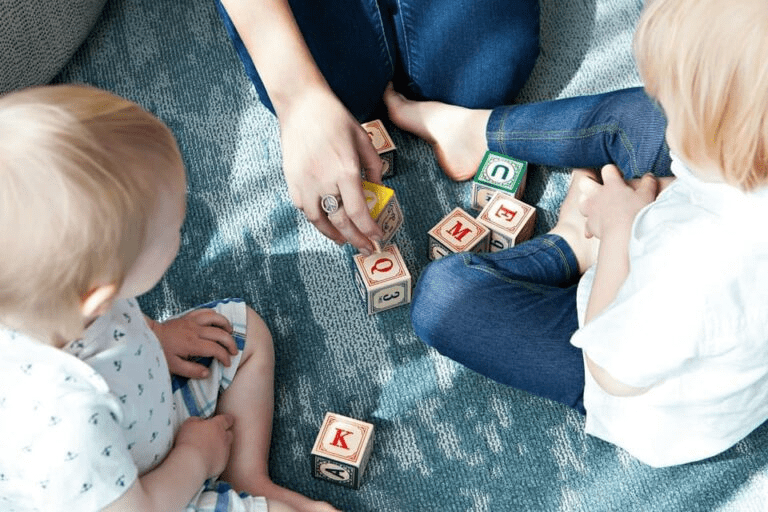
Language in Montessori starts with sound, not sight. Children are introduced to phonetic awareness long before they begin reading books. Through daily conversations, songs, and storytelling, vocabulary expands naturally. Tools like sandpaper letters invite children to trace the shapes of sounds while saying them aloud, blending sensory input with memory.
Writing often comes before reading. Children use the movable alphabet to express their ideas, forming words even before they can decode printed text. This builds confidence and fluency, helping reading emerge as a joyful discovery rather than a chore.
For a closer look at how this progression works, visit our Montessori reading and writing guide.
Montessori science education: Exploring the natural world

Science in Montessori is rooted in real-life observation. Children begin by naming and classifying plants, animals, and natural elements, building both vocabulary and a deep respect for the environment. This grows into larger explorations of biology, physics, chemistry, and earth sciences through experiments and sensory-rich materials.
The approach is not about memorizing facts. It’s about encouraging curiosity, asking questions, and learning how to find answers. From sink-and-float trays to microscope studies, every activity aims to connect the child to the world around them in meaningful ways.
You can learn more in our article on Montessori science education.
Montessori art curriculum: Creativity with purpose

In Montessori education, art is not a separate activity — it’s a form of self-expression woven into daily life. Children are free to explore color, line, and texture with real tools and natural materials. There are no templates or forced outcomes. The goal is not to create “perfect” products but to build confidence, motor skills, and visual thinking.
Art connects to other learning domains as well. A geography lesson might include clay modeling of landforms, while a history study might inspire cultural pattern work. The art area in a Montessori classroom is calm, well-organized, and always ready for independent use.
Dive deeper into Montessori-inspired creative expression.
Montessori music education: Rhythm, melody, and movement

Music in Montessori environments is simple, joyful, and child-centered. Children sing folk songs, clap rhythms, and explore instruments that help them internalize tempo and tone. These early experiences strengthen memory, listening skills, and even language development.
Montessori music isn’t just about playing instruments — it’s about feeling sound in the body and connecting music to movement and culture. Teachers often use rhythm games and call-and-response songs to help children engage socially and emotionally.
Visit our full article on music in Montessori education to learn how rhythm shapes the whole child.
Montessori coding learning: Logic and digital literacy, the Montessori way

Coding might seem like a modern addition, but it fits naturally into the Montessori curriculum areas. Coding encourages sequencing, logic, pattern recognition, and independent problem-solving — all central to Montessori learning. And it doesn’t have to involve screens.
Montessori coding can begin with hands-on materials like logic tiles, storytelling games, and tactile coding toys. As children grow, digital tools may be introduced in carefully chosen, intentional ways that preserve focus and agency.
Explore the full approach to coding the Montessori way and discover how tech education can support your child without disrupting their developmental flow.
How the Montessori education changes by age group
The Montessori curriculum is never one-size-fits-all. It grows with the child, changing in depth and focus as cognitive, emotional, and physical needs evolve. Whether it’s a Montessori toddler stacking blocks or a Montessori elementary student exploring ancient civilizations, each stage of learning is built on the one before it, layering complexity while preserving independence.
Let’s explore how the Montessori school curriculum adapts across key age groups: from birth to age 3, early childhood from 3 to 6, and the elementary years from 6 to 12.
Montessori curriculum 0–3 years: The absorbent mind in action
The journey begins at birth. In this phase, often called the Montessori toddler or infant stage, the focus is on sensory input, movement, language exposure, and emotional security. The child is forming foundational connections with the world, and doing it rapidly.
The Montessori curriculum at this age emphasizes Practical Life activities like pouring, carrying, and dressing. These aren’t just daily routines. They’re powerful tools for developing coordination, concentration, and confidence. Language is introduced through songs, picture cards, and constant verbal interaction. Sensorial experiences are everywhere: texture baskets, sound shakers, and cause-and-effect toys guide the child’s discovery.
The prepared environment is calm, ordered, and scaled to fit little hands. There is no pressure to memorize or perform — just a gentle invitation to explore.
Montessori curriculum 3–6 years: Early childhood education through purposeful play
Between the ages of 3 and 6, children move from unconscious learning to conscious exploration. This is the classic Montessori early childhood education period, where core subject areas come into sharper focus. The classroom offers the full range of Montessori curriculum areas: Language, Math, Sensorial, Practical Life, and Cultural studies.
Here, you’ll find children tracing sandpaper letters, building numbers with golden beads, and exploring botany through puzzle maps and classification cards. But everything still starts with the senses. Children move freely, choose their own work, and repeat tasks as needed to master new skills.
The multi-age setting encourages peer learning and builds social awareness. While the curriculum introduces academic foundations, the goal is to cultivate independence, curiosity, and emotional intelligence. It’s a rich time for learning, but always at the child’s own rhythm.
Montessori curriculum 6–12 years: Abstract thinking and deeper exploration
As children enter the Montessori elementary years, the curriculum expands dramatically. Their minds shift from absorbing concrete facts to exploring abstract concepts, big questions, and “why” behind the “what.” This is when subjects like history, biology, geometry, and writing take on new meaning and depth.
The Montessori school curriculum at this stage is known for its “Great Lessons”—imaginative, story-driven presentations that introduce the universe, the timeline of life, early humans, language, and mathematics. These grand narratives invite children to research, create, and collaborate.
Unlike traditional education, Montessori elementary doesn’t rely on grades or rigid testing. Instead, children keep journals, complete long-form projects, and participate in group discussions. The freedom to choose continues, but with increased responsibility and planning.
Here, the Montessori curriculum becomes not just a tool for learning, but a path to understanding the world and one’s place within it.
Benefits of the Montessori curriculum for children
The Montessori curriculum offers far more than academic instruction. It nurtures the whole child. Designed to support natural development, it fosters confidence, independence, creativity, and a deep, lasting love of learning. Unlike traditional models, which often prioritize memorization and conformity, the Montessori school curriculum allows children to explore ideas at their own pace, guided by curiosity and hands-on experience.
This freedom doesn’t lead to chaos. It cultivates focus and self-direction. A child who selects a math activity independently is more likely to engage deeply and remember the concept. A student who revisits a geography puzzle day after day is not behind—they’re mastering it through repetition, reflection, and play.
Real-life results speak for themselves. Montessori children are often described as self-motivated, adaptable, and confident thinkers. Whether they move into traditional schools or continue in Montessori environments, they carry with them strong problem-solving skills and a sense of ownership over their learning journey.
Below is a comparison between Montessori and traditional educational approaches to highlight how the Montessori curriculum supports holistic development.
Montessori vs traditional curriculum: Side-by-side comparison
| Aspect | Montessori Curriculum | Traditional Curriculum |
| Learning Pace | Child-led; children work at their own speed | Teacher-paced; same material for the whole group |
| Classroom Structure | Mixed-age, collaborative environment | Same-age classrooms, often competitive |
| Materials | Hands-on, sensory-based learning tools | Mostly paper-based and abstract concepts |
| Independence | High focus on self-direction and responsibility | Structured around teacher direction |
| Assessment | Observational and portfolio-based | Grades, quizzes, and standardized tests |
| Creativity & Exploration | Built into the curriculum; child chooses activities | Often limited by rigid subject timelines |
| Focus on Child Development | Emphasis on emotional, social, and cognitive growth | Primarily focused on academic achievement |
| Love of Learning | Cultivated through freedom and intrinsic motivation | Often reduced by pressure and performance expectations |
The Montessori curriculum doesn’t just prepare children for school. It prepares them for life. By supporting independence and honoring individual learning styles, it builds strong foundations for resilience, adaptability, and joy in discovery. Whether at age three or twelve, Montessori learners grow into capable, curious, and compassionate individuals. But how does it cope with modern technologies?
Montessori curriculum and technology: Navigating change with purpose
Technology is changing the way children live and learn, but how does it fit into the Montessori curriculum? Rooted in physical materials and real-world experiences, the Montessori school curriculum has always emphasized concrete exploration before abstraction. Still, as tools evolve, many educators and families are asking: Can Montessori and technology work together?
The answer is not simple. Montessori education does not reject technology, but it approaches it with caution and intentionality. When used wisely, digital tools can enhance learning, support creativity, and even introduce children to future-ready skills like coding or digital storytelling. However, without a strong foundation in Montessori values, screens can quickly disrupt the balance of a child-led environment.
From sandpaper letters to smart classrooms: How Montessori is evolving with technology
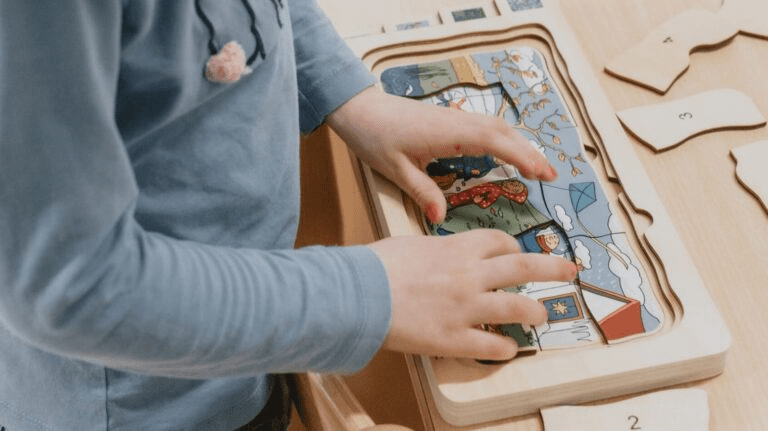
Montessori materials are famously hands-on — wooden blocks, bead chains, tactile letters. But in modern classrooms, a quiet transformation is underway. Some schools are experimenting with smart boards, interactive apps, and even AI tutors. While this might seem at odds with traditional practices, thoughtful integration is possible.
As explored in our article on the evolution of Montessori education, many Montessori environments are blending classic tools with digital aids that extend, not replace, learning. For example, children might still use sandpaper letters to trace sounds, but then reinforce phonics through self-guided language apps. In some cases, smart classroom tools help teachers track progress or customize lesson pacing.
The key is maintaining the Montessori principles: respect for the child, hands-on engagement, freedom within limits, and connection to real-world tasks. Technology should serve the child, not distract them from purposeful work.
Integrating AI into Montessori: Enhanced learning or hidden trap?
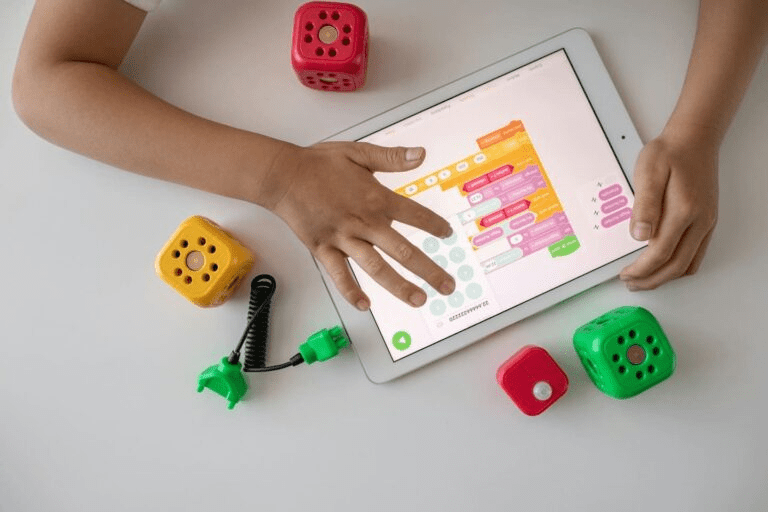
Artificial Intelligence (AI) is also entering the conversation, especially in higher levels of Montessori education. With its ability to personalize content, analyze performance, and offer instant feedback, AI may seem like a perfect fit for self-paced learning. But is it truly aligned with Montessori curriculum areas like Practical Life or Sensorial work?
In our in-depth article on integrating AI into Montessori education, we explore both sides of the debate. On one hand, AI can reduce repetitive administrative tasks for educators and offer tailored challenges to students. On the other hand, it risks isolating children from real-life experiences and diminishing peer collaboration.
Montessori learning is inherently social and sensory. AI, when used, must be thoughtfully introduced, monitored closely, and never replace the teacher’s role as observer, guide, and human connection. In short, AI may become a tool in the toolbox, but it should never become the toolbox itself.
Balancing innovation with tradition
Technology and the Montessori curriculum don’t have to be opposites. When digital tools are introduced with care, intention, and alignment to Montessori values, they can support child development and open new learning paths. The challenge is not whether to use technology, but how, when, and why.
The Montessori school curriculum continues to evolve, just as Maria Montessori herself evolved her methods in response to the needs of children and society. Today, it’s up to educators and families to carry that spirit forward, balancing innovation with the enduring principles that make Montessori education so powerful.
Final words: Why the Montessori curriculum matters
The Montessori curriculum is more than a method. It’s a mindset. Rooted in respect for the child, it offers a learning journey that is thoughtful, responsive, and deeply human. Every lesson, material, and moment is crafted to meet children where they are and help them grow intellectually, emotionally, and socially.
Unlike one-size-fits-all approaches, the Montessori school curriculum adapts to each child’s pace, interests, and developmental stage. From early language exploration to advanced cultural studies, the Montessori curriculum areas work together to support the whole child. Children don’t just learn facts. They build concentration, independence, empathy, and a lifelong love of discovery.
Whether you’re a parent exploring your options, an educator looking for inspiration, or someone simply curious about child-centered education, the Montessori approach offers something deeply meaningful and lasting.
🌿 Visit the Montessori Family Center — a place to explore what Montessori truly is and learn more about its curriculum, philosophy, and real-world applications.
The Montessori curriculum matters because childhood matters. And how we nurture it shapes everything that follows.
Montessori curriculum FAQ
1. What is the Montessori curriculum, and how is it different from traditional education?
The Montessori curriculum is a child-centered approach that emphasizes hands-on learning, self-directed activity, and collaborative play. Unlike traditional education, it adapts to each child’s pace and interests rather than following a rigid, age-based program.
2. What are the core Montessori curriculum areas?
The main curriculum areas include Practical Life, Sensorial, Language, Math, and Cultural Studies (which encompasses science, geography, history, music, and art). Each area is designed to support cognitive, emotional, and physical development in an integrated way.
3. At what age do children start the Montessori curriculum?
Montessori education can begin as early as infancy, with tailored environments for children from birth to age 3. Core curriculum work typically begins in the 3–6 age range, where children are introduced to foundational lessons in all subject areas.
4. How does the Montessori school curriculum support independent learning?
Montessori classrooms are carefully prepared to encourage autonomy. Children choose their own activities from a range of developmentally appropriate options, fostering self-discipline, motivation, and critical thinking.
5. Does the Montessori curriculum include technology or digital tools?
While traditionally focused on tactile materials, modern Montessori programs may include thoughtfully integrated technology. Digital tools and even AI can be introduced when aligned with Montessori values—supporting, not replacing, hands-on, child-led learning.
6. How is math taught in the Montessori curriculum?
The Montessori math curriculum begins with concrete materials like number rods, golden beads, and spindle boxes. These tools help children understand quantity, sequencing, and operations before moving on to abstract equations and problem-solving.
7. Is reading taught differently in Montessori education?
Yes. The Montessori language curriculum introduces phonetic sounds first, followed by writing, then reading. Children use tactile tools like sandpaper letters and the moveable alphabet to build literacy skills in a natural, joyful sequence.
8. How does the Montessori curriculum support creativity and the arts?
Montessori encourages open-ended exploration of art and music. Rather than following templates, children use real materials to express themselves freely. Music is integrated through rhythm games, movement, and exposure to global cultures.
9. Can the Montessori curriculum prepare my child for traditional schools later?
Yes. Children who transition from Montessori to traditional schools often adapt well thanks to their strong foundation in independent learning, problem-solving, and emotional regulation. Many exhibit advanced academic and social skills.
10. Where can I learn more about Montessori materials and how the curriculum works?
To explore the full range of Montessori curriculum areas, age groups, and teaching strategies, visit the Montessori Family Center. It’s a trusted resource for parents, educators, and anyone curious about holistic, child-led education.