In traditional education, science often means textbooks, memorization, and structured lessons. But in Montessori classrooms, science is an adventure — one driven by curiosity, hands-on discovery, and real-world connections.
Imagine a child holding a magnifying glass, studying the intricate veins of a leaf. Or carefully mixing water and flour, observing how the materials change. Science in Montessori isn’t about rote learning — it’s about experiencing the world firsthand.
This method aligns perfectly with how young minds naturally explore. Instead of passive instruction, the Montessori science curriculum encourages children to ask questions, conduct experiments, and find answers through direct observation. What makes a plant grow? Why do objects float or sink? How do animals adapt to their environments? Montessori children don’t just learn these concepts — they discover them.
By integrating Montessori and science, you foster critical thinking, problem-solving, and a lifelong love of discovery. Ready to see how it works in practice? Let’s explore the key principles, materials, and activities that make studying science using the Montessori method truly unique.
Why teaching science the Montessori way works: Key principles
Children love to explore the world around them because learning, at its core, is an act of discovery. Montessori science is built on this natural curiosity, allowing kids to learn by doing, experimenting, and observing rather than memorizing facts from a textbook. But what makes this approach so effective?
At the heart of Montessori science materials is self-directed learning. Instead of rigid lessons, children are given the freedom to choose activities that spark their interest — whether it’s examining insects, mixing colors to see how they blend, or exploring magnetism. This autonomy fosters a deep sense of engagement and intrinsic motivation, turning learning into a journey rather than a task.
The Montessori method is grounded in principles that make science education more engaging, effective, and deeply connected to real-world experiences. Let’s explore how each principle contributes to scientific learning aligned with Montessori:
- Hands-on exploration. Instead of just hearing about scientific concepts, children touch, manipulate, and observe them in action. Whether it’s growing plants, observing the movement of water, or experimenting with weights and balances, tactile learning reinforces abstract scientific ideas. Young children learn through their senses — touching different textures, hearing different sounds, smelling different materials, and observing tiny details. Montessori science materials, such as botany puzzles, nature trays, and water displacement activities, ensure that science is experienced rather than just explained.
- Self-directed learning. Montessori classrooms encourage children to follow their interests. A child fascinated by animals might choose to study classification cards on vertebrates and invertebrates, while another might focus on simple chemistry experiments with baking soda and vinegar. This autonomy nurtures curiosity and keeps engagement levels high.
- Real-world applications. Science isn’t just a subject — it’s part of everyday life. Montessori science connects learning to gardening, weather changes, cooking, and outdoor exploration. Through this approach, children understand that science isn’t just something done in a lab — it’s happening all around them.
- Encouraging observation and inquiry. Montessori emphasizes asking questions and making discoveries. Instead of telling a child, “Water evaporates,” a teacher might guide them to leave a cup of water outside and observe what happens over time. This method builds critical thinking and problem-solving skills.
- Mixed-age learning and peer teaching. Older children often help younger ones understand concepts through hands-on activities. Explaining an idea to a peer reinforces knowledge and builds confidence. In a Montessori setting, children naturally engage in collaborative learning, much like real scientists working in teams.
- Respect for nature and the environment. Montessori places a strong emphasis on caring for the earth. Children plant gardens, explore ecosystems, and learn about conservation from an early age. By fostering a connection with nature, Montessori science encourages environmental awareness and responsibility.
Science isn’t about memorizing facts — it’s about discovery, curiosity, and exploration. And the Montessori method provides the perfect environment for children to engage deeply with scientific concepts through hands-on experiences, sensory learning, and real-world applications.
But how is this curiosity-driven learning structured? Let’s take a closer look.
Montessori science curriculum overview
In the Montessori science curriculum, children learn by observing, experimenting, and interacting with the world around them. Instead of memorizing scientific facts, they experience science — watching seeds sprout, classifying animals, feeling the difference between rough and smooth rocks, and testing what floats and sinks.
The curriculum is designed to introduce key scientific disciplines in a way that feels natural and engaging. Let’s see what exactly young learners explore in Montessori science.

Botany in Montessori science curriculum: Understanding the plant kingdom 🌱
Ever seen a child carefully observe a leaf under a magnifying glass? Montessori and science go hand in hand when it comes to botany. Children explore the life cycle of plants, learn about parts of a flower and tree, and even engage in real gardening activities. Why do leaves change colors? What do roots do? How does a seed turn into a tree? These questions spark curiosity, and practical activities — like planting seeds, watering plants, and matching leaf shapes — bring answers to life.
Zoology in Montessori science curriculum: Learning about the animal world 🐞
Why do some animals have fur while others have scales? How do birds build nests? The Montessori science curriculum introduces children to animal classification, life cycles, and habitats. Children use puzzle cards to match animals to their environments, study real-life specimens like shells and feathers, and observe insects in nature. Learning about animals fosters not just scientific understanding but also compassion and environmental awareness.
Earth sciences in Montessori science curriculum: Exploring our planet 🌍
Children are natural geologists — who hasn’t seen a child collecting rocks or playing with sand? In Montessori science, earth sciences include exploring landforms, weather patterns, and natural materials. Children learn about mountains, rivers, and continents through maps and model-making, and they study weather by tracking temperatures, making rain experiments, and feeling different soil textures. This helps them connect with nature and understand the world they live in.
Physical sciences in Montessori science curriculum: The magic of experiments 🧲
Why does ice melt? How do magnets work? Montessori science activities bring physics to life through simple, engaging experiments. Children explore motion, gravity, and states of matter by dropping objects, pouring water into different containers, and experimenting with magnetism. They don’t just learn scientific concepts — they experience them.
As you can see, science in Montessori is not just a subject — it’s an exploration of life. With carefully designed materials and practical experiences, children learn by touching, observing, and questioning. But what tools help bring these discoveries to life?
Essential Montessori science materials
Montessori science materials are designed to engage all the senses, encouraging young learners to observe, experiment, and draw their own conclusions. These materials don’t just teach science; they ignite curiosity and invite exploration. Here are some of the most common ones.

1. Classification cards: Learning through matching 🦋
Montessori classification cards introduce children to the wonders of botany, zoology, and earth science in a practical and engaging way. They learn to group animals by habitat, match leaves to their trees, and even classify types of rocks. This simple but powerful activity builds observation skills and strengthens memory retention.
2. Nature trays: Bringing the outdoors inside 🍂
What’s more exciting than collecting treasures from nature? Montessori nature trays are filled with leaves, seeds, shells, feathers, and rocks for children to explore. They can touch, examine, and compare textures, fostering a deep connection with the natural world. How does a smooth river stone feel compared to a rough piece of bark? These small discoveries lay the foundation for scientific thinking.
3. Experiment kits: Science in action 🔬
Simple experiment kits allow children to test ideas on their own. These kits — containing magnifying glasses, pipettes, magnets, and measuring tools — encourage children to ask questions, form hypotheses, and see results firsthand. The excitement of discovery makes science unforgettable!
4. Land and water forms: Understanding geography 🌍
Montessori land and water form trays let children explore geography through sensory play. By pouring water into models of bays, peninsulas, and straits, they see how land and water interact in nature. It’s a hands-on way to make geography and earth sciences come to life!
5. Magnetism and gravity materials: The magic of physics 🧲
What makes magnets stick together? Why do objects fall to the ground? Montessori magnet and gravity kits introduce children to fundamental physics through fun, engaging activities. By experimenting with attraction and repulsion, pendulum swings, and rolling objects, children naturally begin to understand the laws of motion and force.
6. Plant growing kits: Watching life unfold 🌱
There’s no better way to understand the life cycle of plants than to grow one from a seed. Montessori plant-growing kits allow children to plant, water, and observe as tiny sprouts turn into leaves and stems. This hands-on process teaches patience, responsibility, and an appreciation for nature.
7. Sensory bottles and water experiments: Exploring liquids 💧
Sensory bottles and water experiments allow children to explore density, movement, and viscosity. By manipulating different materials, they gain a deeper understanding of how liquids behave — a fundamental concept in both physics and chemistry.
The right Montessori science materials turn learning into an adventure. They encourage children to ask questions, make discoveries, and develop a deep understanding of scientific concepts — all through sensor play. But how can you bring this kind of learning into everyday life?
Hands-on Montessori science activities for 3-5 year olds
Science is all around us—floating leaves in a puddle, tiny ants carrying food, or the way sunlight casts shadows. Young children are natural scientists, and with the right activities, you can turn everyday moments into exciting learning experiences. The best part? Montessori science activities are easy to set up and use simple materials you likely already have at home!
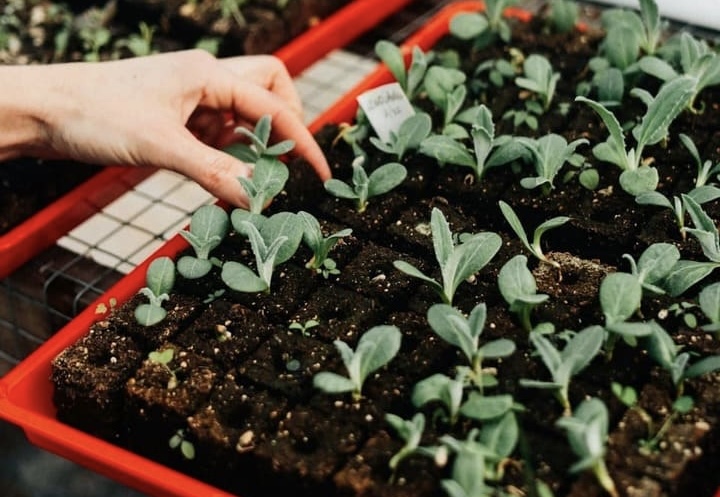
Here are some fun, hands-on science activities for 3-5-year-olds at home that will spark curiosity and encourage discovery.
- Sink or float? Fill a bowl with water and gather objects of different sizes and weights. Let your child predict which ones will sink and which will float, then test their guesses. This activity introduces early physics concepts while building observation and reasoning skills.
- Nature walk and collection. Take a nature walk and encourage your child to collect interesting leaves, rocks, or flowers. At home, examine them closely — feel the textures, compare colors, and discuss patterns. Ask questions like, “Why do some leaves have smooth edges while others are jagged?” This simple activity fosters botany awareness and sensory exploration.
- Color mixing with water. Fill three jars with red, blue, and yellow water. Provide small cups and let your child mix the colors to create new shades. What happens when red and blue mix? Can they make green? This hands-on experiment teaches color theory, observation, and cause-and-effect thinking.
- Magnetic discovery. Give your child a small magnet and let them explore the house, testing objects to see which ones stick. They’ll quickly notice that metal attracts while wood and plastic don’t. Ask, “Why do you think this happens?” This activity is a simple yet effective way to introduce magnetism and material properties.
- Ice melting experiment. Place ice cubes in three bowls — one in the sun, one in the shade, and one sprinkled with salt. Have your child check on them and discuss which melts first and why. This experiment teaches early chemistry concepts and encourages children to make predictions.
- Planting seeds and watching them grow. Plant a bean in a clear jar with wet cotton or soil. Have your child water it daily and note changes. Ask, “What do plants need to grow?” This hands-on activity introduces botany, responsibility, and the life cycle of plants.
- Shadow play and light exploration. Take your child outside and trace their shadow with chalk. Return later to see how it has moved. Discuss how the sun’s position affects shadows, introducing basic astronomy concepts in a fun way.
- Making a simple volcano Mix baking soda and vinegar in a cup to create a fizzing, “erupting” volcano. Let your child observe the reaction and discuss why it happens. This activity introduces chemical reactions in a fun, hands-on way.
- Sorting natural objects. Gather a collection of natural materials — leaves, shells, pinecones, sticks, and rocks — and have your child sort them based on size, texture, or color. Ask, “Which ones feel the roughest? Which are the heaviest?” This activity strengthens classification skills and sensory exploration.
- Observing worms and soil. After a rainy day, find a spot in the yard or park where worms are active. Let your child watch how they move and discuss why worms are important for the soil. If possible, create a small worm habitat in a jar with layers of soil and leaves to observe how they tunnel. This activity introduces basic biology and environmental science.
- Floating paper boat experiment. Fold a small paper boat and place it in a tub of water. Let your child gently blow on it to see how air can move objects. Then, try adding pennies inside to test how weight affects floating. This introduces basic physics concepts like buoyancy and force.
Science doesn’t need to be complicated to be meaningful. These simple Montessori science activities help children ask questions, experiment, and discover answers on their own — all while having fun.
But how do children go from simple experiments to real scientific thinking? That’s where observation and experimentation come into play. Let’s explore why these skills are so essential for young learners.
The role of observation and experimentation in Montessori science
Montessori education encourages children to observe, hypothesize, and experiment, laying the foundation for lifelong scientific thinking. Instead of passively receiving information, Montessori children are active participants in discovery, just like real scientists.
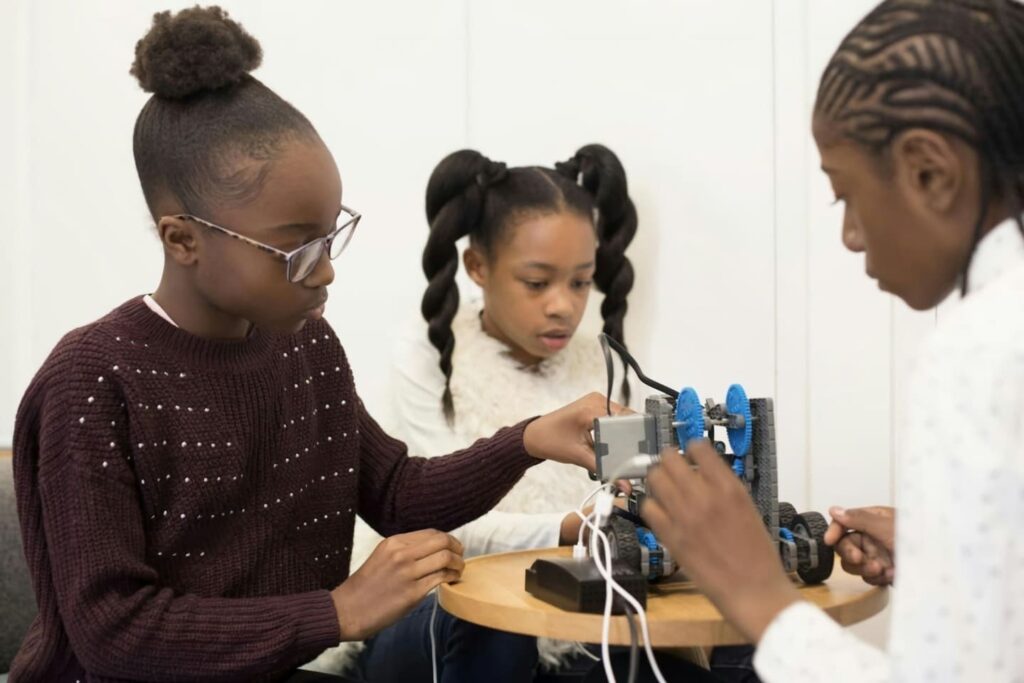
Observation: The first step in scientific thinking
Have you ever watched a child stare intently at a ladybug crawling on a leaf? That’s scientific observation in action. Montessori and science go hand in hand because the method encourages children to slow down, notice details, and ask questions. In a Montessori setting, children:
- Use magnifying glasses to study the veins of a leaf or the texture of a rock.
- Observe animal behaviors — how ants move in a line or how birds build their nests.
- Track the weather by recording daily temperatures or watching clouds change shape.
These simple but powerful activities train the brain to recognize patterns, compare details, and build connections.
Hypothesis: Encouraging “What if?” thinking
Children are naturally curious. What if I mix these colors together? Why does a balloon stick to my sweater? What happens if I plant a seed in the shade? Montessori educators nurture this curiosity by encouraging children to predict outcomes before testing them.
- Before an experiment, a teacher might ask, “What do you think will happen?”
- Children are encouraged to verbalize their guesses before testing them.
- Even when predictions are incorrect, children learn through trial and error.
Making a hypothesis is the foundation of critical thinking. Montessori science activities teach children that wrong answers are not failures — they’re learning moments.
Experimentation: Learning by doing
Montessori science isn’t about memorizing facts — it’s about experiencing them. Children test their ideas, adjust their thinking, and discover cause-and-effect relationships firsthand. Some common Montessori science activities that foster experimentation include:
- Sink or float tests — Why does a rock sink while a piece of wood floats?
- Germination experiments — How do plants grow under different conditions?
- Simple physics activities — What happens when you roll objects of different weights?
By repeating experiments and making new observations, children gain confidence in their own ability to explore and understand the world.
The foundation for lifelong scientific thinking
When children are encouraged to observe, ask questions, and experiment, they develop skills that extend far beyond science class. These habits help them become independent thinkers, problem solvers, and innovators in any field they choose.
In Montessori, every child is a scientist at heart. But how does this curiosity-driven learning benefit them in the long run?
Final thoughts: Why Montessori science prepares kids for the future
Curiosity, critical thinking, and the confidence to explore make a great scientist. These qualities aren’t developed through memorizing facts — they come from hands-on discovery, problem-solving, and real-world experiences. That’s why the Montessori science curriculum is so powerful. It doesn’t just teach science — it shapes the way children think, learn, and interact with the world.
Through Montessori and science, children develop essential skills that benefit them far beyond the classroom. They learn to observe the world around them, ask meaningful questions, and experiment to find answers. Instead of waiting for someone to tell them the right response, they develop the ability to think independently, make predictions, and test their ideas. These problem-solving and critical thinking skills prepare them for any path in life, whether they become scientists, artists, entrepreneurs, or engineers.
Children don’t remember science facts just because they read them in a book. They remember them because they felt, saw, and experienced them. What’s more memorable — reading that water evaporates or watching a puddle disappear under the sun? The Montessori science curriculum ensures that learning is active, engaging, and meaningful. Instead of simply memorizing information, children internalize concepts by testing them in real life. They don’t just learn science — they live it.
Montessori science education isn’t just about creating future scientists — it’s about fostering a lifelong love of discovery. A child who grows up asking questions, testing ideas, and exploring the world with curiosity will carry that mindset into everything they do. And isn’t that what education should be about? Not just learning facts, but learning how to think, explore, and understand the world. See how all subjects work together to form a complete learning experience in our guide to the Montessori curriculum.
If you want your child to experience science the Montessori way, visit the Montessori Family Center and explore programs designed to nurture curiosity, independence, and a hands-on love of learning.
FAQ: Montessori and Science Education
1. What is the Montessori approach to science education?
The Montessori approach to science focuses on hands-on exploration, observation, and real-world applications. Instead of memorizing facts, children experiment, ask questions, and discover scientific principles through sensory-rich activities.
2. How does the Montessori science curriculum differ from traditional science education?
Unlike traditional education, which often relies on textbooks and structured lessons, the Montessori science curriculum emphasizes child-led discovery and hands-on learning. Children engage in practical experiments, nature studies, and real-world problem-solving, fostering critical thinking and curiosity.
3. What are some examples of Montessori science activities?
Some engaging Montessori science activities include: sink or float experiments to introduce physics concepts, planting seeds to explore botany and life cycles, magnetism exploration to understand forces and materials, nature walks and classification activities to develop observation skills, and simple chemistry experiments like baking soda and vinegar reactions.
4. Why are hands-on experiments important in Montessori and science learning?
Hands-on activities allow children to experience scientific concepts directly, making learning more meaningful and memorable. Instead of passively absorbing information, they observe, test, and discover the natural world through direct engagement.
5. What materials are used in Montessori science education?
Montessori science materials include: classification cards for botany and zoology, nature trays for exploring textures, patterns, and colors, experiment kits for hands-on physics and chemistry activities, magnifying glasses and observation tools for detailed exploration, and land and water form models to teach geography and earth sciences.
6. How does Montessori encourage scientific thinking in young children?
The Montessori method nurtures scientific thinking by encouraging children to observe, ask questions, make predictions, and test their ideas. They are free to explore at their own pace, fostering problem-solving skills and a natural curiosity about the world.
7. At what age should children start learning science the Montessori way?
Children can start exploring science through Montessori principles as early as age 3. Montessori science activities for 3–5-year-olds focus on sensory experiences, nature observation, and simple experiments that lay the foundation for more advanced learning.
8. How does the Montessori method integrate science with other subjects?
In Montessori education, science is interwoven with language, math, geography, and practical life activities. For example, learning about plant growth connects with botany (science), counting seeds (math), and writing observations (language). This holistic approach makes learning more engaging and meaningful.
9. Can Montessori science activities be done at home?
Yes! Many Montessori science activities can be easily done at home using simple materials. Activities like water experiments, shadow play, plant-growing projects, and nature exploration require minimal setup but provide endless opportunities for learning.
10. Where can I find Montessori programs that emphasize science education?
To explore Montessori science curriculum programs and hands-on learning opportunities, visit the Montessori Family Center. Their programs are designed to nurture curiosity, independence, and scientific exploration in children.
References and further reading
For more in-depth insights into Montessori and science education, explore the following resources:
- Teaching Science with Montessori is a practical guide on how Montessori science fosters curiosity and hands-on learning.
- How Montessori Helps Your Child Learn Science explains the Montessori approach to science and how it benefits young learners.
- Exploring the Montessori Science Curriculum is a detailed breakdown of how Montessori introduces scientific concepts.
- Montessori Science Curriculum covers key science areas and materials used in Montessori classrooms.
- Elementary Science in Montessori discusses hands-on science activities for Montessori elementary students.
- Science in Montessori highlights how observation, experimentation, and discovery play a role in Montessori science education.
These resources provide valuable perspectives on the Montessori science curriculum, hands-on activities, and the role of observation and experimentation in early childhood education.