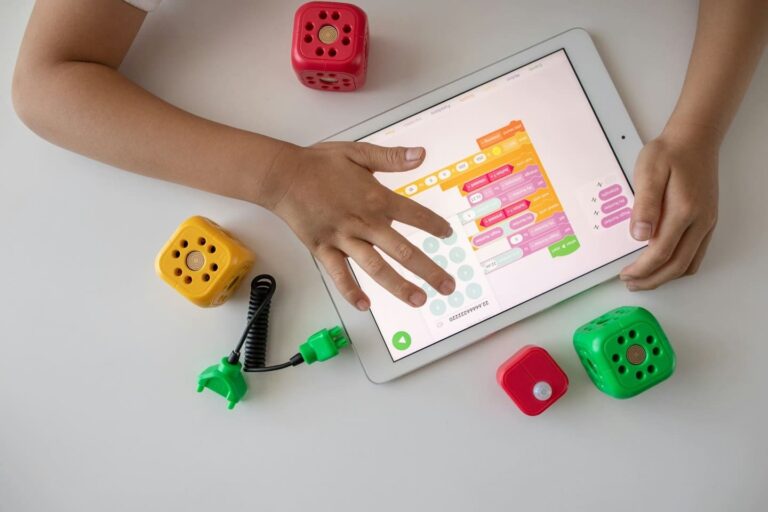
Montessori education is built on self-directed learning, hands-on discovery, and deep teacher-student connections. But as AI enters the classroom, it raises an important question: can it enhance the Montessori experience, or does it risk replacing its core principles? Let’s explore what Montessori AI really means — and whether combining a hands-on, child-led method with advanced technology is truly possible.
Artificial intelligence is revolutionizing education, offering personalized learning, real-time feedback, and intelligent teaching assistants. And Montessori AI is not an exception. Some argue that AI can empower Montessori students and teachers, making learning more adaptable and engaging. Others warn that too much reliance on technology could weaken problem-solving skills, reduce practical learning, and introduce privacy risks.
So, where’s the balance? In this article, we’ll explore both sides — the benefits AI brings to the Montessori curriculum and the potential downsides that educators and parents must consider. Let’s dive into this evolving conversation and find out if AI can truly support Montessori’s vision of child-led, experiential learning — or if it’s a digital shortcut we should approach with caution.
Montessori students and AI: A future of possibilities or a risky path?
Imagine a classroom where every child gets the perfect challenge at just the right moment, where creativity flourishes with the help of intelligent tools, and where technology supports — not replaces — deep, meaningful learning. Sounds exciting, doesn’t it? Montessori education has always been about nurturing independence, curiosity, and hands-on discovery. But as AI steps into the picture, it brings a mix of opportunity and uncertainty.
Can artificial intelligence truly complement the Montessori philosophy, offering personalized learning, fostering creativity, and supporting children with diverse learning needs? Or does it pose risks that could erode the very essence of Montessori education — replacing real-world, tactile experiences with screens and algorithms?
Let’s explore both sides of this evolving conversation. First, we’ll dive into the potential benefits AI can bring to Montessori students, unlocking new ways to learn, create, and adapt. Then, we’ll look at the concerns that come with this technological shift, asking the critical question: Does AI enhance Montessori learning, or are we losing something essential in the process?
The benefits of AI in Montessori learning
Montessori classrooms are built around one powerful idea — children learn best when they explore at their own pace, driven by curiosity rather than rigid instructions. Now, imagine a tool that enhances this natural learning process, adjusting to each child’s needs in real time. That’s where Montessori AI steps in, offering new possibilities that align with the philosophy of self-directed, individualized education. But how exactly can AI complement Montessori learning? Let’s take a closer look!
Personalized learning and adaptive feedback — AI tools can assess a child’s learning pace and tailor educational experiences accordingly
Every child is unique — one might master mathematical patterns effortlessly, while another takes their time grasping phonics. AI-powered learning tools, much like a thoughtful Montessori guide, can follow a child’s progress and adjust challenges to match their learning rhythm. This intelligent approach provides immediate feedback, helping children stay engaged without feeling overwhelmed or bored.
Only imagine an AI-powered reading assistant that can listen to a child’s pronunciation and gently correct them, just as a Montessori teacher would. Or a math program that introduces more complex puzzles when it detects mastery of foundational concepts. The result? A dynamic learning environment where children remain challenged but never frustrated.
Fostering creativity and problem-solving — AI-based storytelling, design, and interactive learning encourage experimentation
What if children could co-write stories with an AI partner, creating imaginative worlds and characters that respond to their ideas? Various AI-powered tools already make this possible, allowing students to blend their creativity with AI-generated content to design books, compose music, or even build interactive art.
In a Montessori setting, creativity thrives when children have the freedom to explore and experiment. AI can amplify this by acting as an interactive collaborator rather than just a tool — suggesting new directions, prompting deeper thinking, and encouraging problem-solving. Whether it’s coding their own game, composing digital music, or using AI to visualize abstract concepts, children gain confidence in their ability to create, adapt, and innovate.
Early digital literacy — Exposure to AI prepares children for a world where digital tools will be integral to work and life
We live in a digital-first world, where AI is shaping everything from how we communicate to how we solve problems. Shouldn’t children learn how to navigate it responsibly? Introducing AI in Montessori classrooms doesn’t just mean using smart tools — it means teaching children to think critically about technology.
Through hands-on interactions with AI, students can learn how algorithms work, how data is processed, and how to question AI-generated content. A Montessori approach to AI education isn’t about passive consumption — it’s about active exploration, discussion, and ethical understanding. By the time these children grow up, they won’t just be users of AI; they’ll be the innovators designing its future.
Supporting neurodiverse learners — AI can assist children with different learning needs by providing individualized resources.
Every child deserves an education tailored to their unique strengths and challenges. For neurodiverse learners, such as children with autism or ADHD, AI can provide structured, personalized support that adapts to their needs. Whether it’s an AI-powered speech assistant for children with language delays or a sensory-friendly interactive program, technology can help create an inclusive learning environment.
AI doesn’t rush, doesn’t judge, and doesn’t get impatient. For children who need extra time or a different approach to grasp a concept, AI can be a gentle guide that adjusts in real time, offering repeated practice without frustration. And for Montessori educators, these tools provide valuable insights into how each child learns best, helping them fine-tune their teaching methods to support every learner.
As you can see, AI offers incredible opportunities for Montessori learners — adapting to their pace, inspiring creativity, and preparing them for the future. But as with any tool, balance is key. Can AI truly align with Montessori’s emphasis on sensory-based experiences? Or does it risk pulling children away from real-world exploration?
Let’s take a closer look at the other side of the coin — the challenges AI brings to Montessori education and the concerns that educators and parents are raising.
The downsides: The path to losing the Montessori essence
AI in education sounds exciting, but at what cost does it come? Montessori education is deeply rooted in real-world exploration, sensory experiences, and human connection. If AI becomes a dominant learning tool, we risk moving away from these foundational principles.
As educators and parents explore the role of AI in Montessori, some are raising important questions. Could increased screen time replace real-world discovery? Will AI-driven guidance weaken a child’s ability to think critically and solve problems independently? And perhaps most importantly, how do we ensure AI respects children’s privacy and developmental needs? Let’s dive into these concerns.
Screen time vs. hands-on learning
Montessori classrooms are full of textures, shapes, and real-world materials designed to engage the senses. Whether it’s tracing sandpaper letters, pouring water from one container to another, or stacking wooden blocks, children learn by touching, feeling, and moving.
Now, imagine swapping those experiences for a screen. Can a digital program ever truly replace the depth of hands-on learning? Never!
AI-driven apps may teach letters or numbers, but they lack the tactile, real-world connection that Montessori emphasizes. A virtual puzzle is no match for the weight, texture, and balancing act of real Montessori materials.
This is one of the biggest concerns Montessori educators have about AI integration. Technology should enhance, not replace, physical exploration. If AI is used too often, there’s a risk that children become passive learners — absorbing information from a screen rather than experiencing it through their senses.
Critical thinking and over-reliance on AI
Montessori education encourages children to ask questions, experiment, and make discoveries on their own. The beauty of a Montessori classroom is that it allows students to explore at their own pace, making mistakes and learning from them. But what happens when AI is always there, providing answers instantly?
AI-powered learning tools are designed to be helpful, but too much help can actually weaken problem-solving skills. If children rely on AI for every solution, they may stop thinking critically, stop experimenting, and stop learning how to navigate challenges on their own.
Take a simple math problem: A Montessori child working with bead bars physically counts and arranges numbers, visually and tangibly understanding quantity. In contrast, an AI-based math app might provide hints, auto-correct mistakes, or even predict the answer before the child truly engages with the problem. If AI becomes a shortcut, does it reduce the struggle that leads to deeper learning?
To align with Montessori principles, AI should be a guide, not a crutch, encouraging children to think, rather than just react.
Ethical and privacy concerns
AI tools in education often collect data, tracking progress, analyzing learning behaviors, and personalizing experiences. On the surface, this sounds helpful. But as Montessori educators, should we be concerned about what happens to this data?
Children are still developing their sense of privacy, autonomy, and consent. If AI collects and stores their learning patterns, who has access to this information? Could it be used for commercial purposes? Could it shape how children are assessed in ways they don’t understand?
Montessori education places great emphasis on trust and respect for the child. Any AI used in the classroom must align with these values, ensuring that:
- Children’s learning data remains private.
- AI-driven assessments do not create unnecessary pressure.
- Montessori educators, not algorithms, remain in charge of guiding the child’s learning journey.
Without proper safeguards, AI in education could create a surveillance-like environment, where children’s learning is constantly monitored in ways that might limit their freedom.
Hands-on first: Ensuring real-world learning before AI
AI in Montessori education is neither all good nor all bad. Used thoughtfully, it can personalize learning and enhance creativity. Overused, it may weaken the very principles that make Montessori so effective.
So, how do we strike the right balance? The answer lies in how AI is integrated within screen-time recommendations:
- 0–2 years: No screen time → No AI exposure. At this stage, children need sensory-rich learning to build foundational skills.
- 3–5 years: 25–60 minutes/day (supervised) → Limited AI use depending on the activity. AI should enhance creativity and exploration, not replace real-world tasks.
- 6–12 years: 1–2 hours/day, with educational use preferred → Some time may be spent on AI, but only for activities that reinforce practical learning rather than replace it.
- 13–18 years: 2–3 hours/day, balancing educational and social use → AI should be used only as a supplemental tool, never replacing problem-solving and critical thinking skills.
Children should first experience real-world processes before using AI to assist or optimize them. A child should physically count with Montessori bead bars before using AI for math exercises, or write by hand before experimenting with AI-generated text. AI can be a powerful learning tool — but only when it supports, rather than replaces, hands-on discovery.
This brings us to the next question:
AI in Montessori teaching: A helpful guide or a risky shortcut?
Montessori teachers are more than educators — they are guides and facilitators of a child’s natural learning process. Their role is to create an environment where curiosity flourishes, independence grows, and every child receives the right level of challenge and support. But what if AI could help make this process even more personalized?
Imagine an intelligent assistant that tracks each child’s progress, suggests customized activities, and reduces administrative workload, freeing up more time for sensory interactions. Sounds promising, doesn’t it? AI has the potential to be a powerful tool for Montessori educators, offering deeper insights into student development and enhancing individualized learning.
But here’s the question: Can AI truly support Montessori teachers without interfering with their intuition and human connection? Let’s first explore how AI can be a game-changer in lesson planning, student assessment, and administrative efficiency. Then, we’ll take a step back and examine the challenges.
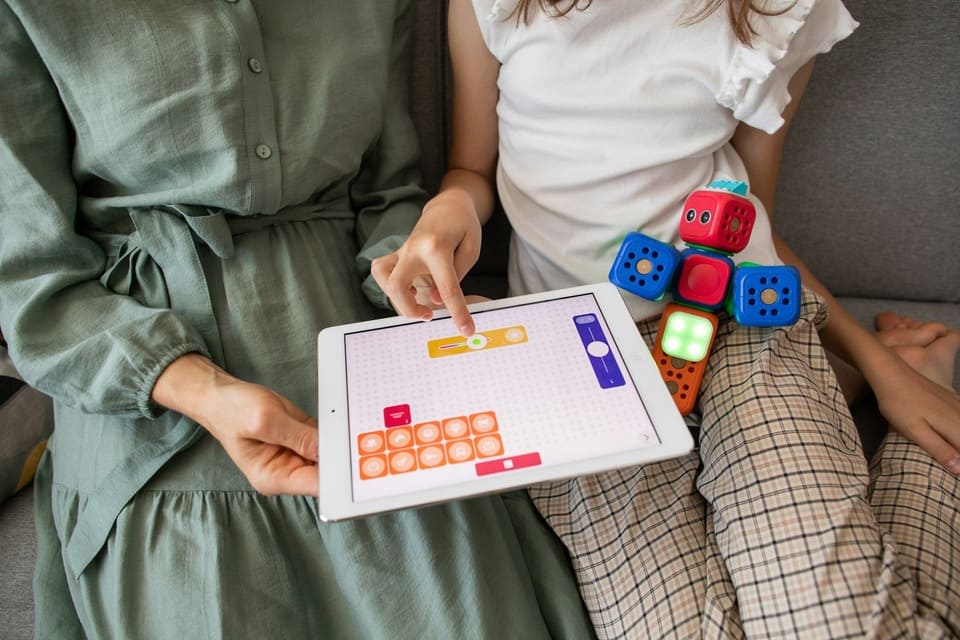
How AI Can Support Montessori Educators
Montessori teachers play a delicate yet powerful role in the classroom. They observe and adapt to each child’s learning journey, ensuring that no two students follow the exact same path. But with classrooms filled with diverse learners, keeping up with every child’s individual progress can be challenging. This is where Montessori AI can step in — not to replace the teacher, but to provide valuable insights, reduce repetitive tasks, and create even more space for meaningful, practical learning.
Customizing lesson plans — AI as a personalized teaching assistant
Wouldn’t it be amazing if teachers had a digital assistant that could track each student’s strengths and challenges in real time? AI-powered learning tools can analyze how children interact with materials, recognizing patterns that might take days — or even weeks — for a teacher to notice.
For example, if a child consistently struggles with early math concepts but excels in language, an AI system could suggest specific Montessori materials to reinforce numeracy skills while allowing language learning to continue flourishing. Similarly, if a student quickly grasps a concept, AI can recommend more advanced activities to maintain engagement.
But don’t worry — this doesn’t mean AI is making decisions for the teacher. It’s simply offering suggestions based on data, allowing Montessori educators to make even more informed choices while still trusting their instincts and experience.
Reducing administrative tasks — More teaching, less paperwork
Montessori educators know that teaching is only part of the job. Record-keeping, tracking student progress, and preparing individualized learning plans take hours of behind-the-scenes effort. AI-powered systems can automate these tasks, freeing up time for what truly matters — direct interactions with students.
Imagine a system that automatically:
- Records student progress and updates learning journals
- Identifies patterns in behavior or performance
- Generates reports to help teachers tailor learning experiences
Instead of spending time manually tracking which materials a child has mastered, AI can instantly provide an overview of their progress, allowing educators to focus on engagement rather than paperwork.
Identifying struggling students faster — Early intervention, better support
One of the most critical roles of a Montessori guide is recognizing when a child needs additional support. However, some challenges — such as difficulties with focus, processing speed, or concept retention — can be subtle and easy to overlook in a busy classroom.
AI can help identify these challenges earlier, providing teachers with:
- Real-time insights on how often a child interacts with certain materials
- Pattern detection to spot consistent struggles or gaps in understanding
- Personalized recommendations for alternative learning approaches
With so many benefits, AI seems like an incredible tool for Montessori teachers. But can it ever replace human intuition and the deep observational skills that define Montessori education? That’s the next question we need to explore.
Challenges and ethical dilemmas of using AI in Montessori teaching
Human connection, careful observation, and practical experiences are the cornerstones of Montessori education. However, the rise of AI brings a challenge:
Will AI replace human intuition and disrupt the natural learning process?
Montessori educators are keen observers. They don’t just track how a child completes a task; they notice body language, frustration levels, curiosity shifts, and the small details that make each learner unique. AI might be able to detect patterns, but can it truly understand a child’s emotions and personal growth?
For instance, AI could flag that a child is taking longer to complete a puzzle. But a skilled Montessori teacher might see beyond the data — perhaps the child is lost in deep concentration, developing patience, or experimenting with a new strategy. An algorithm might suggest intervention, but a teacher might recognize a breakthrough moment.
This is where balance is key. AI should support teachers, not make decisions for them. The moment we let AI dictate educational choices without human judgment, we risk losing the heart of Montessori education.
Bias in AI algorithms: Can it treat every child fairly?
AI is only as unbiased as the data it learns from — and that’s a problem. What if AI reinforces stereotypes, misinterprets learning behaviors, or favors certain students over others?
For example, an AI-powered assessment tool might struggle to recognize learning styles that don’t fit standard patterns. A child who takes an untraditional approach to solving problems might be flagged as struggling, when in reality, they are thinking creatively.
Montessori education embraces diversity in learning styles — AI must do the same. Educators must question and monitor how AI systems assess students to ensure every child is valued for their unique abilities, not just their ability to fit a data model.
Dependence on technology: Are we losing Montessori’s core values?
AI can be incredibly helpful, but what happens when teachers become too reliant on it?
Montessori educators are trained to observe, adapt, and engage based on a deep understanding of child development. If AI starts making too many decisions — suggesting materials, pacing lessons, or evaluating progress — the teacher’s role may shift from an engaged guide to a passive overseer.
There’s also the risk that children become too accustomed to AI-driven feedback, expecting instant answers rather than learning through trial and error. Montessori values the process of struggle and discovery. If AI smooths out too many challenges, are we robbing children of the chance to develop resilience?
So, AI should never replace the Montessori method — it should only be a tool that gently supports it. Thoughtful integration can enhance learning, reduce administrative burdens, and support personalized education without taking away what makes Montessori special.
So what’s working right now? Let’s look at real-world Montessori AI experiments, where technology is being used to enhance — not replace — the principles of Montessori education.
Real-world Montessori AI experiments
AI in Montessori education isn’t just an idea — it’s already happening! Around the world, educators are testing, refining, and integrating AI tools in ways that complement Montessori principles rather than replace them.
From Switzerland’s AI Montessori School to global initiatives like HundrED, innovative educators are finding ways to harness Montessori AI for personalized learning, creative exploration, and teacher support. But how does it work in practice? Let’s explore some of the most exciting real-world experiments in AI-powered Montessori education.
The AI Montessori School
Imagine a Montessori classroom where children don’t just consume AI-generated content but actively shape it. That’s exactly what’s happening at the AI Montessori School in Switzerland, where educators are testing how AI tools like Krea can enhance learning without taking away the child’s independence.
Krea is an AI-powered tool that allows students to co-create stories, designs, and even small projects with AI assistance. But here’s the important part — AI doesn’t do the thinking for them. Instead, it acts as a responsive partner, offering suggestions, inspiring creativity, and helping students develop ideas.
For example, a child might start drawing a scene, and AI can suggest ways to expand the story. Or, a student composing a melody can get AI-generated harmonies to enhance their music. The result? A dynamic, interactive learning environment where AI enhances the creative process.
The HundrED Initiative
The HundrED Initiative is a global project exploring how AI can be integrated into Montessori classrooms without disrupting core values. Their research focuses on one key idea: AI should be a collaborator in learning, not a substitute for human interaction.
In some Montessori schools, educators are using AI-powered tools to:
- Enhance storytelling by allowing students to input ideas and generate narrative extensions
- Support problem-solving through interactive AI that suggests different approaches
- Encourage exploration by providing children with AI-generated challenges based on their interests
But the initiative is carefully monitored — educators ensure that AI never dictates learning paths and that it remains an optional enhancement rather than a requirement. This approach respects Montessori’s self-directed learning model while bringing new possibilities into the classroom.
Early Montessori AI Apps
AI is already making its way into Montessori classrooms through specialized learning apps designed to support educators and students. Below are some of the AI-powered Montessori tools:
- Playo Montessori Preschool 3-7. Designed for children aged 3 to 7, this app offers a variety of games that promote mental, physical, and social-emotional development. It features an AI system capable of interacting with preschoolers, providing a safe and engaging learning environment. Developed by Montessori educators, it includes 13 categories such as Coding and Logic, Language Development, and Practical Life, aligning with the Developmentally Appropriate Practice (DAP) principles.
- Montessori Guided Tool. This AI-powered tool offers insights into Montessori principles, assisting parents and educators in applying Montessori methods in modern contexts. It provides information on creating prepared environments, fostering self-directed learning, and understanding the benefits of Montessori education, serving as a virtual guide to Montessori philosophy.
- Montessorium. An AI-enabled flashcard experience that utilizes image-recognition intelligence and augmented reality to facilitate learning the Montessori way. Developed in collaboration with Y Media Labs, Montessorium offers responsive, education-based applications that have received recognition in various media outlets.
- Kids UP – Montessori Online. This app provides exercises designed to balance the development of both the right and left brain. With a scientifically-based structure, it applies proven methods of early education to enhance cognitive abilities, offering a range of activities that align with Montessori principles.
- Montessori Preschool. A comprehensive Montessori environment for children aged 3 to 7, this app allows kids to learn by doing. It includes regular updates and new content to keep the learning experience captivating, covering subjects like math, reading, and practical life skills through interactive activities.
Some Montessori schools are experimenting with apps that read children’s handwriting and offer real-time feedback or use AI speech recognition to help with early language development. The key takeaway? AI is most effective when it blends seamlessly into Montessori’s hands-on learning environment, enhancing engagement while keeping children in control of their own discoveries.
But there’s still one important question left: How do we ensure AI remains a tool rather than a crutch?
Conclusion: AI and Montessori — A careful balance
AI in Montessori education is a powerful tool, but not a replacement. It has the potential to personalize learning, foster creativity, and support teachers in ways that weren’t possible before. From customized lesson plans to AI-assisted storytelling, we’ve seen how technology can enhance a child’s educational journey. But where do we draw the line?
AI should never replace the human connection, sensory exploration, or independence that Montessori fosters. Instead, it should be a thoughtful companion — a tool that helps teachers and students without taking over.
For AI to truly serve Montessori education, we must be intentional and responsible in how we integrate it. Schools and educators should establish clear guidelines to ensure that AI:
- Respects the Montessori method and does not override child-led learning.
- Enhances rather than replaces hands-on, experiential education.
- Prioritizes ethics and privacy, protecting children’s data and development.
So, is Montessori AI the future of education? The answer isn’t black or white. AI is neither a silver bullet nor a disaster — it’s a tool. Its value depends entirely on how we choose to use it. When used wisely, it can empower both students and educators, opening new possibilities while staying true to the Montessori philosophy.
The next step? Thoughtful, ethical, and balanced implementation — because the future of Montessori education isn’t about choosing between AI and tradition. It’s about finding a way for them to work together, seamlessly and purposefully.
Interested in learning more about Montessori education and how it nurtures a child’s natural curiosity and independence? Visit the Montessori Family Center to explore a world where practical learning, creativity, and personalized growth come together! Whether you’re a parent, educator, or simply curious about the Montessori method, you’ll find valuable resources to guide you.
FAQ: Montessori AI and education
1. What is Montessori AI?
Montessori AI refers to artificial intelligence tools designed to complement Montessori education by personalizing learning experiences, assisting teachers, and supporting self-directed discovery. These tools help adapt lessons to each child’s pace while maintaining Montessori’s emphasis on hands-on learning.
2. Can AI replace Montessori teachers?
No. AI should support, not replace, Montessori educators. While AI can automate assessments and suggest activities, human connection, careful observation, and guidance remain irreplaceable. Teachers play a crucial role in understanding emotions, fostering creativity, and guiding real-world learning.
3. How does AI fit into Montessori’s hands-on learning approach?
AI in Montessori should enhance learning without replacing tactile experiences. It can be used for adaptive learning, personalized recommendations, and creative expression (e.g., AI-assisted storytelling or coding). However, children should always engage with real-world materials before digital alternatives.
4. What are the benefits of AI in Montessori education?
Personalized learning — AI adapts activities to each child’s pace.
Fostered creativity — AI tools can enhance storytelling, art, and coding projects.
Support for neurodiverse learners — AI adjusts teaching strategies to individual needs.
Reduced administrative tasks — Teachers can spend more time with students.
5. Are there any risks of using AI in Montessori classrooms?
Yes. The biggest concerns include screen time overuse, over-reliance on AI for learning, potential bias in AI recommendations, and privacy risks. Educators must monitor AI use carefully to ensure it aligns with Montessori values.
6. How much screen time should children have when using AI in Montessori?
0–2 years: No AI exposure.
3–5 years: 25–60 minutes/day, with supervision and hands-on activities.
6–12 years: 1–2 hours/day, AI should be used for educational purposes.
13–18 years: 2–3 hours/day, AI should be an additional tool, not a primary resource.
7. What are some Montessori AI tools available today?
There are several AI-powered Montessori tools, including:
Playo Montessori Preschool 3–7 — AI-based preschool activities.
Montessori Guided AI Tool — AI-powered Montessori learning insights.
Montessorium — AI-enhanced flashcards and AR experiences.
8. How can parents introduce AI in a Montessori-friendly way?
Ensure real-world learning comes first. AI should only enhance — not replace — real-world exploration.
Use AI interactively. Encourage discussions and creative projects rather than passive screen use.
Set screen-time limits. Follow age-based recommendations to ensure a balanced experience.
9. How does AI help neurodiverse children in Montessori education?
AI can adapt learning experiences based on a child’s needs. For example, AI-powered speech assistants help children with language delays, while personalized learning paths assist students with ADHD or dyslexia. AI ensures every child gets the support they need at their own pace.
10. What is the future of AI in Montessori education?
AI’s role in Montessori education will continue to evolve, but its success depends on thoughtful integration. The future lies in AI tools that enhance creativity, support educators, and personalize learning, without replacing the essential experiences that define Montessori.
References and further reading
For those interested in exploring Montessori AI in greater depth, here are some insightful resources that discuss the opportunities, challenges, and real-world applications of AI in Montessori education.
Articles and research on Montessori AI:
- A detailed look at how AI can be integrated into Montessori education, enhancing personalized learning and supporting teachers.
- This article explores AI’s role in adapting to students’ learning needs while preserving Montessori’s core values.
- A critical analysis of the potential risks and rewards of AI in Montessori classrooms.
- A statement from the American Montessori Society on the ethical implications of AI in education.
- A discussion on AI’s role in complementing Montessori techniques.
- A community discussion on the benefits and concerns surrounding AI in Montessori learning.
Case studies and real-world implementations:
- A pioneering school using AI tools like Krea to enhance creativity and co-learning while maintaining Montessori principles.