What makes education in Germany stand out on the global stage? Is it just the fact that public schooling is free, or is there something deeper, more structured, more thoughtful about how children learn and grow in this country?
Whether you’re a local navigating school enrollment, an expat looking to understand your child’s next steps, or a curious parent exploring alternatives like Montessori education, getting to know the German education system is more than helpful — it’s essential.
From the very first steps in daycare (Krippe) to the transition into elementary school (Grundschule) and beyond, the education system in Germany is remarkably well-organized. It provides children not only with academic knowledge but with clear, diverse pathways — whether that’s university, vocational training, or a hybrid of both. And yes, all this is often tuition-free, even through higher education!
But here’s the twist: not every child thrives in the same environment. That’s why more and more families — German and international alike — are turning to Montessori as a flexible, child-centered alternative.
In this guide, we’ll walk you through everything: how the German school system works, what to expect from preschool and daycare in Germany, and where Montessori fits in. If you’ve ever wondered, “Is this the right system for my child?” — this article is for you.
Let’s explore the full journey of education in Germany — and help you make the best choices for your family.
Is education free in Germany?
One of the most common — and exciting — questions families ask is: “Is education free in Germany?” The answer? Yes, it absolutely can be!
Germany is widely recognized for its tuition-free public education, which extends from primary school (Grundschule) all the way through university. That means your child can receive a high-quality, structured education without the burden of tuition fees that weigh heavily in other countries.
Sounds incredible, right? But what does “free” really mean?
Let’s break it down.
🎒 What’s truly free — and what’s not?
In the public school system, families do not pay for tuition. This includes access to lessons, school buildings, and teachers — all covered by the state. The goal of the German education system is to make learning accessible for everyone, no matter their background.
However, there are still some costs parents need to consider:
- School supplies like notebooks, pens, and sportswear;
- Lunch programs in all-day schools;
- After-school programs (Hort) can vary in price depending on the region;
- And most importantly, early education (Kita and Kindergarten) isn’t always fully free.
🧒 What about preschool and daycare?
Here’s where things get nuanced. Preschool in Germany (commonly referred to as Kindergarten, part of a Kita) is partially subsidized by the state, but not always fully free. Some federal states (like Berlin) offer completely free daycare, while others require income-based fees.
So, while education in Germany is broadly free, early childhood care (ages 0–6) may come with a price tag, especially in the private sector. It’s worth checking what your local municipality offers — you might be pleasantly surprised!
🏫 Public vs. private education in Germany: What’s the difference?
Germany’s public schools are the default option for most families, and rightly so — they’re well-funded and academically strong. But there are also private schools, including Montessori, Waldorf, and international schools.
Private options:
- Often have smaller class sizes;
- Emphasize alternative learning methods;
- Come with monthly tuition, typically ranging from €100 to over €1,000 depending on the institution.
But here’s a thought: Is paying always worth it? That depends on your child’s learning style, your values as a family, and whether you believe a more personalized approach like Montessori education in Germany might serve your child better.
So, let’s summarize: education in Germany is free, but not always entirely cost-free. The public system offers a strong foundation, while private options give you room to explore what suits your child best.
And isn’t that what education should be about — choosing what helps your child thrive? However, navigating this landscape for you as a parent may be challenging, especially if you are not familiar with its structure. So, let’s break it down.
Structure of the education system in Germany
The German education system is one of the most structured in the world. It’s designed to guide children step by step, offering both academic and vocational paths based on strengths, interests, and long-term goals.
Let’s explore each stage — and help you see where your child fits into this exciting learning journey.
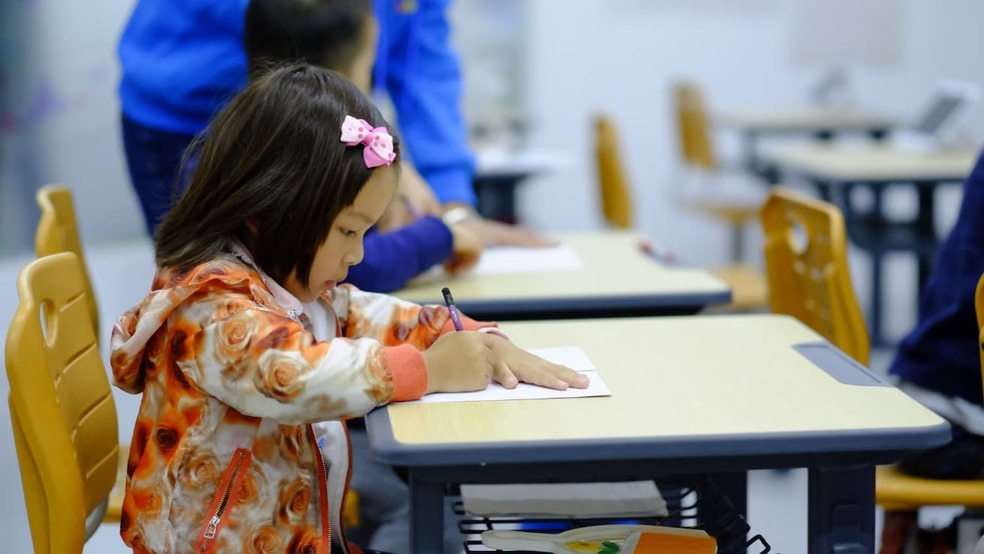
🧸 Early childhood education in Germany (ages 0–6): Kita
Before formal schooling starts, children attend early childhood education facilities — Kita — childcare from 0 to 6 years, which includes both Krippe and Kindergarten groups:
- Krippe (for ages 0–3) — infant care;
- Kindergarten (for ages 3–6) — preschool-like preparation for school, focused more on play-based learning and social development.
While not mandatory, this phase is incredibly important for developing social, emotional, and basic cognitive skills. Montessori programs are common here, but we will focus on their integration below.
📚 Primary education (ages 6–10): Grundschule
At age 6, children begin Grundschule, the primary school stage that lasts for four years: Grades 1–4.
Here, they build foundations in:
- Reading and writing;
- Math;
- Social studies;
- Arts and physical education.
And here comes a big question for parents: What comes after Grundschule?
🧭 Lower secondary education: Three possible paths
At the end of Grade 4, families (with guidance from teachers) choose one of three educational tracks based on the child’s academic performance, learning style, and potential.
Here’s how it breaks down:
- Hauptschule – A lower secondary school focusing on practical education, typically leading to vocational training.
- Realschule – A mid-level secondary school offering both academic and practical subjects, preparing students for technical careers or higher vocational education.
- Gymnasium – An academically-oriented secondary school preparing students for university, ending with the Abitur qualification.
We describe each path below.
🎓 Upper secondary and beyond: Vocational vs academic
After finishing lower secondary, students either:
- Enter Berufsschule (vocational school) and start apprenticeships through the dual system (learning + working);
- Or continue at Gymnasium or a specialized school to prepare for the Abitur — the diploma that opens doors to universities.
Germany’s dual education system is a global model for success. Students don’t just learn in classrooms — they gain real work experience while earning a wage.
Would your teen prefer hands-on experience over lectures? Then vocational training might be the perfect path!
✨ A system built around potential
The education system in Germany may feel structured, even a bit strict at times, but it’s incredibly flexible in the long run. Students can switch paths, catch up through bridge programs, or return to school as adults.
And with Montessori programs integrated at early and even primary levels, families can choose a route that nurtures independence, creativity, and lifelong learning.
Now, let’s focus more on how young children in Germany begin their educational journey.
Preschool and daycare in Germany (Kita: Krippe and Kindergarten)
Welcome to the world of Kita — short for Kindertagesstätte — Germany’s umbrella term for daycare and preschool services. It covers everything from infant care to preschool education, ensuring that every child has the opportunity to grow in a supportive, play-based environment before entering primary school. Kita refers to any formal care and early learning facility for children from a few months old up to school age (around 6). Some Kitas focus solely on younger children, others offer combined programs that carry children through from babyhood to their first day of school.
What unites them all is a shared philosophy:
- Learning through play;
- Encouraging independence, cooperation, and curiosity;
- Providing routines, rhythm, and emotional safety.
Whether your child is just learning to walk or is already singing songs in two languages, a Kita can offer the right environment to support their growth.
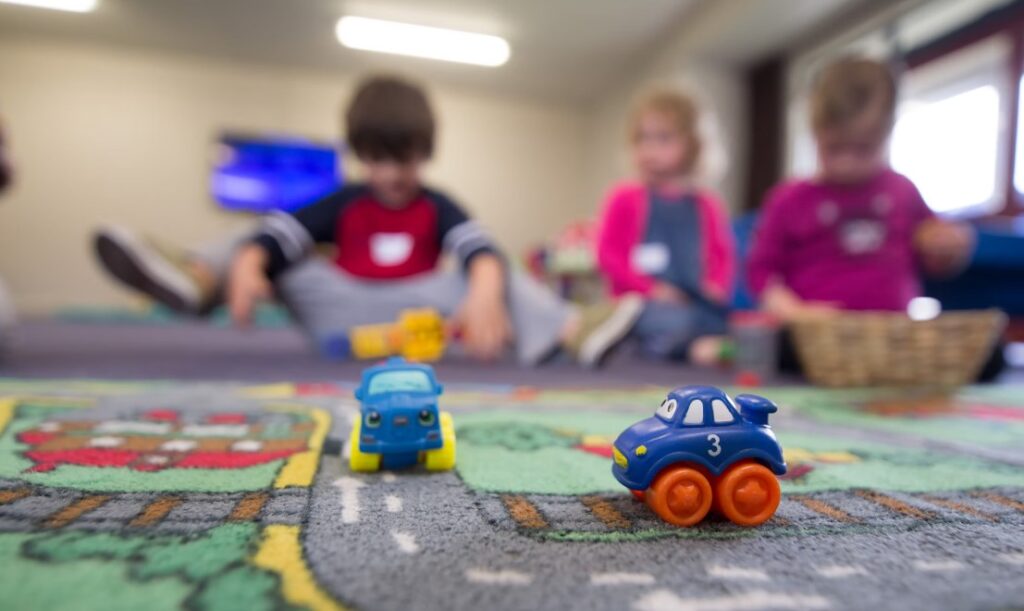
👶 Krippe: Gentle beginnings for the youngest learners
The Krippe is a specialized daycare group within the Kita designed for infants and toddlers under 3 years old. This is where babies get their first experience of structured care beyond the home — and it’s done with a deep sense of warmth and respect for their pace.
A Krippe day typically includes:
- Sensory play, music, and movement;
- Individual care routines;
- Close relationships with a small group of consistent caregivers.
For working parents, daycare in Germany often begins with Krippe. And yes, this German daycare is well-regulated, though places can be limited, especially in urban areas.
Is my child too young for daycare? That’s a question every parent asks. But in the right Krippe setting, children build trust, confidence, and a love of learning from the very start.
🎨 Kindergarten: Play-based preschool education in Germany
From age 3 until they start school, most children in Germany attend Kindergarten — the preschool phase of early education. Though not mandatory, Kindergarten is extremely popular, with over 90% of children enrolled.
So, what makes preschool in Germany so special?
- It’s not about academics. It’s about social and emotional development.
- Daily life is full of free play, music, nature walks, crafts, and storytelling.
- Children learn routines, group interaction, and foundational skills without tests or pressure.
Some Kindergartens follow classic models. Others embrace alternatives like Montessori education, offering even more child-led, self-paced learning environments. Montessori Kindergartens, in particular, are growing in popularity as parents look for settings that nurture independence and intrinsic motivation.
💰 Costs, waiting lists, and choosing the right path
Let’s talk practicalities — because while education in Germany is generally free, early childhood care isn’t always.
- Public Kitas: Subsidized by the state, often with income-based fees. Some federal states (like Berlin) offer free daycare for all.
- Private and Montessori facilities: Higher costs, typically €200–€1,000/month depending on location and services.
- Waiting lists: Yes, they’re real — especially in larger cities. Apply early, and apply widely.
Tip: Start your application process through your local Jugendamt (youth welfare office), and don’t hesitate to tour several options to see which environment fits your child best.
From Krippe to Kindergarten, the early years in Germany are all about nurturing curiosity and joy. Whether in a state-run Kita or a private Montessori preschool, your child will be immersed in a world of discovery. No grades. No stress. Just a beautiful beginning — the way childhood should be. What comes next?
Starting school in Germany: Grundschule and education beyond
In Germany, children begin their formal learning journey at around age 6, when they enter Grundschule — the country’s primary school. This moment marks an important transition: from the playful world of Kindergarten to structured classroom learning. Let’s walk through what the school years look like, step by step.
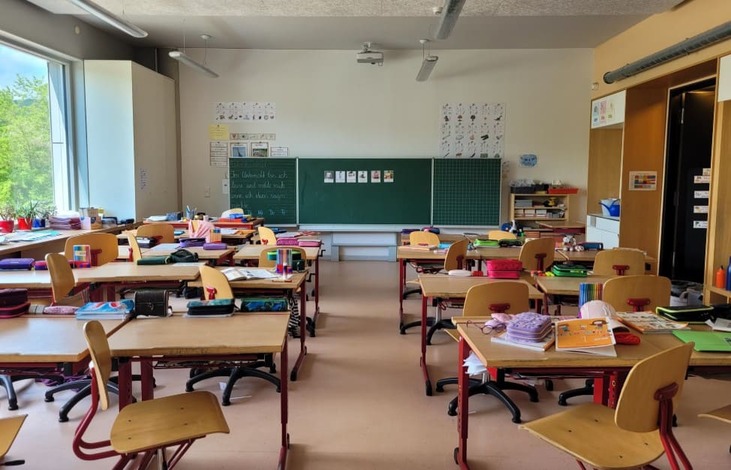
📘 Grundschule (grades 1–4): The foundation years of education in Germany
For most children, Grundschule begins in the autumn after their sixth birthday. This stage lasts four years and is the same for everyone, regardless of region.
Here’s what children typically experience in Grundschule:
- A class teacher who stays with them for multiple years;
- Core subjects like German, math, science, music, art, and PE;
- A strong focus on reading, writing, and building confidence in learning.
Many schools also introduce foreign languages (usually English) and include group projects, theater, and hands-on learning. And while there are regular assessments, children aren’t overwhelmed with grades in the early years. Isn’t it reassuring to know that the first years of school are built on care and continuity?
📚 What comes after? Choosing a path at age 10
At the end of Grade 4, things start to branch out. Based on the child’s academic performance and teacher recommendations — and sometimes with family input — students enter one of several school types. These paths vary slightly depending on the federal state, but here’s the general structure:
| School Type | Grades | Focus | Goal |
| Hauptschule | 5–9 or 10 | Practical, slower-paced learning | Vocational training, trade professions |
| Realschule | 5–10 | Mix of academic and career-focused subjects | Vocational training, technical careers |
| Gymnasium | 5–12 or 13 | Academic, university preparation | Higher education (after the Abitur) |
| Gesamtschule | 5–12/13 | Comprehensive school combining all three paths | Offers multiple qualifications and flexibility |
Sounds like a lot to decide at 10, right? But don’t worry — students can often switch tracks later, and many programs support second chances and reorientation.
🗺️ Regional differences: Not all states are the same
Germany is a federal country, which means each state (Bundesland) manages its own education policies. So, while the country’s education system follows a shared framework, the details can vary from region to region.
For example:
- In Bavaria, the system is more traditional, with early tracking and strong academic rigor in the Gymnasium.
- In Berlin and Brandenburg, children attend Grundschule for six years, not four, and then enter integrated secondary schools (like the Gesamtschule).
What does this mean for families moving across states? It’s a good idea to research your specific region’s school structure or ask your local school office for guidance.
And if you’re an expat family: Yes, you can still enroll in the public system — but international and bilingual schools are also widely available in urban areas.
🧭 A structured system, built for all paths
One of the most unique things about education in Germany is how it embraces different strengths and future goals. Whether your child dreams of university, craftsmanship, science, or the arts, there’s a path designed to support them.
And don’t forget — free education in Germany doesn’t stop at secondary school. Public universities are also tuition-free, making the system truly lifelong. What place does Montessori education have in this system? Let’s find out!
Alternative path: The role of Montessori in German education
Montessori has a long history in Germany. In fact, the first Montessori classroom opened in the 1920s, and despite political challenges in the early 20th century, the movement reemerged stronger than ever after World War II.
Today, Germany is home to:
- Over 1,000 Montessori institutions, including preschools, primary, and secondary schools
- Public, private, and independent Montessori facilities across nearly every federal state
- A strong national organization, Montessori Deutschland, which supports training, certification, and school development.
Montessori education in Germany is thriving, especially among families seeking child-led alternatives to the structured German education system. Take a deeper look at the full Montessori curriculum — from practical skills to academic foundations.
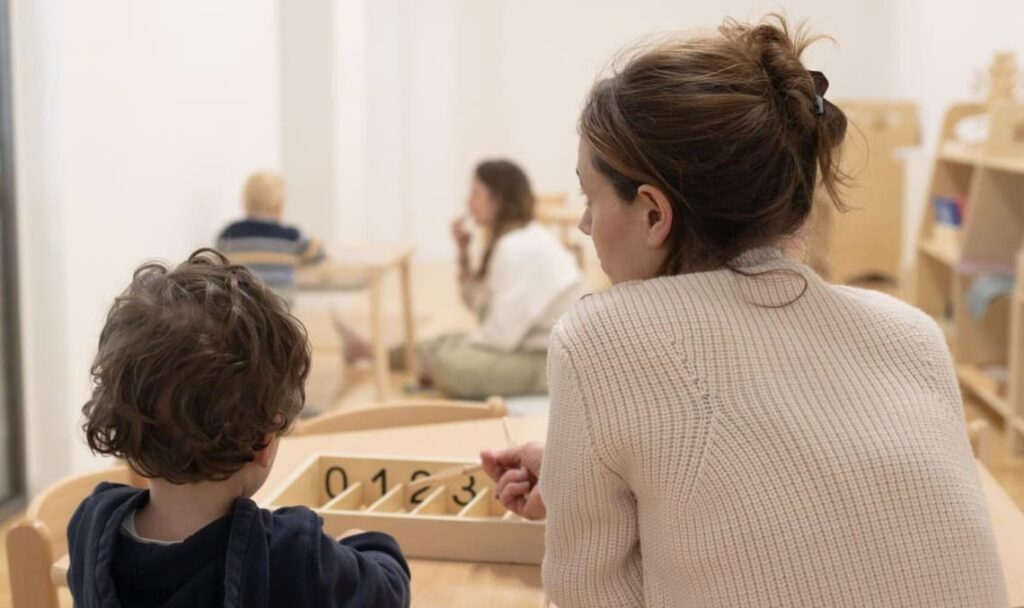
🔍 How is Montessori different from standard education in Germany?
Let’s compare what a typical school day might look like in a Montessori classroom vs. a public school:
| Montessori | Traditional German School |
| Mixed-age groups | Single-grade classes |
| Individualized learning plans | Standardized curriculum |
| No grades or tests | Regular assessments and reports |
| Freedom to choose activities | Fixed lesson plans |
| Focus on independence and responsibility | Teacher-directed instruction |
Montessori isn’t “easier” — it’s just designed around the child. Children still learn math, language, science, and art — but they do it when they’re ready, using concrete materials that make abstract ideas click.
Could your child benefit from learning in a space that respects their pace?
🎓 Is Montessori officially recognized in Germany?
Yes — and this is important.
- Montessori diplomas issued by recognized training institutions in Germany (and internationally) are accredited by Montessori Deutschland and the global umbrella body, AMI (Association Montessori Internationale).
- Many Montessori schools in Germany are part of the official education system, especially those that are publicly funded or hybrid models.
- Students can still take part in state examinations (like the Abitur or Realschulabschluss) through adapted programs or external exams.
So while the learning style is different, the qualifications and outcomes remain compatible with the wider system.
🌟 The Montessori choice: Is it right for your family?
Montessori schools in Germany aren’t for everyone, and that’s okay. Some children thrive in structured academic environments. But for others, Montessori offers a nurturing alternative where emotional development is just as valued as academic progress.
Ask yourself:
- Does your child need more freedom to explore?
- Do they feel overwhelmed in large or fast-paced classrooms?
- Would they benefit from learning in a peaceful, respectful, curiosity-driven space?
If you answered yes to any of these, it might be time to look into Montessori in Germany.
🕰️ When should a child start Montessori?
Is there a perfect age to start Montessori? The answer might surprise you: as early as possible, but it’s never too late.
In Germany, Montessori education is offered across a full range of age groups — from babyhood through secondary school. Here’s how it typically breaks down:
- Montessori Krippe (ages 0–3): Focused on emotional bonding, gross motor skills, and sensory exploration.
- Montessori Kindergarten (ages 3–6): Introduces classic Montessori materials, early math, language, and practical life skills — all at the child’s pace.
- Montessori Grundschule (ages 6–10+): Builds on concentration, self-direction, and deepening academic understanding.
So, when’s the best time to begin? The earlier a child enters a Montessori environment, the more naturally they absorb its rhythms. But even older children benefit, especially those who’ve felt stressed or overlooked in conventional classrooms.
Ask yourself: Does my child need more time to think? To move? To choose? Then Montessori might be a wonderful place to begin, no matter their age.
🔄 Can Montessori be combined with traditional German education?
Absolutely. In fact, many families in Germany blend Montessori and traditional education — either by choice or because their local school system doesn’t offer Montessori beyond a certain stage.
Here’s how that might look:
- A child attends a Montessori Kita or Kindergarten, then transitions into a regular Grundschule at age 6.
- Some children switch from public to Montessori if they struggle with structure or pace in the mainstream classroom.
- Others start in Montessori, move into a traditional Gymnasium, and continue on to university, fully equipped with confidence and independent thinking skills.
Is the switch challenging? Sometimes. But Montessori students are known for their adaptability. They’re used to thinking for themselves, organizing their time, and working independently, which often makes them thrive even when the environment changes.
Many public schools in Germany are also adopting Montessori-inspired practices: group work, project learning, or open classroom formats. So blending both worlds has never been more possible — or more powerful.
Pros and cons of education in Germany (and where Montessori fits)
Germany’s education system is often praised — and for good reason. It’s well-structured, mostly free, and offers clear pathways for every type of learner. But is it perfect? Like any system, it has its strengths and its challenges.

✅ Strengths of the German education system
It’s hard not to admire how organized and thoughtful the education system in Germany is. From the start, children are placed on clear learning tracks designed to match their needs, interests, and goals.
Here’s what works especially well:
- Structure and predictability. The system offers a consistent framework nationwide, with clear expectations at each stage.
- Free access to education. Public schooling — including many universities — is tuition-free. Families save thousands compared to systems elsewhere.
- Multiple career pathways. Academic learners can pursue Gymnasium and university, while practically minded students thrive in vocational training through the dual education system.
And there’s more: teachers are highly qualified, and Germany invests significantly in educational infrastructure. For many children, it’s a strong, stable place to grow and succeed.
But what about those who don’t quite fit the mold?
⚠️ Weaknesses: Early tracking, pressure, and inequality
The system’s strength can also be its greatest challenge.
At just 10 years old, children are placed on separate tracks (Gymnasium, Realschule, Hauptschule). But can we really know a child’s full potential at that age?
- Early tracking can feel unfair, especially for late bloomers or children from non-academic households.
- Children of immigrants or low-income families often face hidden disadvantages, despite the promise of free education in Germany.
- The structure can be rigid, with limited room to pause, explore, or change direction, especially in competitive school environments.
So what happens if your child needs more time? More freedom? A different rhythm?
🌿 Where Montessori fits into the education in Germany
That’s where Montessori in Germany offers an inspiring alternative. Montessori schools flip the script. Instead of placing children on fixed academic tracks, they focus on:
- Child-led learning: Children choose their activities, guided by interest and ability — not by age.
- Inclusive pacing: There’s no rush. No pressure. Just time to explore deeply.
- No early grading or competition: Montessori schools use observation and narrative feedback, not grades or rankings.
- Emotional and social development: Equal in importance to math or reading.
Montessori classrooms are calm, ordered, and full of purpose. Children learn to trust themselves, collaborate with peers, and take pride in their progress, without fear of “falling behind.” Follow this guide to learn more about the benefits of Montessori education.
🌟 Structure, freedom, or both?
The truth is: no system is perfect for every child. But Germany’s educational landscape is evolving. More parents are mixing traditional schooling with Montessori values at home. More teachers are adopting Montessori-inspired practices — even within state schools (learn more about what a Montessori teacher is).
So maybe the real question isn’t “Which system is better?” but “How can we create the right environment for each child?”
If you believe learning should be joyful, purposeful, and personal, Montessori might just be your perfect fit.
Final words: What’s the future of education in Germany?
What will education in Germany look like in five, ten, or twenty years? Will it still follow the same structure, or are we already seeing something new take root?
If you look closely, the answer is clear: change is in the air.
💻 Digital classrooms, global perspectives
Germany’s schools are steadily embracing digitalization — not just in high schools and universities, but even in primary classrooms. Tablets, interactive whiteboards, and blended learning tools are becoming more common, helping teachers personalize lessons and connect with students in new ways.
At the same time, there’s a noticeable rise in bilingual education and international curricula. More schools — public and private — are offering English-German tracks to reflect Germany’s multicultural society.
Isn’t it exciting to think your child could grow up truly bilingual, comfortable with tech, and confident in a global world?
🌍 Toward inclusion and flexibility
Gone are the days when one-size-fits-all education made sense. Today’s Germany is moving toward inclusive schooling, where children with diverse abilities, languages, and needs can learn side by side.
More states are investing in:
- Integration classes for children with disabilities;
- Support for multilingual learners;
- Alternative education models like forest schools, project-based learning, and, of course, Montessori.
This shift reflects a powerful truth: every child learns differently, and the German education system is beginning to honor that.
🌱 The Montessori moment
As traditional schools adapt, Montessori in Germany is gaining momentum. What was once considered “alternative” is now being recognized as deeply aligned with the future of education: child-centered, emotionally intelligent, and purposeful.
Montessori schools are expanding, not just in big cities but in smaller towns, too. And public awareness is growing — parents are asking new questions:
- What if learning didn’t have to feel like a race?
- What if my child could thrive by following their own curiosity, not just a curriculum?
More and more, the answer is Montessori. Visit our Montessori Family Center to learn more about this approach to education.
🌟 Looking ahead — with hope and intention
So, where are we headed? Toward a more flexible, inclusive, and inspired approach to learning. One where daycare in Germany isn’t just care — it’s the start of a joyful educational journey; where preschool in Germany blends exploration and empathy; where education in Germany becomes not only tuition-free, but truly barrier-free.
Whether your child starts in a Montessori Kita or a public Gymnasium, the future belongs to families who ask: What kind of education brings out the best in my child?
And isn’t that the most important question of all?
Frequently asked questions about education in Germany
1. Is education in Germany really free?
Yes, public education in Germany — including most universities — is tuition-free for both residents and many international students. However, families may still pay for materials, daycare, or after-school care.
2. At what age do children start school in Germany?
Children typically start Grundschule (primary school) at age 6. Before that, most attend Kita, which includes Krippe (0–3 years) and Kindergarten (3–6 years).
3. What is the structure of the education system in Germany?
The Germany education system starts with Grundschule (Grades 1–4), then splits into Hauptschule, Realschule, Gymnasium, or Gesamtschule depending on a child’s academic path and region.
4. How do I enroll my child in a Montessori school in Germany?
Parents can apply directly to Montessori schools in Germany, which may be private, public, or partially subsidized. It’s best to contact the school early, as spots can be limited.
5. Is Montessori education recognized in Germany?
Yes, Montessori education in Germany is well established and accredited. Students can transition into public schools or take recognized exams such as the Abitur, depending on the school structure.
6. What’s the difference between Kita and Kindergarten in Germany?
Kita (Kindertagesstätte) is the umbrella term for early childhood care, including Krippe (0–3) and Kindergarten (3–6). Kindergarten is the preschool phase before entering primary school.
7. Are there bilingual or international schools in Germany?
Yes! Germany has many bilingual schools, international schools, and Montessori schools that offer instruction in both German and English, especially in major cities.
8. What are the pros and cons of the German education system?
Pros include free education, clear structure, and strong vocational pathways. Cons include early academic tracking, regional differences, and limited flexibility in some cases.
9. Can children switch school types in Germany?
Yes, while the system is structured, students can often switch from Realschule to Gymnasium, or from public schools to Montessori or alternative models, with the right academic support.
10. Is daycare in Germany easy to access?
Daycare in Germany can be competitive, especially in cities. While public Kitas are subsidized, waiting lists are common. Early registration through your local Jugendamt is highly recommended.
References and further reading
- German Education System – Studying in Germany. An in-depth overview of the German school structure, from early education through higher education, including insights into vocational pathways and public university access.
- School System – Make It in Germany. A government-backed resource for families and expats, explaining how the education system is organized and what to expect at each stage of a child’s development.
- Childcare in Germany. Covers types of childcare available across Germany, including Kita, Tagesmutter (day mothers), and support services for multilingual or migrant families.
- Early Childhood Education. A structured breakdown of Germany’s early childhood education system within the broader EU context, including regulatory frameworks and quality standards.
- Pre-school in Germany. Explores the philosophy and practice of early education in Germany, highlighting differences between states and approaches to preschool readiness.
- Daycares and Preschools – Expatica. A helpful guide for international families navigating the daycare and preschool system in Germany, including cost breakdowns and enrollment tips.
- German School System – Expatrio. Explains the structure of the German education system, with practical advice for students and parents relocating to or living in Germany.