As a parent, you want to give your child the best start in life. But with so many educational approaches available, how do you decide which one fits? “Is Montessori right for my child?” This question crosses the minds of many parents looking for an alternative to traditional education.
Montessori education has been growing in popularity as more parents recognize the benefits of personalized, child-led learning. Many successful entrepreneurs and innovators credit their Montessori background for developing critical thinking, problem-solving skills, and independence. But does this mean Montessori is right for your kid? Not necessarily — every child is unique, and the best education is one that aligns with their learning style.
In this guide, we’ll explore how to determine if a Montessori school is right for your child, breaking down the key factors that make Montessori a great (or not-so-great) fit. Ready to find out? Let’s dive in!
What is Montessori education?
Montessori education is a child-centered learning approach designed to foster independence, curiosity, and a lifelong love of learning. Developed by Dr. Maria Montessori, an Italian physician and educator, this method is based on years of scientific observation of how children naturally learn. Dr. Montessori believed that every child has an innate desire to explore, discover, and understand the world around them, and that education should support this natural development rather than impose rigid structures.
Her method emphasizes learning through experience, self-directed activities, and respect for each child’s natural development. Instead of following a standardized curriculum, Montessori classrooms allow children to make choices, engage in purposeful work, and develop problem-solving skills through hands-on exploration.
The Montessori learning approach: More than just a classroom
Imagine a learning environment where your child is free to move, choose activities that excite them, and discover new concepts through experience rather than memorization. That’s the heart of the Montessori teaching method.
In a Montessori classroom, learning happens naturally — children engage with carefully crafted materials that stimulate critical thinking, creativity, and problem-solving skills. Instead of rigid lesson plans, teachers act as guides, helping students explore subjects in a way that makes sense to them.
But what makes this approach truly unique? Let’s explore the core principles that define the Montessori learning experience.
Core principles of Montessori education
Montessori education incorporates a few key principles that create an engaging and empowering learning experience:
- Child-Led Learning – Children choose their activities based on their interests, which fosters a love for learning and intrinsic motivation.
- Hands-On Experiences – Montessori materials are designed to be touched, moved, and manipulated, helping kids grasp abstract concepts in a concrete way.
- Mixed-Age Classrooms – Younger children learn from older peers, while older children reinforce their knowledge by teaching younger ones. This builds cooperation and social confidence.
- Independence & Responsibility – Montessori students take ownership of their learning, making decisions, solving problems, and managing their time — all essential life skills.
- Respect for a Child’s Pace – There are no rigid deadlines. Children are encouraged to master concepts fully before moving on, reducing stress and building deep understanding.
Why parents love Montessori
Parents who choose Montessori often rave about how it nurtures confidence, independence, and a true joy for learning. Instead of pressuring children to fit into a set curriculum, Montessori allows them to explore, ask questions, and grow at their own speed.
How do you know if Montessori is right for your child? Let’s find out!
Signs that Montessori might be a good fit for your child
Every child is unique, but certain characteristics can indicate that a Montessori learning environment would be a great fit. If you’re wondering, “How to know if Montessori is right for my child?”, take a look at the following signs:
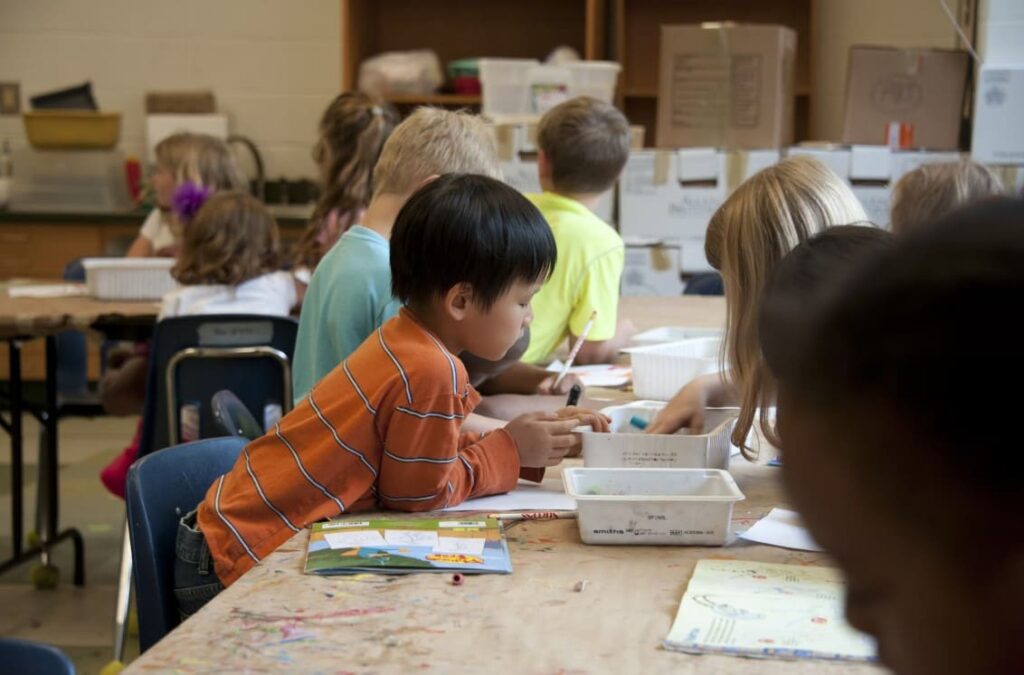
✅ They enjoy self-directed learning. Some children naturally take initiative in learning, choosing activities that interest them and staying engaged for long periods. If your child prefers exploring topics independently rather than waiting for instructions, Montessori’s child-led approach could be a perfect match.
✅ They love hands-on learning. Does your child prefer touching, building, and experimenting rather than just listening and watching? Montessori classrooms use specially designed materials that make learning tactile and interactive, helping children understand concepts through experience rather than memorization.
✅ They are naturally curious. Is your child always asking “why?” or eager to explore new things on their own? Montessori fosters curiosity by allowing children to follow their interests, dive deeper into subjects, and develop a love of learning that lasts a lifetime.
✅ They prefer working at their own pace. Some children struggle in environments where everyone is expected to move at the same speed. Montessori allows children to progress at their natural rhythm, ensuring they master concepts before moving forward. This eliminates unnecessary pressure while building confidence.
✅ They don’t thrive in rigid classroom structures. If your child dislikes strict schedules, sitting at a desk for long periods, or following rigid instructions, they may do better in a Montessori environment.
✅ They are independent and enjoy making choices. Montessori places a strong emphasis on self-sufficiency. Children make decisions, solve problems, and take responsibility for their learning. If your child naturally enjoys doing things on their own, Montessori will reinforce this strength.
✅ They learn best through experience rather than memorization. Does your child understand new concepts better when they can see, touch, or do something themselves? Montessori’s focus on real-world, hands-on learning makes abstract ideas easier to grasp and apply.
✅ They benefit from mixed-age social settings. Montessori classrooms bring children of different ages together, allowing younger students to learn from older ones and older students to reinforce their knowledge by helping younger peers. This structure fosters cooperation, mentorship, and social confidence.
What if my child doesn’t show these signs?
Even if your child doesn’t display all these traits, Montessori can still be beneficial. Some children grow into independence, curiosity, and hands-on learning when placed in the right environment. Montessori isn’t just about fitting a certain mold — it’s about nurturing each child’s strengths and encouraging their natural development. However, it may not be ideal for every child.
When Montessori may not be the best fit
Some children thrive in structured environments where teachers take the lead, while others prefer clear rules, set schedules, and direct instruction. If you’re wondering, “When Montessori doesn’t work?”, consider the following signs that a different learning approach might be better for your child:
❌ Your child thrives on structure and clear expectations. Some children feel most comfortable when they know exactly what to do, when to do it, and how to do it. Montessori classrooms encourage freedom within limits, but if your child prefers a more structured, teacher-led environment, they may find the flexibility overwhelming.
❌ They struggle with too much independence. Montessori schools promote self-directed learning, where children choose activities and take responsibility for their progress. But what if your child needs constant guidance, reminders, and close supervision? If they find it difficult to work independently for long periods, a traditional setting with step-by-step instruction might be a better fit.
❌ They prefer direct instruction over exploration. Some kids love learning by doing, but others prefer clear explanations, lectures, and structured lessons before jumping into an activity. Montessori relies on hands-on exploration rather than direct instruction, so if your child enjoys listening to a teacher explain a concept before practicing it, they may struggle in this environment.
❌ They feel uncomfortable in mixed-age classrooms. Montessori classrooms group children into multi-age groups where younger students learn from older peers. This setup encourages collaboration and mentorship, but some children feel more comfortable learning alongside kids their own age rather than interacting with younger or older classmates.
❌ They need a lot of external motivation. In Montessori, there are no grades, gold stars, or traditional rewards — the focus is on internal motivation and the joy of learning. If your child needs external incentives like grades, praise, or competition to stay engaged, they may find Montessori’s self-driven approach challenging.
Even if these challenges resonate with your child, it doesn’t mean Montessori is entirely out of the question. Every child is different, and some adapt to Montessori over time. Visiting a school, speaking with teachers, and even trying Montessori-inspired activities at home can help you gauge whether this approach could still work for your family.
Addressing common concerns about Montessori
Montessori education offers a unique approach to learning, but many parents have concerns before making the switch. Let’s clear up some common questions and misconceptions.
Can my child transition from Montessori to traditional school?
Yes! Montessori students can successfully transition to traditional schooling, but there are factors to consider:
- Adaptability: Montessori fosters independent thinking, problem-solving, and self-discipline, which helps children adjust to new learning environments.
- Structure Differences: Montessori lacks grades, strict schedules, and teacher-led instruction, so children may need time to get used to standardized tests and fixed curricula.
- Social & Academic Growth: Many children transition smoothly because Montessori builds confidence, curiosity, and resilience, all of which support lifelong learning.
If you anticipate a transition, gradually introduce structured learning at home to help your child adjust.
Will Montessori prepare my child for real-world challenges?
Absolutely — but in a different way than traditional schools. Instead of focusing on test scores, memorization, or standardized benchmarks, Montessori education builds real-life problem-solving skills, independence, and adaptability.
🧠 Critical Thinking: Montessori encourages children to ask questions, explore solutions, and think creatively, making them resourceful in any situation.
🤝 Collaboration & Communication: Mixed-age classrooms teach teamwork, leadership, and conflict resolution, preparing kids for diverse workplaces.
🎯 Self-Motivation: Montessori students learn how to manage their time, take initiative, and stay engaged without external pressure — a skill essential in both careers and personal life.
Is Montessori too expensive?
Montessori tuition can be higher than traditional schools, but there are affordable alternatives:
💰 Public Montessori Schools: Some districts offer tuition-free Montessori programs, blending the method with public school systems.
🏡 Montessori at Home: Many families implement Montessori principles at home, using self-directed activities and Montessori-inspired learning tools.
📚 Scholarships & Grants: Some private Montessori schools provide financial aid to make education more accessible.
Montessori education raises many questions, but understanding how it works can help you make the best choice for your child. If you’re still unsure, why not visit a Montessori classroom and see it in action?
How to choose the right Montessori school
Not all Montessori schools are the same — some strictly follow Dr. Maria Montessori’s principles, while others blend elements of traditional education. So, how do you find the best Montessori school for your child? Let’s explore the key factors that ensure a truly authentic Montessori experience. Here’s a Montessori school checklist to guide you:
✅ Is the school accredited by a recognized Montessori organization? Look for accreditation from Association Montessori Internationale (AMI) or the American Montessori Society (AMS). These organizations ensure that schools uphold authentic Montessori principles. While not all great Montessori schools are officially accredited, certification can be a good sign of quality.
✅ Are the teachers Montessori-certified? Montessori teachers undergo specialized training to understand child-led learning, classroom guidance, and Montessori materials. Ask if the teachers have certifications from AMI, AMS, or other reputable Montessori training programs.
✅ Do they follow a mixed-age classroom structure? A true Montessori school groups children into multi-age classrooms (e.g., ages 3-6, 6-9, and 9-12). This setup encourages peer mentorship, collaboration, and independence. If a school follows a standard grade-level system, it may not fully align with Montessori principles.
✅ Are Montessori materials and methods used consistently? Montessori classrooms are carefully designed learning environments with hands-on materials such as the pink tower, moveable alphabet, and golden beads. If you see plastic toys, worksheets, and desks arranged in rows, it could be a sign that the school blends Montessori with traditional methods rather than following the philosophy fully.
✅ How much freedom do children have to choose their activities? Montessori education emphasizes child-led learning. Students should be free to move, choose activities, and work independently, rather than being restricted to rigid schedules and teacher-led lessons.
✅ What is the school’s approach to discipline? Montessori discipline is based on internal motivation, self-regulation, and respect — not punishments or rewards. A Montessori school should help children develop natural consequences and problem-solving skills rather than relying on time-outs or sticker charts.
✅ Does the school encourage real-world learning and independence? Montessori classrooms prepare children for real life by integrating practical life skills — things like cooking, cleaning, self-care, and conflict resolution. If a school doesn’t emphasize hands-on, real-world learning, it may not be fully aligned with Montessori principles.
Now that you know what to look for, follow these steps:
- Visit the school – Observe the classrooms in action. Are children engaged, independent, and focused? Do they have freedom to move and explore, or are they seated in rows listening to a teacher?
- Talk to the teachers – Ask about Montessori certification, classroom routines, and how they handle discipline. A passionate, well-trained teacher makes a huge difference in your child’s learning experience.
- Check the school’s philosophy – Some schools use the Montessori name without following the philosophy. Look for clear commitment to child-led learning, hands-on materials, and a prepared environment.
- Trust your instincts – Every child is unique. The best Montessori school is one where your child feels happy, engaged, and supported.
Choosing the right Montessori school is about more than just the name — it’s about finding an environment where your child can grow, explore, and develop a love for learning. With the right approach, a Montessori education can be a transformative experience that nurtures independence, curiosity, and confidence. Not quite ready for a classroom setting? Bring Montessori learning into your home!
Montessori at home: Alternative options
Whether you’re interested in Montessori-inspired homeschooling or simply want to incorporate Montessori principles into daily life, there are plenty of ways to create a rich, hands-on learning environment at home.
Can I do Montessori at home without a school?
Absolutely! Montessori is more than just a classroom — it’s a mindset. You don’t need a formal school setting to encourage independence, creativity, and hands-on learning. By making small changes in your home, you can help your child learn naturally through exploration and discovery.
Here’s how to get started:
- Create a prepared environment – Organize your home so your child can access materials easily. Use low shelves, trays, and baskets to store activities they can choose independently.
- Follow your child’s interests – Instead of forcing a strict curriculum, observe what excites your child and provide activities that align with their natural curiosity.
- Encourage practical life skills – Montessori isn’t just about academics! Let your child pour their own water, prepare snacks, fold clothes, and help with cleaning to build confidence and independence.
Homeschooling with Montessori: How does it work?
Many families choose Montessori-inspired homeschooling because it allows for self-paced, interest-driven learning. That’s what you should do to implement Montessori learning at home:
- Set up a Montessori learning space – Dedicate a quiet, organized area where your child can work on activities without distractions. Keep materials simple, uncluttered, and accessible.
- Use Montessori-style learning materials – Hands-on tools like sandpaper letters, math beads, and sensory bins make abstract concepts easier to understand.
- Follow the Montessori work cycle – Allow uninterrupted blocks of time for your child to engage in deep, focused learning instead of rushing from one activity to another.
- Encourage exploration outdoors – Nature is one of the best learning environments! Let your child garden, collect leaves, observe insects, or explore textures in nature—all of which align with Montessori’s focus on real-world experiences.
What are the best Montessori toys and materials for home?
Here are some recommendations regarding materials and toys to use at home for a Montessori-inspired learning experience:
🎲 Practical life materials – Child-sized brooms, watering cans, and kitchen tools to encourage self-sufficiency.
📚 Language materials – Sandpaper letters, movable alphabet sets, and phonetic books to support early literacy.
🔢 Math materials – Counting beads, number rods, and wooden puzzles to develop numerical skills through touch.
🛠 Sensorial toys – Stacking blocks, shape sorters, and sound cylinders to enhance sensory awareness.
🌱 Nature and science kits – Gardening sets, magnifying glasses, and real-life observation activities to nurture curiosity.
Whether you choose Montessori-inspired homeschooling or simply integrate Montessori methods into everyday life, the key is to create an environment that nurtures independence, curiosity, and hands-on exploration. Follow our guide to teaching and setting up Montessori at home for further information.
Conclusion: Is Montessori the right choice for your child?
Now that you have a better understanding of Montessori education, it’s time to tackle the big question: “Is Montessori right for my child?”
The answer isn’t one-size-fits-all — it depends on factors like your child’s personality, learning style, and educational needs. But to keep it simple, let’s break it down:
- Montessori is ideal for children who thrive in self-directed, hands-on learning environments. If your child loves exploring, problem-solving, and working at their own pace, this approach could be a great match.
- Not all Montessori schools are the same. Look for Montessori accreditation (AMI or AMS), certified teachers, and a mixed-age classroom structure to ensure an authentic Montessori experience.
- Montessori principles can be applied at home. Whether through Montessori-inspired homeschooling, self-directed activities, or hands-on learning materials, you can bring the Montessori philosophy into your daily life.
- Montessori helps children develop real-world skills. From independent thinking to social collaboration and problem-solving, Montessori prepares kids for challenges beyond the classroom.
Still unsure if Montessori is right for your child? The best way to decide is to visit a Montessori school, observe the classroom environment, and talk to teachers. Seeing Montessori in action can help you understand how it aligns with your child’s learning needs. The Montessori Family Center offers valuable resources to help parents explore Montessori education in depth. Visit Montessori Family Center to discover how Montessori can support your child’s growth!
FAQ: Everything you need to know about Montessori education
To help you answer “Is Montessori right for my child?”, here are 10 frequently asked questions about Montessori education.
1. What is Montessori education in simple terms?
Montessori is a child-centered learning approach that focuses on independence, hands-on experiences, and self-paced learning. Instead of traditional teacher-led instruction, children explore subjects through specially designed materials and real-world activities.
2. At what age should my child start Montessori?
Most Montessori programs begin at age 2.5 or 3 and continue through elementary and even high school. However, you can introduce Montessori principles at home from birth by encouraging independence and hands-on learning.
3. Is Montessori education only for preschoolers?
No! While Montessori is well-known for early childhood education, it also extends to elementary, middle, and even high school levels. The method adapts to older children by encouraging critical thinking, problem-solving, and self-directed learning.
4. Can Montessori help children with special needs?
Yes! Montessori’s individualized learning approach can be especially beneficial for children with ADHD, autism, dyslexia, and other learning differences. The emphasis on hands-on learning, flexibility, and self-paced progress allows children to develop confidence in their own way.
5. How does Montessori compare to regular school?
Montessori and traditional schools differ in many ways. Here’s a side-by-side comparison of key aspects:
| Aspect | Montessori | Traditional School |
|---|---|---|
| Learning Style | Child-led, hands-on | Teacher-directed, lecture-based |
| Pacing | Individualized | Standardized |
| Classroom Structure | Mixed-age groups | Same-age groups |
| Discipline | Internal motivation | External rewards/punishments |
| Curriculum | Flexible, interest-driven | Fixed, standardized |
While Montessori encourages independence and self-directed learning, traditional schools provide a structured framework based on external instruction and uniform benchmarks.
6. Can Montessori students transition to regular schools?
Yes! Montessori students develop adaptability, problem-solving skills, and a love for learning, which helps them adjust to traditional classrooms. However, they may need time to adapt to structured schedules, standardized testing, and teacher-led instruction.
7. Is Montessori too expensive?
Montessori tuition can be higher than traditional schools, but there are affordable options:
💰 Public Montessori Schools – Some districts offer tuition-free Montessori programs.
🏡 Montessori at Home – Many families implement Montessori principles at home with DIY materials.
📚 Scholarships & Grants – Some private Montessori schools provide financial aid.
8. Can I do Montessori at home without a school?
Yes! Montessori is a lifestyle, not just a school setting. You can create a Montessori environment at home by:
Encouraging independence – Letting your child dress themselves, prepare snacks, and clean up.
Using hands-on materials – Montessori toys, nature exploration, and real-world activities.
Following their interests – Letting your child learn at their own pace.
9. What are the disadvantages of Montessori?
While Montessori has many benefits, it may not be the best fit for every child.
Too much independence – Some children may struggle without structured teacher-led instruction.
Limited standard testing prep – Montessori doesn’t focus on grades or standardized tests.
Not all Montessori schools follow true Montessori principles – Always check for accreditation and teacher certification.
10. How do I choose the best Montessori school?
When selecting a school, use this Montessori school checklist:
Accredited by AMI or AMS
Montessori-certified teachers
Mixed-age classroom structure
Authentic Montessori materials (not just worksheets!)
Focus on self-directed, hands-on learning
Pro Tip: Visit the school, observe a class, and talk to teachers before enrolling your child.
References and further reading
For parents looking to dive deeper into Montessori education and whether it’s the right fit for their child, the following resources provide valuable insights:
Montessori Foundation – How Can I Determine if Montessori is Right for My Child?
Montessori Foundation provides an in-depth guide to help parents assess whether the Montessori approach aligns with their child’s learning style and personality.
🔗 Read the full article
Reddit Discussion – Should I Send My Kids to Montessori School?
A community-driven discussion where parents share their real-life experiences with Montessori schools, offering practical insights and considerations.
🔗 Join the discussion
Quora – Are Montessori Schools Right for My Child?
Expert opinions and personal experiences from educators and parents discussing the advantages and challenges of Montessori education.
🔗 Explore responses on Quora
Montessori Academy – How to Know if Montessori is Right for My Child?
A breakdown of Montessori principles and guidance on evaluating whether this approach matches your child’s needs.
🔗 Learn more
Parenting Translator – Are Montessori Schools Really the Best Educational Option?
A research-backed analysis of Montessori education, discussing its benefits and potential drawbacks from a developmental psychology perspective.
🔗 Read the article
Moreton Bay College – Is Montessori Right for My Child?
Insights from a Montessori school explaining the philosophy, structure, and key factors parents should consider.
🔗 Visit the newsroom