Montessori education is a child-centered, hands-on approach to learning that emphasizes independence, curiosity, and respect for a child’s natural development. Rooted in observation and science, this method nurtures the whole child — intellectually, socially, emotionally, and physically — in carefully prepared environments.
But what is Montessori education really about in today’s world? Over a century since its inception, the Montessori method remains not only relevant but increasingly sought after. In an era defined by digital distractions, academic pressure, and standardized testing, Montessori offers a refreshing alternative. One that respects individuality, encourages self-motivation, and prepares children for real-world challenges through purposeful learning.
This article explores the evolution of Montessori education — from Dr. Maria Montessori’s pioneering work to its modern-day adaptations. We’ll look at how her philosophy has shaped global classrooms and now intersects with innovations like Montessori-inspired coding tools and AI. Through it all, the core of the Montessori education philosophy remains unchanged: trust the child, follow their interests, and provide the freedom to explore.
Whether you’re a parent, educator, or just curious about progressive learning, join us in discovering why Montessori education continues to thrive. And how it’s preparing children not just for school but for life.
What is Montessori education? A philosophy rooted in science
To understand the impact and longevity of Montessori education, it’s essential to return to its roots. So, what is Montessori education? At its core, it is an educational philosophy and method developed by Dr. Maria Montessori. It is grounded in careful observation of how children naturally learn when given freedom within structured limits.
Dr. Montessori began her work in the early 1900s by observing children in Rome’s working-class districts. Drawing on her medical training, she approached education through a scientific lens — meticulously documenting children’s behaviors, interests, and developmental milestones. Her findings led her to challenge the rigid, adult-centered schooling of the time. Instead, she advocated for a child-led, sensory-based model of learning.
This approach eventually became known as the Montessori education method. It emphasizes self-directed activity, hands-on learning, and collaborative play in environments specifically designed to support independence. Rather than passively receiving information, children in Montessori classrooms explore materials that foster abstract thinking, problem-solving, and self-discipline.
Key aspects of the Montessori education
One of the key aspects of the Montessori education philosophy is the prepared environment. Consider it an intentional learning space arranged to encourage autonomy and meaningful interaction. Materials are placed within reach, scaled to a child’s size, and introduced in sequence to match developmental readiness.
Montessori classrooms are also known for their mixed-age groupings, where children of different ages learn together. This design promotes peer-to-peer learning, mentoring, and a non-competitive atmosphere. Equally important is the principle of auto-education. It’s the belief that children learn best when they are given the tools and freedom to teach themselves through exploration.
Rather than acting as a lecturer, the Montessori teacher serves as a guide. This guide observes, gently redirects, and prepares an environment that meets the needs of each unique learner. This responsive model stands out for its ability to foster academic growth and emotional resilience, social awareness, and lifelong curiosity. But how did it all begin, and how did Montessori education evolve into what we see today?
A brief history of Montessori education: From Italy to the world
Montessori education began not as a theory in a classroom but as a practical response to a real-world need. In 1907, Dr. Maria Montessori opened the first Casa dei Bambini (Children’s House) in a poor district of Rome. Tasked with educating children from disadvantaged backgrounds, she applied her scientific training to create an environment that encouraged self-directed learning, independence, and discovery. The results were astonishing — children flourished intellectually, emotionally, and socially in ways previously unseen in traditional schooling. The new method nurtured the whole child — intellectually, socially, emotionally, and physically — in carefully prepared environments.
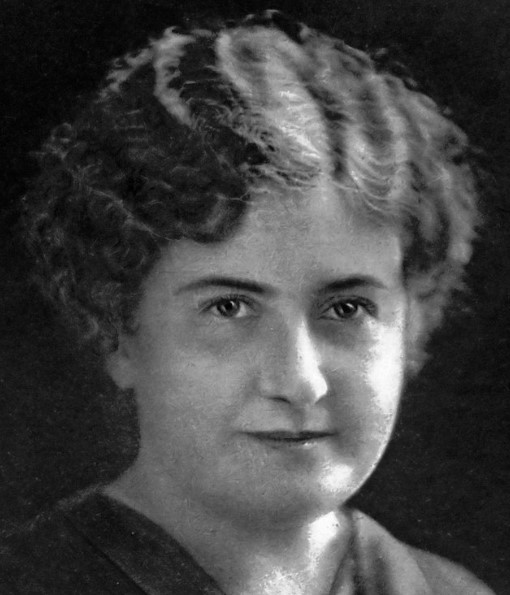
Word of her success spread rapidly. Within a few years, Montessori schools were being established across Europe. By 1911, the first Montessori education programs had appeared in the United States. However, the method faced resistance from mainstream educational institutions, and its early momentum in the U.S. waned by the 1920s.
Montessori education after WWII
Despite setbacks, the history of Montessori education continued to evolve. After World War II, there was a renewed interest in alternative forms of education. This global resurgence was fueled by two key organizations: the Association Montessori Internationale (AMI) and American Montessori Society (AMS). AMI was founded by Dr. Montessori in 1929 to preserve the integrity of her method. AMS was established thirty years later, in 1960, to adapt Montessori principles to American culture and schools.
Today, Montessori education is practiced in over 140 countries, spanning public and private institutions, urban and rural communities, and now, even virtual classrooms. From its modest beginnings in a Roman tenement, it has become one of the most enduring and globally respected approaches to child development. The method has proven adaptable to changing times without losing its core principles.
Benefits of Montessori education: Then and now
The enduring appeal of Montessori education lies in its unique ability to develop the whole child — intellectually, emotionally, socially, and ethically. From its early days in the Casa dei Bambini to modern classrooms enhanced with digital tools, the benefits of Montessori education continue to prove themselves across generations and cultures.
Independence and self-motivation
One of the most recognized Montessori education advantages is the emphasis on independence. In a Montessori classroom, children are empowered to make choices, manage their time, and take ownership of their learning. Tasks are designed to be completed independently, and teachers act as guides rather than authority figures. This cultivates intrinsic motivation — children engage in work not for external rewards but for personal satisfaction and mastery.
Cognitive and emotional development
Montessori materials are carefully designed to support brain development through hands-on, sensorial learning. Activities progress from concrete to abstract, helping children build deep conceptual understanding. But beyond academics, Montessori education also nurtures emotional intelligence. The calm, respectful environment encourages children to regulate their emotions, resolve conflicts peacefully, and develop empathy for others — skills that are often overlooked in traditional education.
Long-term academic and social success
Research and decades of observation indicate that Montessori-educated children often excel academically and socially in later years. According to a study by Angeline Lillard published in the journal Science, Montessori students performed better on tests of reading, math, and executive functioning than their peers in traditional schools. They also showed greater social awareness and adaptability — qualities essential for success in today’s collaborative, fast-changing world.
A comparison with traditional education
Unlike conventional classrooms that rely heavily on direct instruction, rigid schedules, and standardized testing, Montessori education offers flexibility, freedom within structure, and individualized pacing. While traditional education often emphasizes compliance and performance, Montessori prioritizes curiosity, creativity, and meaningful engagement. Students aren’t just memorizing facts — they’re learning how to learn, which sets them apart as lifelong learners.
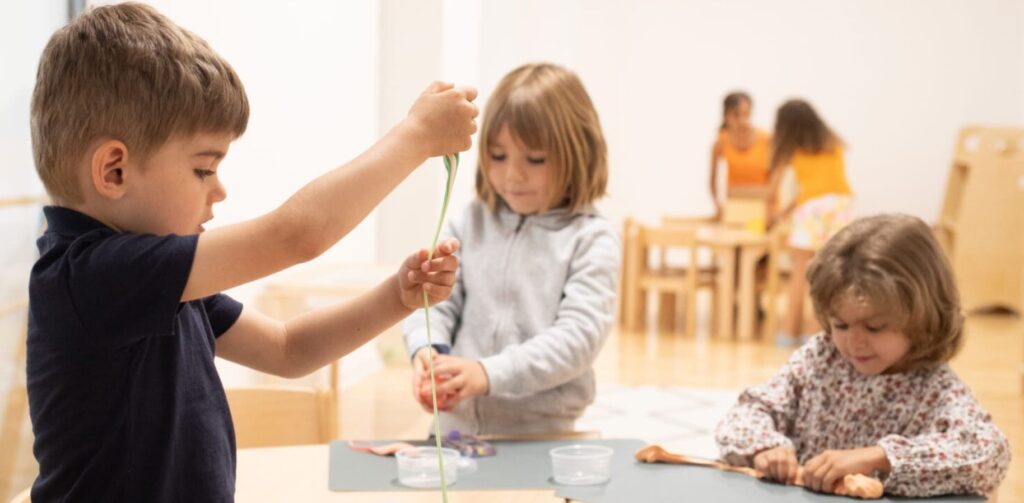
Today, the benefits of Montessori education are not just relevant — they are essential. What began as a revolutionary approach in the early 20th century has adapted remarkably to support 21st-century learners. The foundational emphasis on self-direction, intrinsic motivation, and learning through exploration now aligns seamlessly with what modern neuroscience tells us about how children learn best. As the world shifts from memorization-based education toward creativity, adaptability, and emotional intelligence, Montessori’s holistic model stands out for having championed these values from the very beginning.
The method’s core principles have proven flexible enough to integrate with new educational technologies and global realities. Today, Montessori classrooms offer hands-on wooden materials and, in some schools, also include age-appropriate coding blocks, AR learning tools, and digital portfolios — all without compromising the child-led spirit of the environment. In this evolution, Montessori education has maintained its identity while expanding its reach and impact.
Moreover, the rise of global crises, from climate change to social fragmentation, has led educators to search for models that cultivate critical thinking, ethical reasoning, and collaborative problem-solving. These are not new goals for Montessori — they’ve been embedded in the method for over a century. The global awareness of their urgency is the thing that changed. Montessori offers a proven, evolving path forward — one that prepares children not just to succeed in school but to thrive as thoughtful, compassionate, and capable human beings. Yet this path has consistently been marked by obstacles and resistance.
Challenges and criticism: Misunderstandings and misapplications
While the Montessori education philosophy is widely respected, it is not without its share of challenges and criticism — both historically and in modern contexts. As the method gained popularity worldwide, it also faced evolving concerns around accessibility, authenticity, and practical implementation. Understanding these drawbacks of Montessori education adds nuance to its legacy and helps clarify where the approach thrives — and where it struggles.
Misuse of the term “Montessori”
One of the most persistent issues facing Montessori education is the lack of trademark protection on the term “Montessori.” As a result, any school can label itself Montessori regardless of whether it follows the core principles of the method. This has led to widespread confusion among parents and educators, with some “Montessori” schools incorporating rigid curriculums or test-heavy environments that directly contradict the philosophy’s child-centered foundations.
This misuse dates back to the early 20th century, when Montessori’s ideas were adopted — and often distorted — by educators eager for innovation but not necessarily committed to her scientific method.
Today, the situation persists, with high variability between institutions in both curriculum and teacher training. Organizations like AMI and AMS have worked to offer clearer accreditation standards, but the absence of a global regulatory framework remains a significant challenge.
Difficulty in training and standardization
Another core challenge of the Montessori education philosophy lies in the complexity and depth of teacher preparation. Becoming a certified Montessori educator requires extensive training that goes beyond conventional teacher education. Trainees must master child psychology, developmental theory, and the specialized use of Montessori materials — often without state or national support in terms of licensure or recognition.
This lack of standardization makes it difficult for schools to recruit qualified Montessori teachers, particularly in regions with limited professional development resources. It also contributes to inconsistencies in classroom quality — a point critics point to when arguing that Montessori’s effectiveness is too dependent on how faithfully teachers apply the method.
Limited access due to cost or availability
Although Montessori education is global, it remains more accessible to affluent families, particularly in private school settings. The specialized materials, low student-teacher ratios, and intensive training requirements often make tuition prohibitively expensive. In public education, where funding is tight and curriculum mandates are strict, implementing an authentic Montessori model can be extremely difficult.
This accessibility gap has persisted since the earliest days of Montessori’s movement. Originally developed to support underserved children in Rome, the method ironically became associated over time with elite education — a perception that still lingers today. While public Montessori schools and scholarship programs have helped to broaden access, availability remains uneven across different socioeconomic and geographic contexts.
Despite these obstacles, many educators and advocates view the drawbacks of Montessori education not as failures of the philosophy itself but as implementation issues shaped by external systems. The core ideas remain sound — but realizing their full potential requires clarity, commitment, and investment. As Montessori continues to evolve in the 21st century, addressing these challenges is crucial to ensuring the method serves a wider and more diverse population.
Montessori in the digital age: Embracing AI and modern tools
As education systems around the world adapt to rapid technological change, the Montessori education evolution continues. It does not abandon its roots but thoughtfully integrate modern tools that align with its core principles. True to its philosophy of child-led learning, Montessori’s 21st-century transformation welcomes AI and digital platforms. However, it happens only when they enhance independence, sensory experience, and deep engagement.
Integrating AI into Montessori education
At first glance, artificial intelligence may seem at odds with Montessori’s hands-on, analog approach. However, AI has quietly entered the conversation by enabling more personalized, interest-driven learning pathways. AI-powered platforms can analyze a child’s behavior and adapt content to match their developmental pace. Thus, they echo the Montessori education philosophy of following the child.
Tools like AI-based learning companions or progress-tracking dashboards can support educators in observing patterns and responding with meaningful guidance. Importantly, these technologies do not replace the Montessori guide but extend their observational capacity. When used intentionally, integrating AI into Montessori education reinforces — rather than disrupts — the method’s foundational emphasis on individualized learning.
Explore the benefits, challenges, and real-world applications of Montessori AI here: Integrating AI into Montessori education.
Digital platforms that support self-paced exploration
Montessori classrooms rely heavily on unstructured time and self-selected work. Some modern Montessori tools now translate this approach to digital environments. Learning management systems (LMS) such as Montessorium or Transparent Classroom provide digital shelves, student portfolios, and curated content libraries. They reflect the structure of a physical Montessori space.
These systems empower children to choose their digital “work,” track their progress independently, and engage at their rhythm — supporting both autonomy and accountability. For educators and parents, they offer insight into a child’s growth without resorting to intrusive assessments or artificial deadlines.
Coding for children the Montessori way
Technology isn’t just shaping how children learn — it’s also changing what they learn. In Montessori settings, coding is gaining attention as a modern form of logical thinking and problem-solving that fits naturally within the method’s framework.
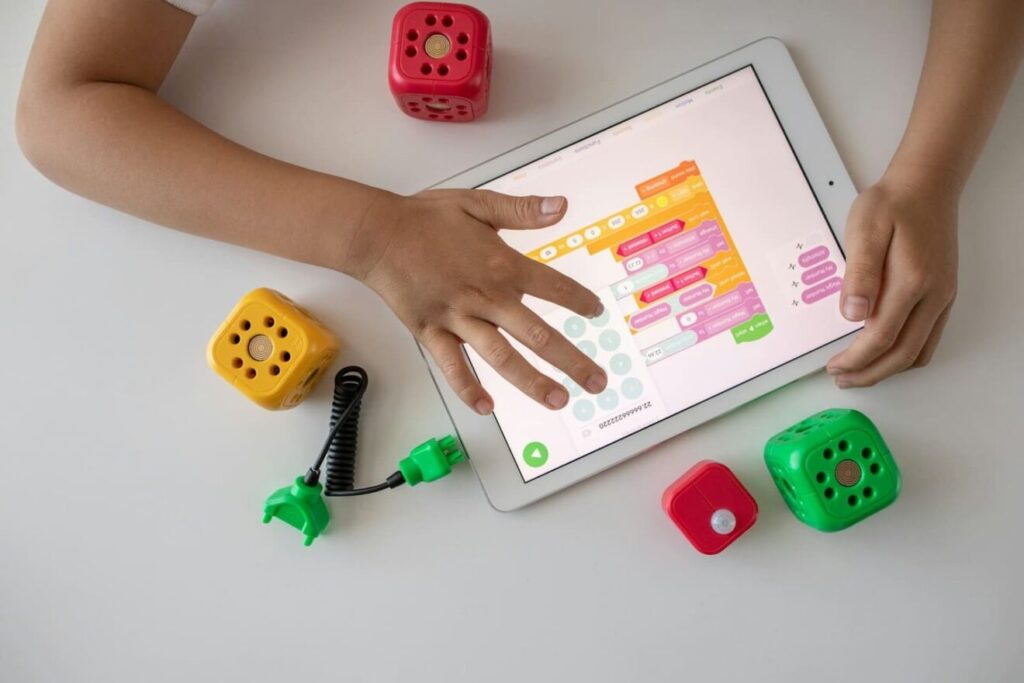
Platforms like MontiKids, Osmo Coding, and Kodable incorporate the core Montessori principles. These tools offer intuitive, age-appropriate coding challenges that emphasize creativity and sequential logic over screen time and abstraction. Cubetto, a Montessori-aligned wooden robot, allows even preschoolers to program actions by physically placing coding blocks on a board — reinforcing both tactile learning and computational thinking.
In many ways, coding embodies key elements of Montessori education: precision, trial and error, and the joy of discovery. Rather than treating coding as a technical skill, Montessori-inspired tools present it as a language. Thus, it introduces a new way for children to express ideas, solve problems, and build real things from their imagination.
By emphasizing hands-on exploration and conceptual clarity, Montessori-aligned coding environments avoid the pitfall of passive screen time. Instead, they empower children to become creators of technology — not just consumers.
Discover coding in the Montessori environment: Coding for children the Montessori way: Benefits, downsides, and screen-free methods.
The fusion of traditional Montessori values with modern digital innovations reveals a remarkable truth: the method was never about the materials themselves but about the mindset. Whether manipulating wooden beads or programming robots, children flourish when given the freedom, trust, and structure to explore the world.
Conclusion: The future of Montessori education as a living philosophy
The future of Montessori education doesn’t lie in reinventing the philosophy — it lies in continuing to adapt it to an ever-changing world. What began as a revolutionary approach to early childhood education has proven itself to be remarkably resilient, dynamic, and scalable across generations, cultures, and now, digital frontiers.
At its heart, Montessori education is not a fixed curriculum but a living philosophy — one that thrives on observation, flexibility, and trust in each child’s natural capacity to grow. This adaptability has been key to its longevity and is now more crucial than ever. As education systems grapple with the demands of a rapidly evolving world, Montessori offers a deeply relevant solution: focus less on standardized outcomes and more on developing resilient, independent thinkers equipped to navigate complexity.
Surge in hybrid learning environments
In the digital age, we’re also seeing a surge in hybrid learning environments — blending in-person discovery with digital exploration. Montessori classrooms are beginning to reflect this shift, integrating learning management systems, AI-enhanced tracking tools, and even virtual extensions of physical learning materials. But unlike many modern approaches that lean heavily on screens, Montessori continues to ground technology in meaningful, sensorial, and purpose-driven learning.
Yet, the Montessori education evolution must also confront a critical challenge: accessibility. While the method was originally designed to uplift underserved communities, it has increasingly become associated with exclusivity — limited by tuition costs, geographic availability, and teacher shortages. Expanding access through public Montessori programs, scholarships, and culturally responsive adaptations will be essential to fulfilling the philosophy’s true promise.
Why Montessori thrives: It responds, not reacts
Looking ahead, Montessori will continue to grow not because it chases trends but because it responds — intentionally and compassionately — to the needs of children in their time. Whether through wooden beads or programmable robots, the core mission remains unchanged: support the whole child, nurture their curiosity, and prepare them not just for school but for life.
Curious to learn more or start your Montessori journey? Visit the Montessori Family Center for resources, guidance, and community rooted in the authentic Montessori spirit.
Montessori education evolution FAQ
1. What is Montessori education, and how has it evolved over time?
Montessori education is a child-centered learning approach developed by Dr. Maria Montessori in the early 1900s. Over time, it has evolved from hands-on activities in a single classroom in Rome to a globally practiced philosophy that integrates digital tools like AI and coding — all while preserving its core focus on independence, curiosity, and self-paced exploration.
2. How did Montessori education begin?
Montessori education began in 1907 with the creation of the first Casa dei Bambini (Children’s House) in Rome. Dr. Maria Montessori designed a new kind of classroom based on her scientific observations of children, emphasizing learning through movement, choice, and meaningful activity.
3. What are the key principles of the Montessori education philosophy?
The Montessori philosophy centers on respect for the child, freedom within limits, a carefully prepared environment, mixed-age classrooms, and self-directed learning. Teachers serve as guides, helping children learn through discovery rather than direct instruction.
4. How has technology influenced the evolution of Montessori education?
Modern Montessori classrooms are increasingly incorporating technology such as AI for personalized learning, AR/VR for immersive experiences, and digital learning platforms that mirror Montessori’s emphasis on self-paced exploration. These tools enhance — not replace — traditional Montessori principles.
5. Why is Montessori education still relevant today?
In a world dominated by standardized testing and screen overload, Montessori education remains relevant for its emphasis on emotional intelligence, problem-solving, independence, and a deep love of learning. Its adaptability to modern tools makes it even more powerful in today’s educational landscape.
6. What are some modern tools used in Montessori-inspired classrooms?
Today’s Montessori classrooms might include learning management systems like Transparent Classroom, coding tools such as Osmo and Cubetto, or AI-driven progress trackers — all designed to support self-guided learning and maintain Montessori’s hands-on philosophy.
7. What are the main criticisms of Montessori education?
Common criticisms include the misuse of the term “Montessori” by unaccredited schools, the lack of standardization across programs, and limited access due to high tuition costs or geographic availability. However, these are often implementation issues rather than flaws in the philosophy itself.
8. How is coding introduced in Montessori-style education?
Coding is introduced through tactile tools like Cubetto or visual platforms like MontiKids and Kodable. These systems focus on sequencing, logic, and creativity — aligning naturally with Montessori goals of hands-on, child-led exploration.
9. Is Montessori education accessible to all families?
Accessibility remains a challenge. While public Montessori programs and scholarships are growing, many high-quality Montessori schools are private and can be expensive. Expanding equity in Montessori education is a key focus for its future.
10. What does the future of Montessori education look like?
The future of Montessori education lies in its ability to adapt. With increasing interest in hybrid learning, digital tools, and global accessibility, Montessori is poised to expand further while staying rooted in its child-first philosophy that has guided it for over a century.
References and further reading
- An essential overview of Montessori principles, including the role of the child, the prepared environment, and how Montessori differs from conventional education.
- A detailed background on the origins, global expansion, core philosophy, and controversies surrounding Montessori education.
- Explains the foundational goals of Montessori, the importance of self-directed learning, and how children develop in multi-age classrooms.
- Covers the timeline of Montessori’s growth from the first Casa dei Bambini to a worldwide educational movement with lasting influence.
- Breaks down the strengths and challenges of Montessori education, helping readers assess whether it aligns with their learning values or goals.
- A parent-focused guide outlining how Montessori works in real classrooms, with emphasis on student independence and classroom structure.
- A modern Montessori-friendly platform for tracking student progress, enabling self-paced learning while maintaining visibility for educators and parents.
- A hands-on, screen-free coding toy for young learners that introduces logical thinking and sequencing through physical manipulation — perfect for Montessori-style classrooms.