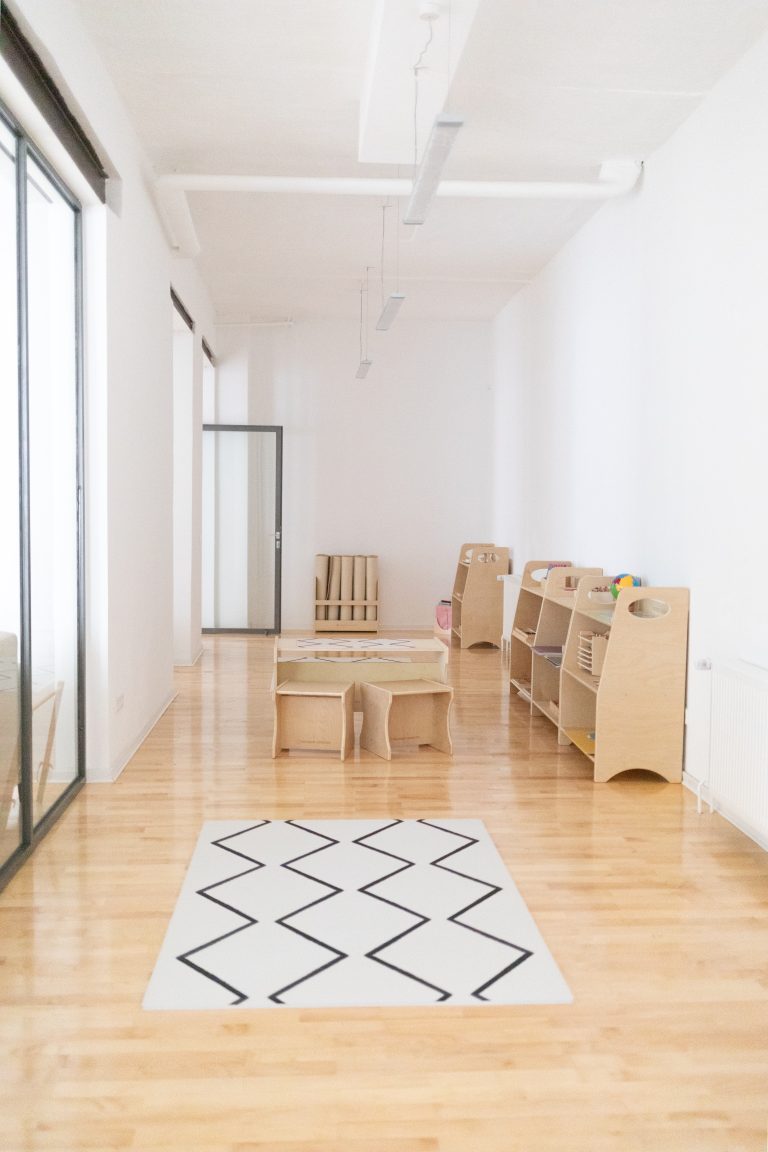
Maria Montessori’s timeless wisdom, as outlined in her seminal works The Secret of Childhood and The Absorbent Mind, guides us through this dynamic process. Whether in a Montessori classroom or an indoor playground, her philosophy of child-led exploration shines through.
The Montessori work cycle begins with a spark of curiosity as children navigate their environment, drawn to activities that capture their imagination and ignite their passion for learning. This initial phase sets the stage for exploration as children engage in purposeful tasks that align with their interests and developmental needs, whether at home, in a Montessori playground, or a dedicated playroom for children.
As children delve into their chosen activities, they enter a focused concentration, immersing themselves fully in the task at hand. Whether in a playroom or an indoor playground for toddlers, this flow state is where deep learning occurs, as children explore concepts enthusiastically and joyfully. Indoor playgrounds, with their carefully designed environments, can help create this state of deep engagement, much like a Montessori classroom.
Upon completing their tasks, children reflect, evaluate their work with a critical eye, and seek feedback from peers and guides. This self-assessment fosters a sense of ownership and responsibility, empowering children to take ownership of their learning journey. This is just as true in structured Montessori environments as it is in more informal learning spaces, like an indoor playground for babies or a baby playground where toddlers and infants can explore their surroundings.
Finally, the cycle culminates in a refinement phase, as children revisit their activities, honing their skills through repetition and practice. This iterative process ensures mastery and solidifies learning, laying the groundwork for future exploration and discovery, whether in a Montessori playground or an indoor playground.

Some keys of the Montessori Work Cycle:
- Promotes Independence: By allowing children to choose their own activities and work at their own pace, the work cycle fosters a sense of independence and self-confidence, even in settings like an indoor playground.
- Encourages Concentration: The extended blocks of uninterrupted time provided by the work cycle allow children to deeply engage with tasks, whether in a Montessori classroom or at a kids café, leading to increased concentration and focus.
- Fosters a Love of Learning: Through hands-on exploration in environments like an indoor playground for toddlers, children develop a lifelong love of learning and a natural curiosity about the world around them.
- Cultivates Social Skills: The work cycle provides ample opportunities for children to collaborate, communicate, and problem-solve, skills that can be nurtured in any setting, whether a Montessori playground or an indoor playground.
Regarding the importance of completing tasks before moving on to the next one:
- Fostering Concentration: Encouraging children to finish one task before starting another promotes the development of concentration and focus. By immersing themselves fully in a single activity, children learn to sustain their attention and engage deeply with the task at hand.
- Encouraging Mastery: Mastery comes through practice and repetition. By completing tasks from start to finish, children have the opportunity to refine their skills, consolidate their learning, and achieve a sense of accomplishment. This sense of mastery builds confidence and motivates children to tackle new challenges with enthusiasm.
- Teaching Time Management: Learning to manage time and prioritize tasks is an important life skill. By adhering to the Montessori work cycle, children learn to allocate their time effectively, set goals, and manage their workload in a systematic and organized manner.
In essence, the Montessori work cycle is a dynamic framework that honors the natural learning rhythm, empowering children to become active participants in their education. By embracing this cycle, we cultivate a love for learning that extends far beyond the prepared enviroment, equipping children with the skills and confidence to thrive in an ever-changing world.
There are many options for families looking for an indoor playground in NRW or a Kindercafé that provides a fun and educational experience for children. These places cater to a range of age groups and often include areas for babies, toddlers, and older children. For example, the Montessori Family Center in Düsseldorf combines the principles of Montessori education with the fun of an indoor playground. This indoor playground in Düsseldorf provides an excellent opportunity for children to explore, learn, and play in spaces designed to foster independence, concentration, and social interaction.
Bibliography: Montessori, Maria. “The Secret of Childhood.” Ballantine Books, 1936. Montessori, Maria. “The Absorbent Mind.” Kalakshetra Publications, 1949.

Discover our Children’s Workroom ⬇