Wish your child could experience art in a way that feels natural, freeing, and deeply personal? That’s what Montessori art is all about. Unlike traditional art education, which often emphasizes step-by-step instructions and predefined outcomes, art in Montessori encourages children to explore materials freely, experiment with textures and colors, and enjoy the creative process without pressure. It’s not about producing a perfect drawing — it’s about discovery and growth.
This article explores how Montessori art differs from conventional approaches, why it plays a crucial role in child development, and how to create a Montessori-inspired art environment that fosters independence and creativity. You will also discover age-appropriate art activities, from sensory-based exploration for babies to process-focused projects for toddlers and preschoolers.
Additionally, we look at different Montessori art curriculum, comparing structured and flexible approaches to help you choose the best fit for your child. Finally, backed by scientific research, this article uncovers how open-ended artistic experiences support cognitive development, emotional well-being, and problem-solving skills. So, what is Montessori art? Let’s find out!
Montessori art: Unlocking creativity through exploration and independence
Montessori art is more than just an activity — it’s a journey of discovery, creativity, and self-expression. Rooted in hands-on learning, it allows children to interact with colors, textures, and materials in a way that feels intuitive and engaging. Instead of following templates or predefined steps, young artists are encouraged to explore freely, make their own choices, and develop confidence in their creative instincts. Every brushstroke, every experiment with clay, and every collage they assemble is a reflection of their individuality and imagination.
Another thing that sets art in Montessori apart from traditional art education, where children are guided step by step to achieve a “perfect” result, is its emphasis on the process rather than the final product. It’s not about producing a flawless drawing or a Pinterest-worthy craft. It’s about discovery. What happens when you mix red and blue? How does it feel to sculpt clay with your hands? What patterns emerge when you press leaves into paint? These open-ended experiences allow children to develop creativity, confidence, and a deep connection to the materials they use.
Here’s what makes Montessori art different from conventional approaches:
- No pre-planned outcome: There’s no right or wrong way to create. Every piece of art is unique.
- Focus on real materials: Instead of plastic brushes and synthetic paints, Montessori environments often introduce natural, high-quality materials — real watercolor brushes, clay, wooden pencils, and handmade paper.
- Encouraging independence: Children choose their materials, set up their workspace, and clean up after themselves, fostering a sense of responsibility.
- Process over product: The experience of creating is valued more than the final artwork. A child’s joy in mixing colors is just as important, if not more, than the finished painting.
At the same time, Montessori art is not treated as an isolated subject — it’s woven into everyday learning. Children are encouraged to experiment, observe, and create in ways that reflect their natural curiosity. Have you ever noticed how toddlers love to scribble, smear, and explore textures with their fingers? That’s their first step into artistic expression. In Montessori, art nurtures this instinct, providing the right materials and space for children to refine their skills at their own pace.
But don’t jump to conclusions too quickly: Montessori art is not just about developing fine motor skills or learning about colors. It’s about giving children the confidence to express themselves freely. Whether through painting, sculpting, or collage-making, children learn that their ideas matter.
Montessori art vs. traditional art programs: Why open-ended art wins
Let’s compare Montessori art to traditional art programs side by side:
| Traditional Art | Montessori Art | |
| Focus | Final product | Process and exploration |
| Instructions | Step-by-step guided activities | Child-led, self-directed discovery |
| Creativity | Limited — children follow a model | Unlimited — children create freely |
| Emotional Impact | Can cause frustration if results don’t match expectations | Encourages confidence and joy in experimentation |
With Montessori art, every child is an artist — because the focus isn’t on what they make, but on how they experience creativity. When children are free to explore without the pressure of achieving a specific result, they develop a deeper connection to the artistic process itself. Open-ended art encourages problem-solving, critical thinking, and self-expression, allowing children to communicate their ideas in unique and meaningful ways. Without rigid instructions, they learn to embrace mistakes as part of the creative journey, building confidence and resilience. Over time, this unrestricted exploration nurtures not only artistic ability but also innovation, curiosity, and a lifelong appreciation for creativity.
The benefits of Montessori art for child development
Now that you know what art in Montessori is, let’s focus on its benefits.

1. Strengthening fine motor skills and hand-eye coordination
Have you ever watched a child carefully grip a paintbrush, roll clay between their fingers, or tear paper into tiny pieces? These seemingly simple actions are actually building the foundation for essential motor skills!
- Brushing, cutting, sculpting, and gluing help refine hand-eye coordination.
- Holding and manipulating different materials strengthen small muscles in the hands, preparing children for writing.
- Repetitive motions (such as threading beads or rolling dough) enhance dexterity and focus.
With each stroke of a crayon or squeeze of a glue bottle, children gain control over their movements, setting them up for success in practical life skills like dressing, eating, and eventually, writing.
2. Fostering self-expression and emotional regulation
How do young children communicate their thoughts and emotions before they have the words to express them? Through art!
In a Montessori art environment, there’s no pressure to create something specific. Instead, children are encouraged to explore colors, textures, and forms freely, helping them healthily process their feelings.
🎨 Bold strokes and bright colors can be an outlet for excitement or energy.
🖌️ Soft shading and slow, repetitive movements may help a child calm down and focus.
🌈 Experimenting with materials allows children to express emotions they might not even realize they have!
By giving children the freedom to create without judgment, we allow them to build emotional intelligence and resilience in a safe, supportive way.
3. Encouraging independence and decision-making
Children develop independence when they are free to choose their own materials, set up their workspace, and clean up afterward. Montessori art encourages children to:
- Make choices – Which color do I want to use? Should I mix them?
- Solve problems – What happens if I press harder with this crayon? Can I use leaves instead of a paintbrush?
- Take responsibility – Cleaning up is part of the creative process, helping children learn to respect their materials.
When children feel ownership over their creativity, they also develop confidence in their ability to make decisions — a skill that carries over into all aspects of life.
4. Boosting creativity and cognitive development
Did you know that open-ended art can enhance cognitive growth? Here’s why this matters:
🧠 Creative problem-solving – Children learn to think outside the box and come up with unique solutions.
🖌️ No “right” or “wrong” answers – Instead of memorization, children develop their ability to explore and experiment.
🌿 Connection to the real world – Art activities often incorporate natural elements, reinforcing observations about nature and everyday life.
From fine motor development to emotional expression and problem-solving, the benefits of Montessori art go far beyond painting and drawing. It’s about giving children the freedom to explore, create, and express themselves confidently — skills that will serve them for a lifetime.
What’s next? Time to set up an inviting Montessori art space and let the creativity flow!
Designing a Montessori art environment: A space for creativity and independence
What is a good art environment? It’s a place where your child can freely express their creativity whenever inspiration strikes. That’s exactly what Montessori offers!
Instead of waiting for scheduled craft time, children in a Montessori setting have constant access to an art space designed just for them. Let’s see how to create this kind of environment at home or in the classroom.
Creating an art-friendly Montessori space
A well-prepared Montessori art environment isn’t just about having supplies — it’s about accessibility, independence, and fostering a love for creative exploration. These are a few principles to follow if you want to design a perfect art space for your child that aligns with Montessori principles:
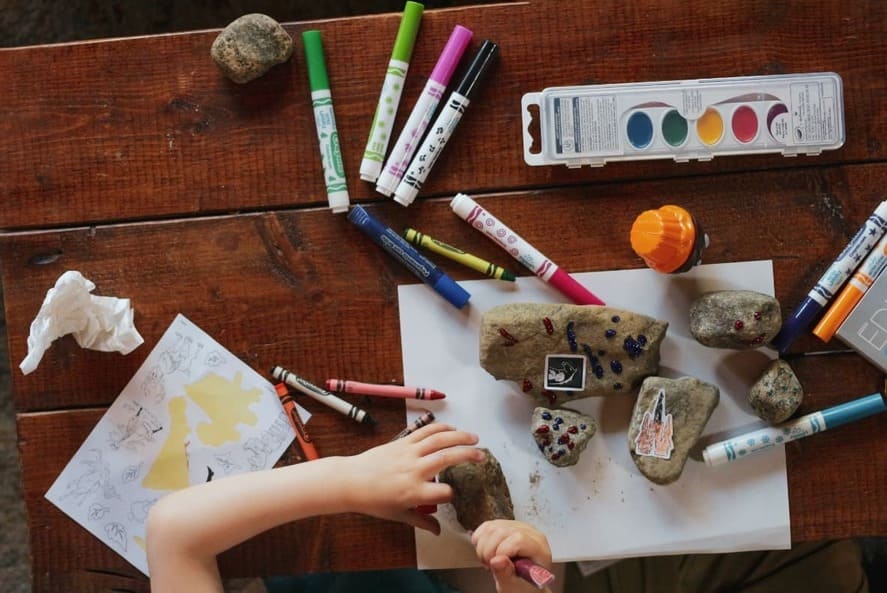
✅ Keep supplies within reach. Store materials on low, open shelves so children can choose what they need without asking for help. When art tools are easy to access, creativity flows naturally!
✅ Use child-sized tools. Small hands need appropriately sized brushes, scissors, and palettes to comfortably explore their creativity. Just as important is the use of real, high-quality tools rather than toy versions. When children work with authentic instruments, they develop a deeper respect for the creative process, reinforcing a sense of responsibility in their work.
✅ Incorporate natural materials. Montessori-inspired art spaces emphasize sensory-rich, environmentally friendly materials that feel natural and inviting to the touch. Because this plays a crucial role in a child’s creative experience, we explore it in detail in the section below.
✅ Create a designated art area. Whether it’s a small table in the corner of a room or a dedicated art station, having a specific place for art encourages daily creativity. Wouldn’t it be wonderful if your child could pick up a brush and start painting whenever they felt inspired?
Encouraging independence with open-ended materials
The materials children use shape their creative experience just as much as the process itself. In a Montessori art environment, they serve several purposes, such as enhancing creativity or supporting fine motor development and problem-solving. Below are some essential Montessori-inspired materials to add to your art space:
🎨 Watercolors – Easy to use and mesmerizing to watch as colors blend.
🖌️ Oil pastels – A fantastic way to explore texture and layering.
🌿 Natural clay – Perfect for strengthening little hands and encouraging sculptural creativity.
✂️ Collage materials – Scraps of fabric, leaves, paper, and magazine cutouts provide endless creative possibilities.
🖍️ Beeswax crayons – Softer and more vibrant than regular crayons, making them ideal for expressive drawing.
A well-prepared art environment naturally sparks creativity, but its impact goes far beyond artistic expression. It empowers children to take ownership of their learning, build confidence, and fully engage in the joy of creating. When given the freedom to explore materials on their own terms, children develop independence and a deeper appreciation for the creative process. Is your art space ready for little hands to dive in? If not, now is the perfect time to set one up and introduce your child to engaging activities!
Montessori art activities by age group: Inspiring creativity at every stage
From the earliest months of life, children explore colors, textures, and movement, expressing themselves through the materials they touch. But what are the best Montessori art activities for each age? And how do we support creativity without overwhelming or limiting a child’s natural curiosity?
The beauty of Montessori art is that it evolves with the child, meeting them where they are developmentally and encouraging exploration at every stage. Whether it’s a baby smearing edible paint, a toddler delighting in tearing paper, or a preschooler carefully mixing watercolors, each experience is valuable.

Babies (0–12 months): Sensory exploration through art
Can a baby do art? Absolutely! In the first year of life, Montessori art for babies is all about sensory exploration. Infants learn through touch, sight, and even taste, so art activities should be safe, simple, and focused on experiencing different textures and materials.
Engaging art activities for babies include:
👶 Finger painting with edible paints – Let babies feel the cool, smooth sensation of natural, edible paint (made from yogurt and food coloring or mashed fruits). It’s messy, but that’s part of the fun!
🔲 High-contrast black-and-white art – Babies’ developing vision is drawn to bold, contrasting colors. Offer black-and-white images, patterns, or even simple DIY cards with geometric shapes to engage their focus.
🌿 Exploring textures – Introduce soft fabric, crinkly paper, or a smooth wooden block for babies to touch and explore. Each new texture helps develop their sense of touch and curiosity about the world.
Toddlers (1–3 years): The joy of process-based art
At this stage, art is all about exploring movement and materials rather than creating a final product. There’s no pressure to “make something” — the focus is on the process of discovery.
Below are a few Montessori art activities for toddlers:
📜 Paper tearing and gluing – Strengthens fine motor skills while allowing toddlers to explore cause and effect.
🖌️ Sponge painting – Dip a sponge into the paint and press it onto paper. What happens when you press hard? What about gently? Toddlers will love the different effects!
🌈 Sidewalk chalk drawing – Perfect for large motor movements, letting children experiment with colors and shapes on a bigger scale.
👐 Playdough exploration – Rolling, squishing, and sculpting playdough builds hand strength and creativity.
Offer only a few materials at a time to keep the experience engaging without overwhelming your toddler. Too many choices can lead to frustration instead of exploration!
Preschoolers (3–6 years): Expanding creativity and fine motor skills
Now comes the exciting stage where children start to develop control over their movements, tell stories through art, and explore more advanced techniques! Preschoolers are ready for art activities that introduce real art materials while still allowing them to create freely.
These are a few art activities for preschoolers that align with Montessori principles:
🎨 Watercolor painting – Introduce real brushes and let children explore how water changes the depth of color.
🍂 Nature-inspired art – Gather leaves, flowers, or sticks and use them for stamping, pressing, or creating collages.
📖 Storytelling through art – Ask your child to draw their favorite moment from the day and describe it to you. It’s a great way to combine language development with creativity!
🎭 Printmaking and stamping – Using natural objects (potatoes, leaves, corks), children can experiment with different textures and patterns.
But how do you ensure that this freedom to explore is nurtured in a way that supports a child’s development? This is where a Montessori art curriculum comes into play. Whether you prefer a structured approach or a more flexible, open-ended style, choosing the right curriculum can make all the difference in fostering a child’s creativity. Let’s explore how to find the perfect fit!
Montessori art curriculum: Choosing between structure and flexibility
When selecting a Montessori art curriculum, one of the biggest considerations is how much structure your child needs. Do they thrive with guidance, or do they prefer complete artistic freedom? Let’s compare the two approaches:
| Feature | Structured Curriculum | Flexible Curriculum |
| Best for | Children who need guidance; Parents or teachers who want a clear roadmap | Independent learners who love experimenting without rules |
| Guidance Level | High – Step-by-step instructions on how to introduce materials | Low – Child-led, open-ended exploration |
| Approach to Materials | Gradual introduction of tools with specific techniques | Children choose materials and use them as they wish |
| Progression | Clear progression from simple to advanced techniques | No rigid progression; children explore at their own pace |
| Lesson Structure | Lessons with defined objectives and outcomes | Free-form, exploratory lessons without predefined outcomes |
| Integration with Other Subjects | Connects art to Montessori subjects like nature, geography, and history | Encourages cross-disciplinary connections through child’s curiosity |
| Creativity Encouragement | Encourages creativity within guided exercises | Prioritizes unrestricted creative expression |
| Skill Development Focus | Focus on refining motor skills and technical ability | Focus on creative problem-solving and self-expression |
| Child Independence | Some independence but within a structured framework | High – Child takes full control of the creative process |
Not sure which one to choose? Don’t worry! Many Montessori-inspired curriculums blend both approaches, offering a foundation while allowing room for creativity. The key is to observe your child and see what style best supports their artistic growth!
The truth is, there’s no single “best” Montessori art curriculum — only the one that fits your child’s unique needs! Whether you follow a structured guide or embrace complete artistic freedom, the goal is to nurture a lifelong love of creativity. But what does the research reveal about the benefits of the Montessori approach to art?
Scientific research supporting Montessori art education
Scientific studies show that open-ended, process-focused artistic activities significantly contribute to children’s cognitive, emotional, and social development. Here’s what the research reveals:
- Boosts cognitive and academic skills. A study published in npj Science of Learning found that children in Montessori programs perform significantly better academically than their peers in traditional settings. Montessori students scored approximately 1/4 standard deviation higher on academic assessments, highlighting the cognitive benefits of Montessori methods, including art integration.
- Enhances creativity and problem-solving. Research in the International Journal of Art & Design Education confirms that open-ended art activities help children develop creativity and problem-solving skills. The study emphasizes that allowing children to freely explore art materials fosters critical thinking and innovation.
- Supports social and emotional development. According to Frontiers in Psychology, Montessori students show greater self-regulation, social skills, and overall well-being than those in traditional education. The study found that art-based activities in Montessori settings contribute to emotional resilience and improved peer interactions.
- Promotes independence and confidence. Research from Montessori Art highlights that Montessori students develop greater focus and confidence when they are given autonomy in the creative process.
- Aligns with neuroscience findings. Neuroscience supports art education as a key component of child development. A Penn State University publication explains how art activates multiple areas of the brain, enhancing sensory integration, social-emotional growth, and problem-solving skills.
The scientific evidence behind Montessori art education is clear — open-ended artistic experiences enhance cognitive abilities, encourage self-expression, improve social-emotional development, and build confidence. By embracing a Montessori-inspired art approach, parents and educators can help children develop essential life skills that extend far beyond the art table.
Conclusion: Emphasizing creativity over perfection
So, the next time your child picks up a brush or squishes clay between their fingers, celebrate the process rather than the outcome. Because in Montessori art, every child’s creativity is limitless! There’s no right or wrong way to create — only endless possibilities waiting to be explored. A swirl of paint, a crayon pressed firmly against paper, or the gentle shaping of clay are all forms of self-expression, each as valuable as the next.
Montessori art isn’t about getting things perfect. It’s about discovery, curiosity, and the joy of making something uniquely one’s own. When children are free to explore materials without fear of failure, they develop confidence not just in their artistic abilities but in their ideas, choices, and independence. With each brushstroke, they’re learning to trust themselves, to think outside the box, and to embrace the unexpected. The freedom to create fosters not just artistic skills but problem-solving, patience, and a deep love for learning.
What if you could give your child that kind of experience — one where creativity flourishes without limits? At Montessori Family Center, we provide a space where children can experiment, explore, and express themselves through art in a way that feels natural and exciting. Come join us and see firsthand how Montessori art nurtures creativity, independence, and joy. Let’s create together!
Ready to discover more? Learn how each Montessori subject area contributes to your child’s growth and joy in learning in our guide to the Montessori curriculum.
Montessori art FAQ: Your questions answered
1. What is Montessori art?
Montessori art is a process-driven approach to creativity that encourages children to explore materials freely, without predefined outcomes. Unlike traditional art education, which often focuses on following steps to create a final product, Montessori art emphasizes self-expression, experimentation, and discovery, helping children develop creativity and confidence.
2. How is Montessori art different from traditional art programs?
Traditional art programs typically follow structured lessons with specific goals, whereas Montessori art focuses on open-ended exploration. Children choose their own materials, work at their own pace, and create without pressure. The emphasis is on the process rather than the final product, fostering independence and problem-solving skills.
3. Why is art important in a Montessori environment?
Art in Montessori is not just an activity — it’s woven into daily learning. It helps develop fine motor skills, cognitive abilities, emotional regulation, and creative thinking. Through open-ended artistic experiences, children learn self-expression, patience, and confidence in their ideas.
4. What materials are used in Montessori art?
Montessori art environments prioritize natural, high-quality materials over plastic or synthetic alternatives. Common materials include watercolor paints, real brushes, natural clay, wooden pencils, handmade paper, beeswax crayons, and natural collage elements like leaves and fabric.
5. How do you set up a Montessori art space at home?
A Montessori art space should be accessible, organized, and inviting. Store materials on low, open shelves so children can choose their own supplies. Provide child-sized tools, real materials, and a designated area for messy exploration. The goal is to encourage independence and creativity without adult intervention.
6. What are some Montessori art activities for different age groups?
Babies (0–12 months): Sensory exploration with edible paints, high-contrast images, and textured materials.
Toddlers (1–3 years): Simple, process-based art like tearing paper, sponge painting, and playdough sculpting.
Preschoolers (3–6 years): More advanced techniques such as watercolor painting, printmaking, and nature-inspired art.
7. What are the benefits of Montessori art for child development?
Montessori art enhances fine motor skills, independence, problem-solving, emotional regulation, and confidence. Research supports that open-ended artistic experiences improve cognitive development, creativity, and social-emotional skills, making Montessori art an essential part of holistic learning.
8. Is there a structured Montessori art curriculum?
Montessori art curriculums can be structured or flexible. A structured curriculum provides step-by-step guidance on introducing materials, while a flexible curriculum focuses on child-led exploration. Many Montessori programs blend both approaches to balance skill-building with creative freedom.
References and further reading
- Explore how Montessori art supports creativity, independence, and skill development through process-based learning.
- Discover hands-on Montessori-inspired art and craft activities that encourage open-ended creativity at home.
- A guide to selecting the best Montessori art curriculum based on structure, flexibility, and child-led exploration.
- Learn about Trillium Montessori’s approach to integrating art into early childhood education.
- A discussion on Montessori-friendly art activities for infants and toddlers.
- A study on how Montessori students outperform their peers in creativity, emotional regulation, and well-being.
- An examination of how unrestricted artistic exploration helps children develop creativity, problem-solving, and self-expression.