
Education is a cornerstone of child development, and choosing the right approach can significantly impact a child’s growth. Here, we explore two distinct educational systems: Montessori and Traditional education. We’ll delve into their principles, teaching methods, and unique features, followed by a detailed comparative analysis highlighting similarities and differences.
Montessori Education
Montessori education was founded by Dr. Maria Montessori in Italy in the early 1900s. It is based on her scientific observations of children’s learning processes. Montessori believed that children learn best in an environment that supports their natural curiosity and desire to learn, such as Montessori playgrounds or playrooms for children that offer freedom within a structured setting.
Historical Context and Evolution
Montessori education began in the early 20th century and quickly spread worldwide. The first Montessori school, Casa dei Bambini, opened in Rome in 1907. The method has evolved to incorporate new educational research and technologies while maintaining its core principles.
Principles
- Child-Centered Learning:Emphasizes independence, freedom within limits, and respect for a child’s natural psychological development. Many indoor playgrounds for toddlers can integrate such an approach, allowing kids to explore freely.
- Prepared Environment: Classrooms and playrooms are designed to support self-directed learning, with materials accessible to children.
- Mixed-Age Classrooms: Encourage peer learning, collaboration, and social development. The age gap is 3 years.
- Sensitive Periods: Recognizes specific times when children are particularly receptive to learning certain skills, making environments like playrooms for children ideal for tailored learning.
Teaching Methods
- Hands-On Learning: Uses tactile materials to help children understand abstract concepts, similar to activities found in indoor playgrounds for babies or kids where sensory exploration is key.
- Individualized Pacing: Students learn at their own pace, guided by their interests.
- Teacher as Facilitator: Teachers observe and guide rather than directly instruct.
- Practical Life Skills: Activities like pouring, tying, and sweeping to develop fine motor skills and independence.
Unique Features
- Focus on sensory-based and practical life skills.
- Emphasis on intrinsic motivation and self-regulation.
- Nurtures holistic development: intellectual, social, emotional, and physical.
- Detailed, specialized materials designed for specific developmental needs.
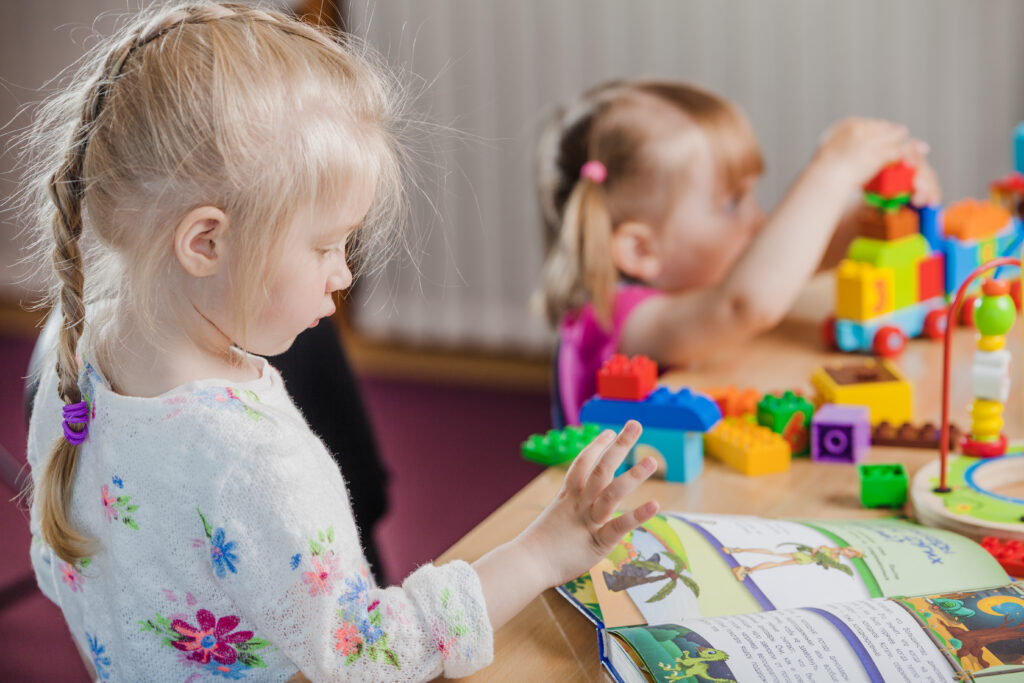
Impact on Different Learning Styles
Montessori education is particularly effective for students who thrive in a self-paced, hands-on learning environment. It accommodates various learning styles, including visual, auditory, and kinesthetic learners. Montessori playrooms and Montessori indoor playgrounds support such approaches, offering an environment where children can learn through play.
Parental and Community Involvement
Parental involvement is a crucial component of Montessori education. Schools often encourage parents to participate in classroom activities and support their child’s learning at home. Community involvement is also emphasized, with many Montessori schools engaging in community service projects and offering spaces like kids cafés, where families can connect.
Criticisms and Challenges
Some critics argue that Montessori education may lack structure and rigor compared to traditional methods. Others believe it may not adequately prepare students for the highly structured environment of conventional schools. However, proponents argue that the method’s emphasis on independence and critical thinking provides a strong foundation for lifelong learning, making it a great complement to indoor playgrounds where children can practice these skills in a relaxed environment.
Traditional Education
Traditional education has evolved over centuries, with roots in ancient civilizations. It typically involves a structured, teacher-centered approach and is widely practiced in public and private schools worldwide.
Historical Context and Evolution
Traditional education has its roots in ancient educational systems, such as those of Greece and Rome, where formal schooling was structured and hierarchical. Over the centuries, this approach has been refined to include compulsory education and standardized testing, adapting to societal changes and technological advancements.Many indoor playgrounds now offer after-school programs that complement this structured learning by providing time for physical activity and play.
Principles
- Structured Learning: Follows a set curriculum with defined standards.
- Teacher-Centered: Teacher directs learning and provides information.
- Assessment-Based: Regular testing to measure progress.
- Uniformity: Ensures consistency across different schools and classrooms.
Teaching Methods
- Direct Instruction: Teacher delivers lessons to the whole class.
- Standardized Curriculum: Emphasizes core subjects like math, science, language arts, and social studies.
- Graded Assessments: Frequent quizzes, tests, and standardized exams.
- Discipline and Order: Emphasizes rules and structured schedules.
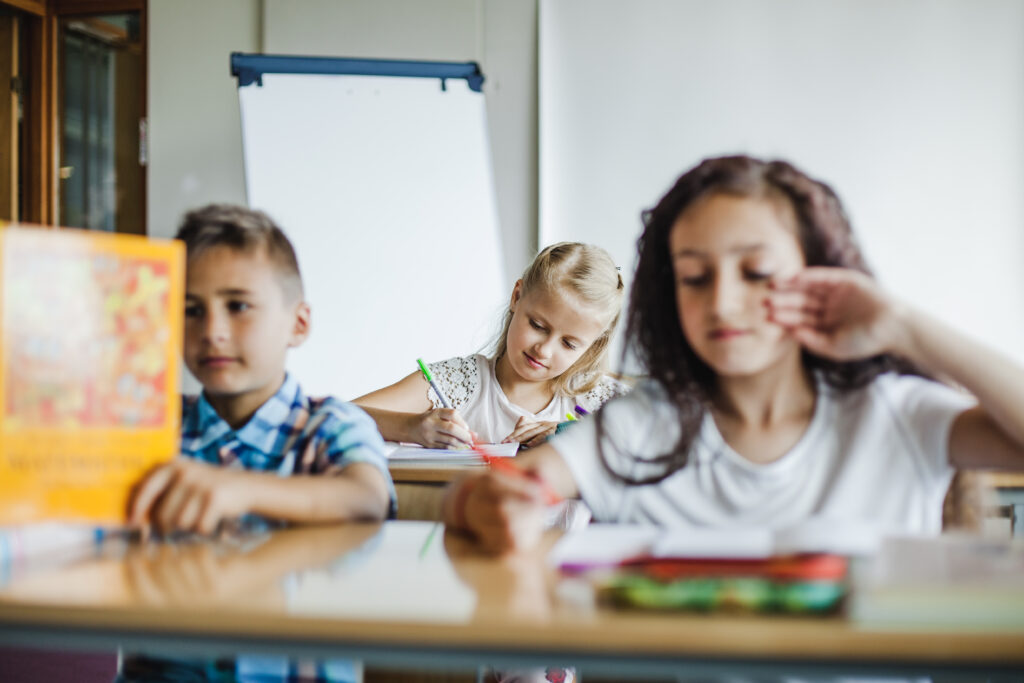
Unique Features
- Consistent and uniform across different schools.
- Focus on academic achievement and performance.
- Prepares students for standardized tests and college admissions.
- Emphasis on discipline and structured learning environments.
Impact on Different Learning Styles
Traditional education generally follows a one-size-fits-all approach, which can be challenging for students with diverse learning styles. However, many schools now incorporate differentiated instruction strategies to address the needs of visual, auditory, and kinesthetic learners. Special education programs are also widely available to support students with special needs.
Parental and Community Involvement
Parental involvement in traditional education varies but often includes participation in parent-teacher associations, school events, and support for homework and extracurricular activities. Community-based indoor playgrounds can offer after-school programs that provide a balance of play and learning for children enrolled in traditional schools.
Criticisms and Challenges
Critics of traditional education argue that it can be too rigid and focused on rote learning, which may not foster critical thinking and creativity. Additionally, the high-stakes testing environment can create stress and anxiety for students. Proponents argue that it provides a clear structure and prepares students for standardized testing and higher education.
Comparing Montessori and Traditional Education
Similarities
- Both aim to prepare children for future academic success.
- Focus on developing essential skills and knowledge.
- Both systems have adapted to incorporate modern educational tools and technology, often using spaces like indoor playgrounds for additional activities.
Differences
- Montessori: Promotes self-paced, individualized learning with an emphasis on intrinsic motivation and hands-on experiences.
- Traditional: Uses a structured, standardized approach with teacher-centered instruction and frequent assessments to measure progress.
- Montessori: Encourages independence and self-directed learning, allowing children to choose their activities and work at their own pace.
- Traditional: Follows a set curriculum with defined standards, focusing on uniformity and consistency across different schools and classrooms.
- Montessori: Classrooms are designed to support self-directed learning with mixed-age groups and specialized materials.
- Traditional: Classrooms typically group children by age and follow a more rigid schedule and curriculum.
Long-Term Outcomes:
Studies suggest that Montessori students often excel in social and emotional development, critical thinking, and problem-solving skills. Traditional education students may perform well in structured environments and standardized tests, which can be advantageous for college admissions. Indoor playgrounds often provide complementary environments where children from both educational backgrounds can socialize and play together.
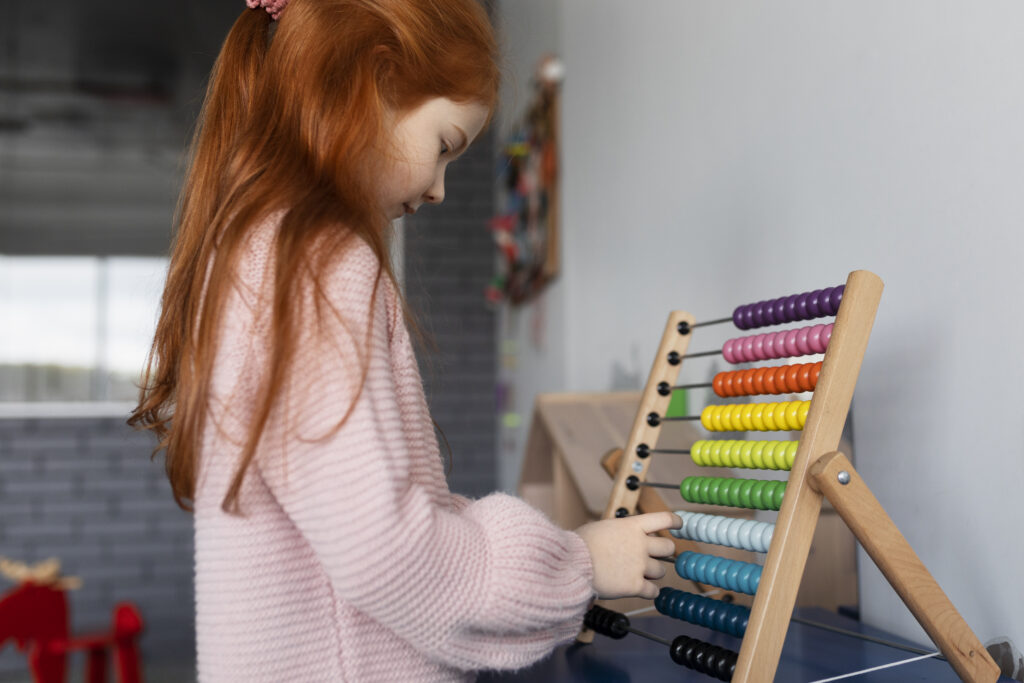
Each educational philosophy offers unique approaches and benefits. Montessori education stands out for its emphasis on independence, self-directed learning, and holistic development. It contrasts significantly with traditional education’s structured, teacher-centered methods. Understanding these differences helps parents and educators make informed decisions that best meet the needs and potential of each child.
Both Montessori and traditional education can benefit from the integration of indoor playgrounds, playrooms, and kids cafés. These spaces offer children a chance to apply the skills they learn in school—whether through self-directed play in a Montessori playground or structured activities in an indoor playground for toddlers.
For parents seeking indoor activities in Düsseldorf, options like indoor playgrounds for babies and indoor playgrounds from 1 year old provide enriching environments that support various learning styles and developmental needs. Whether looking for a baby playground or a more sophisticated playroom, these indoor spaces are valuable complements to educational experiences, fostering growth, socialization, and family bonding.
FAQ
1. What are the main differences between Montessori and Traditional education?
Montessori education focuses on self-paced, individualized learning with an emphasis on intrinsic motivation and hands-on experiences. Traditional education, on the other hand, uses a structured, standardized approach with teacher-centered instruction and frequent assessments to measure progress.
2. How do Montessori and Traditional schools handle assessments?
Montessori schools do not emphasize standardized testing; instead, they use observational assessments and portfolio reviews to track student progress. Traditional schools rely heavily on standardized tests, quizzes, and exams to evaluate student performance.
3. What are the core principles of Montessori education?
Core principles include child-centered learning, a prepared environment, mixed-age classrooms, and recognition of sensitive periods for learning specific skills. The approach emphasizes independence, freedom within limits, and respect for a child’s natural development.
4. What are the main principles of Traditional education?
A: Main principles include structured learning with a set curriculum, teacher-centered instruction, regular assessments to measure progress, and uniformity across different schools and classrooms.
5. How does Traditional education handle different learning styles?
A: While Traditional education generally follows a one-size-fits-all approach, many schools now incorporate differentiated instruction strategies to address the needs of visual, auditory, and kinesthetic learners. Special education programs are also widely available to support students with special needs.
6. How do the outcomes of Montessori and Traditional education compare?
Studies suggest Montessori students often excel in social and emotional development, critical thinking, and problem-solving skills. Traditional education students may perform well in structured environments and standardized tests, which can be advantageous for college admissions.
7. How do parental and community involvement differ in Montessori and Traditional education?
Montessori education emphasizes significant parental involvement and community engagement, often encouraging parents to participate in classroom activities and community service projects. Traditional education also involves parents but typically through parent-teacher associations, school events, and support for homework and extracurricular activities.
References
Gatto, J. T. (2002). The Underground History of American Education. Oxford Village Press.
Gutek, G. L. (2012). Historical and Philosophical Foundations of Education: A Biographical Introduction. Pearson.
Kramer, R. (1988). Maria Montessori: A Biography. Addison-Wesley
Lillard, A. S. (2005). Montessori: The Science Behind the Genius. Oxford University Press.
Marzano, R. J. (2003). What Works in Schools: Translating Research into Action. ASCD.
Montessori, M. (1912). The Montessori Method: Scientific Pedagogy as Applied to Child Education in the Children’s Houses. Frederick A. Stokes Company.
Murray, A. (2011). The Montessori Way. Montessori Foundation Press.
Ravitch, D. (2010). The Death and Life of the Great American School System: How Testing and Choice Are Undermining Education. Basic Books.
Discover the Working Room ⬇️