
Parents in Germany have several childcare options available for children before they enter formal schooling. These options cater to different family needs, work schedules, and the individual preferences of parents and children. In this article, we will explore the main alternatives: Kita, Kindergarten, Tagesmutter, Tagespflege, and other available forms of early childcare, providing insights to help parents choose the best option for their family.
1. Kita (Kindertagesstätte)
Kita (Kindertagesstätte) is an umbrella term for daycare centers for children from 4 months to 6 years old. Kitas provide full-day care and focus on both play and early education. They are usually divided into age-specific groups:
- Krippe: For children from 4 months to 3 years, focusing on nurturing, sensory play, and basic motor skills.
- Kindergarten: For children from 3 to 6 years, helping them develop socially, emotionally, and cognitively in preparation for school.
Kitas are often managed by municipalities, private entities, or religious organizations. The prices may vary depending on the entity that offers the service and the state where the place is. They emphasize play-based learning, creativity, and social interaction. Many Kitas also include indoor playgrounds as part of their facilities, offering a stimulating environment for kids to play and develop. Kitas are a popular option for working parents, as they offer care from early morning until the late afternoon, providing meals and rest periods for children.
2. Kindergarten
Kindergarten specifically refers to preschool for children aged 3 to 6 years. It is a more formal form of early childhood education compared to Kitas and aims to prepare children for school. Kindergartens focus on early literacy, numeracy, and social development through structured activities like arts, crafts, music, and outdoor play. Many kindergartens also offer indoor activities, such as creative workshops and learning through play.
Most Kindergartens operate during school hours (around 8:00 AM to 4:30 PM), though some offer extended care to accommodate working parents. Kindergartens are often partially or fully subsidized by the state, making them an affordable option for many families. The fees may vary depending on the states of Germany.

3. Tagesmutter (Childminder)
A Tagesmutter is a certified, state-approved childminder who provides care for small groups of children (usually between 3 and 6) in her home. This form of care often takes place in the childminder’s home, offering a cozy, family-like setting that allows for close, individualized attention. Many Tagesmütter provide flexible hours, which is ideal for parents with irregular work schedules. Some Tagesmütter may also have a small playroom for children, offering indoor playtime alongside outdoor activities.
Activities with a Tagesmutter may include basic educational play, outdoor activities, and everyday routines like mealtime and nap time. The personal attention and smaller group size are key advantages for parents looking for more individualized care. Tagesmütter must undergo training and certification through the local youth welfare office to ensure they meet health, safety, and developmental standards.
4. Tagespflege (Day care)
Tagespflege refers to a broader system of non-institutional childcare, including services provided by a Tagesmutter or other licensed caregivers. Unlike larger daycare centers (Kitas), where dozens of children may be grouped together, Tagespflege offers care in smaller settings. These care environments can range from the caregiver’s own home to specially designated childcare spaces, often equipped with basic indoor playground setups for younger children to explore.
The concept of Tagespflege is regulated by the local youth welfare office (Jugendamt), ensuring that caregivers meet strict standards. This flexible form of childcare caters to parents who seek a more personal, home-like atmosphere without the formal structure of institutional daycare.
5. Parent-Led Groups (Parents’ initiative)
Elterninitiative is a cooperative childcare model where parents are actively involved in running the daycare facility. These groups are typically smaller and allow parents to have direct input into the care, activities, and educational approaches provided to their children.
Parents take turns volunteering to help run the daycare, handling administrative tasks, and organizing activities. While this requires a greater time commitment, it allows parents to play a significant role in their child’s early development and creates a strong sense of community among the families involved. Some of these groups may even include access to indoor playgrounds or arrange regular visits to kids cafés in Düsseldorf.
They also offer Krippe (for children under 3 years) and Kindergarten (for children aged 3-6 years) services. Depending on what you are looking for, this option might suit your needs.

6. Private Nannies and Au Pairs
Private nannies offer full-time or part-time in-home care for children and may also assist with household chores. Nannies provide highly individualized care and flexible hours, making them an attractive option for families with specific scheduling needs. This option is typically more expensive than others but offers a tailored approach to childcare.
Au pairs are young people, often from abroad, who live with a family and provide part-time childcare in exchange for room, board, and a small stipend. While au pairs may not have professional childcare training, they provide a cost-effective option for families and often participate in cultural exchange programs. Families using au pairs often find local options for indoor playgrounds or playrooms for children where au pairs can take kids for social interaction and play.
Key Differences Between Childcare Options
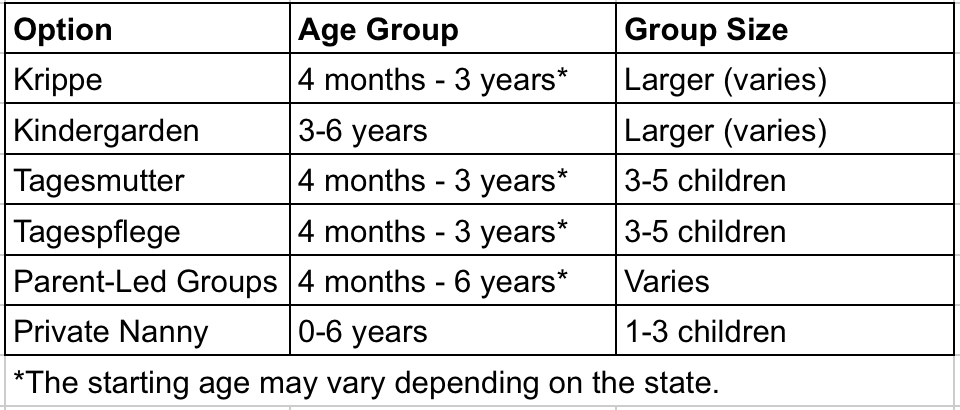
How to Choose the Right Option
Choosing the best childcare option depends on several factors:
• Child’s age: Very young children may benefit from the personal attention of a Tagesmutter or Tagespflege, while older children may thrive in the structured environment of a Kita or Kindergarten.
• Location and availability: In urban areas, there may be more options for Kitas and Kindergartens, while in rural areas, Tagesmutter or Tagespflege might be more common.
• Work schedules: If you need flexible hours, a Tagesmutter or private nanny may offer the best solution. Kitas and Kindergartens often have set hours.
• Group size preference: Some parents prefer smaller groups for more personalized attention, which makes Tagesmutter or Tagespflege appealing, while others may choose Kitas for their variety of activities and social opportunities.
Choosing the right childcare depends on your family’s needs, preferences, and the specific services available in your area. By understanding the different options available, you can make an informed decision that supports your child’s development and meets your family’s logistical needs.
Each option in Germany provides a safe and enriching environment for children before they begin formal schooling. Whether you choose a structured daycare center, a home-based care option, or an alternative like a private nanny, the goal is to ensure that your child receives the care and education they need in their early years.

Alongside these childcare options, families in Düsseldorf and other cities have access to a variety of indoor playgrounds and indoor activities, providing additional opportunities for children to play, learn, and socialize outside of formal care settings. From indoor playgrounds for babies to play centers for older children, these venues complement traditional childcare options by offering fun, engaging environments that stimulate growth and development. Whether you choose a Kita, Kindergarten, or Tagesmutter, pairing these options with visits to local playrooms for children or kids cafés can enhance your child’s early years, ensuring they have a well-rounded and fulfilling experience before starting formal schooling.
FAQ
1. What is the difference between a Kita and a Kindergarten?
A Kita (Kindertagesstätte) is a daycare facility for children aged 4 months -6 years, offering full-day care and educational activities. It divides in Krippe (under 3 years) and Kindergarden (3-6 years). Kindergarten specifically caters to children aged 3-6 years, focusing more on school preparation, early literacy, numeracy, and social development. Kindergarten is a part of Kita but provides more formal early childhood education.
2. What is a Tagesmutter and how is it different from a Kita?
A Tagesmutter is a certified childminder who cares for small groups of children (3-5 children) in her own home. The main difference is the smaller group size and more personalized, family-like care compared to the larger and more structured group setting of a Kita.
3. What are the advantages of choosing a Tagespflege over a larger daycare center?
Tagespflege offers a more intimate, home-based environment with a small group size (up to 5-6 children), allowing for personalized attention. It is often preferred for very young children (4 months -3 years) and provides a nurturing and flexible care option, especially in areas where larger daycare centers may not be easily accessible.
4. What is an Elterninitiative and how does it work?
Elterninitiative is a cooperative childcare model where parents are actively involved in running the daycare facility. Parents take turns volunteering, manage administrative tasks, and organize activities. This option allows parents to have direct input into the care and education provided to their children, fostering a strong community environment.
5. What factors should parents consider when choosing the right childcare option?
Parents should consider factors such as their child’s age, location, availability of childcare centers, work schedules, and group size preferences. While some may prefer the more structured environment of a Kita or Kindergarten, others may value the flexible hours and personalized care of a Tagesmutter or Tagespflege.
6. Can private nannies and au pairs be an alternative to daycare centers?
Yes, private nannies and au pairs provide personalized in-home childcare. Nannies offer full-time or part-time care and can assist with household chores, making them a flexible option for families with specific scheduling needs. Au pairs are young people who live with the family and provide part-time care in exchange for room, board, and a stipend, offering a cost-effective solution for some families.