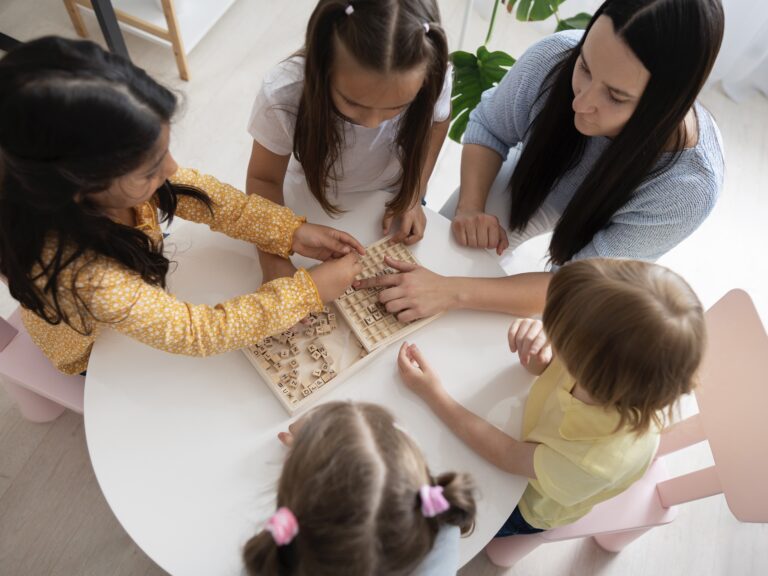
Education is a cornerstone of child development, and choosing the right approach can significantly impact a child’s growth. Here, we explore five distinct educational philosophies: Montessori, Goddard, Waldorf and Reggio Emilia education. We’ll delve into their principles, teaching methods, and unique features, followed by a detailed comparative analysis of how Montessori education stands against each of the others, highlighting similarities and differences.
Montessori Education
Montessori education, founded by Dr. Maria Montessori in the early 20th century, emphasizes child-centered learning, hands-on activities, and self-directed pacing. It supports various learning styles and encourages significant parental involvement. The method has faced criticisms regarding its lack of structure compared to traditional education, but proponents highlight its strengths in fostering independence and critical thinking. Spaces like a Montessori playground can enhance this philosophy, providing environments where children can explore freely and learn through play.
For a detailed exploration of Montessori education, please read the article here.
Goddard Education
Historical Context and Evolution
The Goddard School was founded by Lois Goddard Haines in 1988 in Malvern, Pennsylvania, USA. It has grown into a nationwide network of franchised preschools known for their focus on early childhood education.
Principles
- FLEX Learning Program: Combines academic, social, emotional, and physical development.
- STEAM Curriculum: Integrates Science, Technology, Engineering, Arts, and Mathematics.
- Assessment-Based: Uses ongoing assessments to tailor learning experiences.
- Balanced Learning: Ensures a blend of play-based and academic-focused activities.
Teaching Methods
- Teacher-Led: Structured lessons with clear objectives.
- Interactive Activities: Focus on hands-on, engaging activities.
- Balanced Approach: Combines teacher-directed and child-initiated learning.
- Technology Integration: Uses modern educational tools and technology to enhance learning.

Unique Features
- Strong emphasis on early childhood education.
- Incorporates modern educational technology.
- Focus on readiness for primary school and beyond.
- Continuous assessment to adapt to each child’s progress.
Impact on Different Learning Styles
Goddard’s balanced approach, incorporating both structured lessons and child-initiated activities, caters to different learning styles. The STEAM curriculum supports visual, auditory, and kinesthetic learners by integrating various educational tools and methods, similar to some indoor activities that emphasize experiential learning.
Parental and Community Involvement
Parental involvement is integral, with schools encouraging regular communication, classroom activities, and special events. Community involvement is promoted through local partnerships and service projects, much like the engagement seen in indoor playgrounds that host family-oriented events.
Criticisms and Challenges
Critics of the Goddard approach argue that it may be too structured for some children, potentially stifling creativity. Additionally, as a franchised model, the quality of education can vary between locations. However, supporters highlight its structured curriculum and readiness for primary school.
Waldorf Education
Historical Context and Evolution
Waldorf education, also known as Steiner education, was founded by Rudolf Steiner in Germany in 1919. It emerged from the anthroposophical movement and has since expanded globally, adapting to various cultural contexts while maintaining its core principles.
Principles
- Holistic Development: Balances intellectual, artistic, and practical skills.
- Imagination and Creativity: Strong emphasis on storytelling, arts, and imaginative play.
- Rhythmic Structure: Daily, weekly, and seasonal rhythms to provide a sense of security and predictability.
- Spiritual Development: Incorporates aspects of spiritual growth and moral development.
Teaching Methods
- Experiential Learning: Learning through doing and experiencing.
- Arts-Integrated Curriculum: Uses arts to teach various subjects.
- Age-Specific Curriculum: Tailors educational content to the developmental stages of children.
- Main Lesson Blocks: Focuses on in-depth exploration of subjects in extended blocks.

Unique Features
- Delays formal academics in early childhood.
- No use of textbooks in early grades.
- Emphasis on nature and outdoor activities.
- Use of natural materials and handcrafted learning tools.
Impact on Different Learning Styles
Waldorf education supports different learning styles through its arts-integrated curriculum and experiential learning approach. The emphasis on imagination and creativity caters to visual, auditory, and kinesthetic learners, making it a good fit for playrooms designed for creative play.
Parental and Community Involvement
Parental involvement is highly valued in Waldorf education. Parents often participate in school festivals, classroom activities, and governance. Community involvement is fostered through celebrations, local partnerships, and service projects.
Criticisms and Challenges
Critics argue it can be too unstructured and the delayed introduction of academics may disadvantage students. Some question the spiritual aspects. Proponents argue it fosters well-rounded, creative individuals.
Reggio Emilia Education
Historical Context and Evolution
The Reggio Emilia approach was developed by Loris Malaguzzi and parents in the villages around Reggio Emilia in Italy after World War II. It is renowned for its child-centered and project-based learning approach and has influenced early childhood education worldwide.
Principles
- Child-Centered: Views children as competent and capable, with a strong emphasis on their interests.
- Project-Based Learning: Guided by children’s curiosity.
- Environment as the Third Teacher: Classrooms are designed to be beautiful and stimulating.
- Collaboration: Encourages collaboration among children, teachers, and parents.
Teaching Methods
- Collaborative Learning: Encourages group work and social interaction.
- Documentation: Reflects on learning processes through regular documentation.
- Emergent Curriculum: Develops based on the interests and ideas of the children.
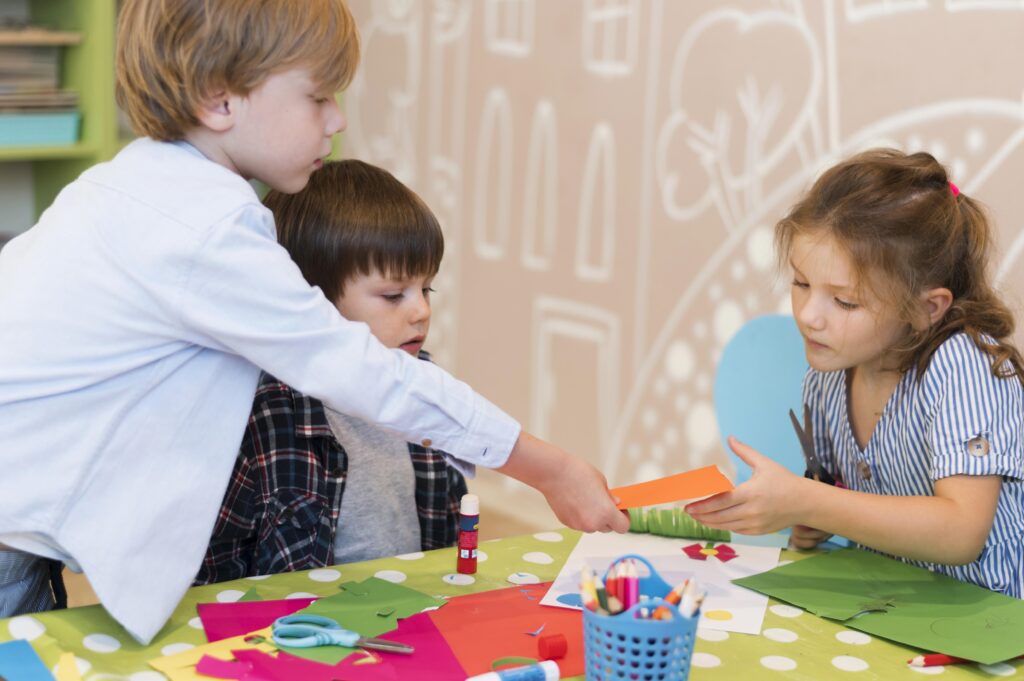
- 100 Languages of Children: Emphasizes multiple forms of expression, including drawing, sculpting, and dancing.
Unique Features
- Strong community involvement.
- Focus on expressive arts.
- Emphasizes the importance of the learning environment.
- Encourages self-expression and social collaboration.
Impact on Different Learning Styles
Reggio Emilia’s emphasis on project-based and collaborative learning supports various learning styles. The approach’s flexibility allows for the incorporation of visual, auditory, and kinesthetic learning preferences.Reggio Emilia’s emphasis on project-based and collaborative learning supports various learning styles. The approach’s flexibility allows for the incorporation of visual, auditory, and kinesthetic learning preferences.
Parental and Community Involvement
Parents are considered partners in education, participating in classroom activities, curriculum planning, and documentation. Schools engage in local projects to foster community involvement.
Criticisms and Challenges
Critics argue the lack of structure can be challenging for students and the approach requires highly skilled educators, which could be a barrier to implementation. Supporters praise its responsiveness to children’s interests and collaborative nature.
Comparing Montessori Education with Other Educational Philosophies
Montessori vs. Goddard
Similarities
- Both emphasize holistic development and hands-on learning, addressing academic, social, emotional and physical growth.
- Both incorporate some level of technology into the learning process.
Differences
- Montessori: Focuses on self-directed learning and intrinsic motivation, with children learning at their own pace.
- Goddard: Combines structured lessons with child-initiated activities, utilizing ongoing assessments to tailor learning experiences.
- Montessori: Emphasizes mixed-age classrooms to foster peer learning and social development.
- Goddard: Uses age-specific classrooms and places a stronger emphasis on preparing children for primary school.
Montessori vs. Waldorf
Similarities
- Both emphasize holistic development, including intellectual, artistic, and practical skills.
- Encourage creativity, imagination, and experiential learning.
- Focus on developing the whole child: mind, body, and spirit.
Differences
- Montessori: Uses specific, tactile materials for hands-on learning, with a strong emphasis on individual work and self-paced learning.
- Waldorf: Prioritizes arts and imaginative play, using storytelling and rhythmic activities, with a strong focus on group work and collaboration.
- Montessori: Has a more structured and prepared environment with defined materials and activities.
- Waldorf: Emphasizes a more fluid and rhythmic structure, with significant use of nature and outdoor activities.
Montessori vs. Reggio Emilia
Similarities
- Both are child-centered and prioritize individual interests.
- Both emphasize hands-on learning and the importance of the environment, encouraging self-expression and creativity.
Differences
- Montessori: Has a more defined curriculum with specific materials and a highly structured environment to support independent learning.
- Reggio Emilia: Uses a flexible, project-based approach, with the curriculum emerging from the interests and ideas of the children.
- Montessori: Focuses on individual work and self-paced learning.
- Reggio Emilia: Emphasizes collaborative learning and social interaction, with strong community involvement and documentation of learning processes.
The choice between Montessori, Waldorf, Goddard, and Reggio Emilia can be complemented by the city’s variety of indoor playgrounds, playrooms, and kids cafés. These spaces provide children with opportunities to explore, learn, and grow in environments that align with their educational philosophy. Whether it’s a baby playground or a Montessori playground, these venues extend learning beyond the classroom, offering rich indoor activities that support socialization, creativity, and family bonding. Families looking for a blend of structure and freedom can find the right fit among indoor playgrounds for toddlers and playrooms for children, ensuring that every child’s learning journey is supported in a fun and engaging way.
FAQ
1. How does Goddard education integrate technology into its curriculum?
Goddard education incorporates modern educational technology through its STEAM curriculum, which integrates Science, Technology, Engineering, Arts, and Mathematics. This approach ensures that children are comfortable with technology and can use it as a tool for learning and creativity.
2. What makes Waldorf education unique compared to other educational philosophies?
Waldorf education is unique for its emphasis on holistic development, imagination, and creativity. It uses storytelling, arts, and rhythmic activities to teach various subjects. Waldorf also delays formal academics in early childhood and emphasizes nature and outdoor activities.
3. How does Reggio Emilia education approach learning differently than Montessori?
Reggio Emilia education is more flexible and project-based, with the curriculum emerging from the interests and ideas of the children. It emphasizes collaborative learning, social interaction, and strong community involvement, whereas Montessori has a more structured environment with defined materials and activities.
4. What are the benefits of a holistic approach in Waldorf and Montessori education?
Both Waldorf and Montessori education emphasize holistic development, addressing intellectual, artistic, emotional, and physical growth. This approach nurtures well-rounded individuals who are prepared for various aspects of life, fostering creativity, critical thinking, and social skills.
5. How does the Goddard approach prepare children for primary school?
The Goddard approach uses a structured curriculum combined with play-based learning to prepare children for primary school. Its STEAM curriculum ensures children are well-versed in science, technology, engineering, arts, and mathematics, providing a balanced foundation for future academic success.
6. What role does community involvement play in Reggio Emilia education?
Community involvement is a fundamental aspect of Reggio Emilia education. Schools often engage in local projects, and parents are active partners in the educational process, contributing to curriculum planning, classroom activities, and documentation, fostering a strong sense of community and collaboration.
References
Edwards, C. P., Gandini, L., & Forman, G. (1998). *The Hundred Languages of Children: The Reggio Emilia Approach to Early Childhood Education*. Ablex Publishing Corporation.
Goddard School. (n.d.). About us. Retrieved from https://www.goddardschool.com/about-us
Gutek, G. L. (2012). *Historical and Philosophical Foundations of Education: A Biographical Introduction*. Pearson.
Lillard, A. S. (2005). *Montessori: The Science Behind the Genius*. Oxford University Press.
Montessori, M. (1912). *The Montessori Method: Scientific Pedagogy as Applied to Child Education in the Children’s Houses*. Frederick A. Stokes Company.
Private School Review. (2024). The Goddard School (2024 profile) – Norristown, PA. Retrieved from https://www.privateschoolreview.com/the-goddard-school-profile
Reggio Children. (n.d.). The Reggio Emilia approach: Principles. Retrieved from https://www.reggiochildren.it/en/reggio-emilia-approach/principles/
Discover our Working Room ⬇️