What is the purpose of Montessori education?
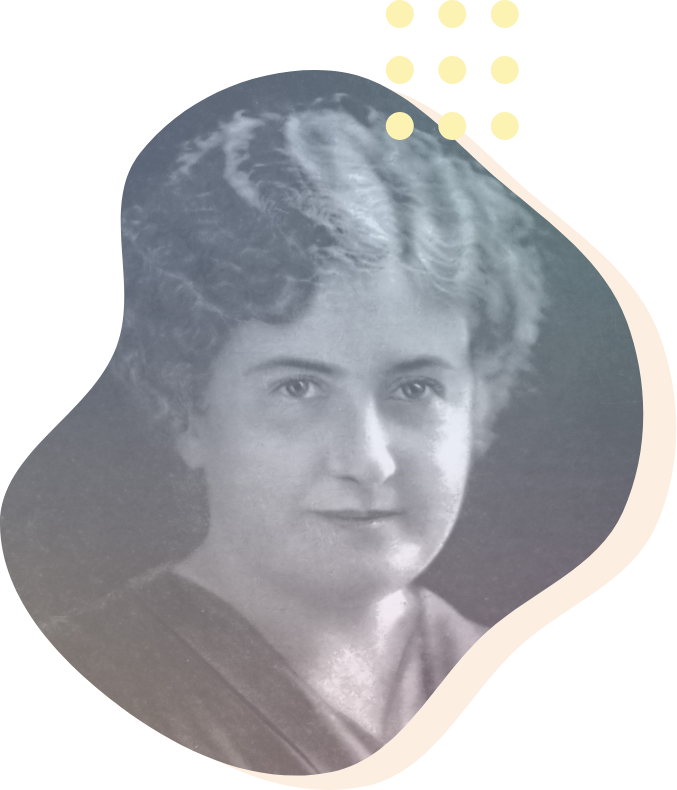
Educating a child is not an easy task. It requires a lot of patience, will and above all, intelligence. At least that is what Maria Montessori thought.
The Montessori Method is based on the principle that children should have complete freedom to learn and develop independently in a stimulating environment of understanding and affection. Montessori proposed that children have an immense capacity to absorb knowledge, initially on a subconscious level and later through conscious understanding. This approach empowers the child to take an active role in their own learning journey.
Montessori education also pays special attention to love and understanding of parents towards their children— a love based on respect, freedom, responsibility and the establishment of clear but unrestrictive limits, where trust, patience and empathy become the protagonists.
What makes Montessori unique?
What makes Montessori unique?
Mixed age groups
Montessori classrooms typically have children of varying ages grouped together, which encourages younger children to learn from older peers and for older children to reinforce their learning by teaching concepts they have already mastered. The difference in ages is regularly up to 3 years.
Self-directed learning
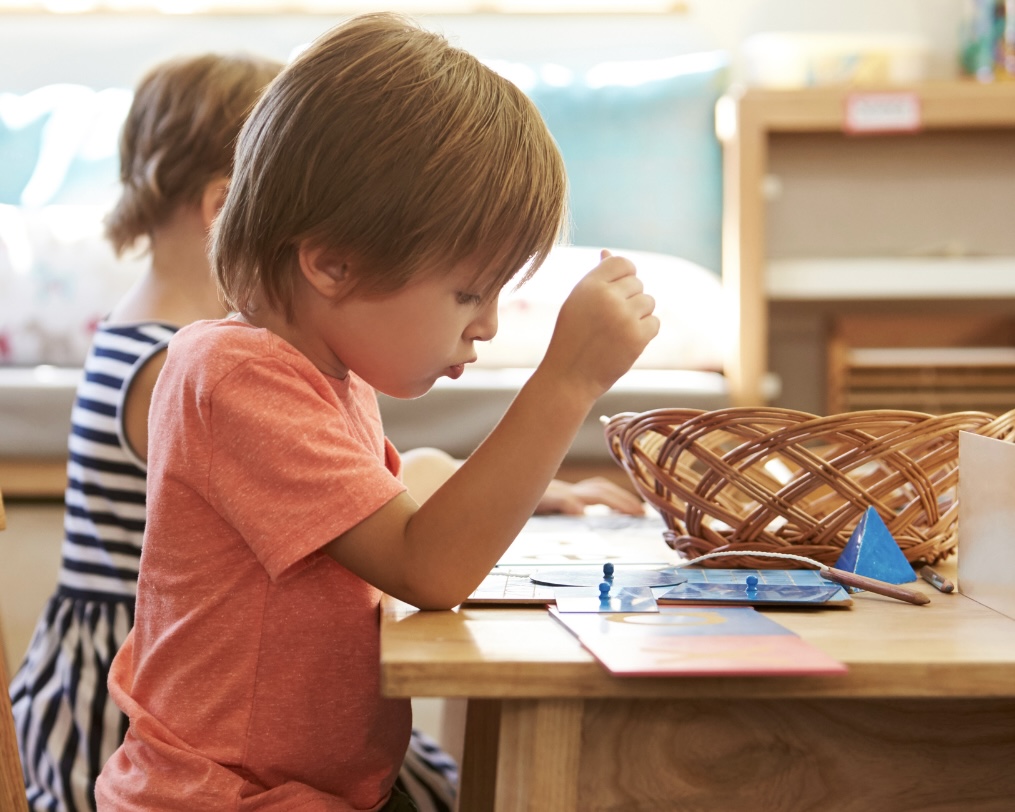
Children choose activities from a range of options that are appropriate for their developmental stage. This autonomy gives them the freedom to work at their own pace, promoting independence, motivation, and a deep, personal engagement with the material.
Uninterrupted work cycles
Children choose activities from a range of options that are appropriate for their developmental stage. This autonomy gives them the freedom to work at their own pace, promoting independence, motivation, and a deep, personal engagement with the material.
Five cores of Montessori principles
Five cores of Montessori principles
1. Respect for the Child
Montessori teaching emphasizes respect for each child as a unique individual. Educators observe children without interrupting their activities, encouraging natural development and respect for their individual choices and pace.
2. The Absorbent Mind
Montessori believed that children absorb knowledge from their environment effortlessly in their early years. This principle underlines the importance of a rich and positive environment where children can explore and learn.
3. Auto Education
Montessori believed in the children’s ability to educate themselves. This self-directed learning allows children to learn through their own discoveries, facilitating a deeper understanding of the subject matter and promoting self-confidence.
5. Prepared Environment
Montessori classrooms are carefully designed to offer stimuli that correspond to the developmental needs of children. The environment is prepared with materials and activities that promote independence, order, and choice, enabling children to engage in self-directed, meaningful activities.
4. Sensitive periods
According to Montessori, children go through specific "sensitive periods" when they are more receptive to certain types of learning experiences, such as language development, sensory activities, and social skills. Recognizing and taking advantage of these periods is crucial for optimal development.
1. Respect for the Child
Montessori teaching emphasizes respect for each child as a unique individual. Educators observe children without interrupting their activities, encouraging natural development and respect for their individual choices and pace.
2. The Absorbent Mind
Montessori believed that children absorb knowledge from their environment effortlessly in their early years. This principle underlines the importance of a rich and positive environment where children can explore and learn.
3. Auto Education
Montessori believed in the children’s ability to educate themselves. This self-directed learning allows children to learn through their own discoveries, facilitating a deeper understanding of the subject matter and promoting self-confidence.
4. Sensitive Periods
According to Montessori, children go through specific "sensitive periods" when they are more receptive to certain types of learning experiences, such as language development, sensory activities, and social skills. Recognizing and taking advantage of these periods is crucial for optimal development.
5. Prepared Environment
Montessori classrooms are carefully designed to offer stimuli that correspond to the developmental needs of children. The environment is prepared with materials and activities that promote independence, order, and choice, enabling children to engage in self-directed, meaningful activities.
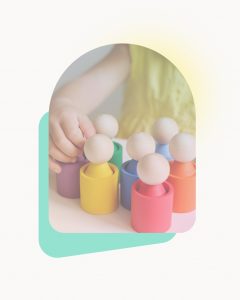
Stages of Montessori education
Stages of Montessori education
First plane: Infancy (0-6 years)
0-3 years (Infant & Toddler)
- Focus: Emphasizes physical and psychological growth, basic motor skills, and early language acquisition.
- Environment: The setting is designed with sensory and practical life activities that promote movement and independence. Materials are safe, manageable, and encourage exploration.
- Educational Goals: Foster basic motor coordination, independence, early language skills, and sensory development.
3-6 years (Preschool)
- Focus: Refinement of earlier skills, engaging in more complex tasks, and introduction to academic foundations.
- Environment: Classrooms include areas for practical life, sensory-based learning, and foundational academic work in math and language.
- Educational Goals: Enhance sensory refinement, develop social skills, and introduce academic fundamentals, promoting self-directed learning.
Second plane: Childhood (6-12 years)
6-9 years (Lower Elementary)
- Focus: Introduction to abstract thinking by building on concrete knowledge, understanding the reasons behind learned concepts.
- Environment: Offers materials that bridge tangible and abstract learning, such as advanced math materials and research projects.
- Educational Goals: Develop reasoning abilities, expand knowledge of the world, and foster understanding of cultural and scientific concepts.
9-12 years (Upper Elementary)
- Focus: Deepening understanding of complex subjects and connections between different areas of knowledge.
- Environment: Supports advanced academic exploration and sophisticated projects that require critical thinking.
- Educational Goals: Strengthen intellectual independence, enhance project management skills, and promote ethical thinking.
Third plane: Adolescence (12-18 years)
12-15 years (Middle School)
- Focus: Emotional and social development as students become more aware of their individual identities and societal roles.
- Environment: Includes practical life applications and community engagement, like running a small business or organizing community service.
- Educational Goals: Support personal development, community involvement, and the application of academic knowledge to real-world situations.
15-18 years (High School)
- Focus: Preparation for adult responsibilities, focusing on career exploration and advanced studies.
- Environment: Often extends beyond the classroom to include internships, work experience, and community projects.
- Educational Goals: Develop self-expression, advanced reasoning, social responsibility, and preparation for professional life.
First Plane: Infancy (0-6 years)
0-3 years (Infant & Toddler)
- Focus: Emphasizes physical and psychological growth, basic motor skills, and early language acquisition.
- Environment: The setting is designed with sensory and practical life activities that promote movement and independence. Materials are safe, manageable, and encourage exploration.
- Educational Goals: Foster basic motor coordination, independence, early language skills, and sensory development.
3-6 years (Preschool)
- Focus: Refinement of earlier skills, engaging in more complex tasks, and introduction to academic foundations.
- Environment: Classrooms include areas for practical life, sensory-based learning, and foundational academic work in math and language.
- Educational Goals: Enhance sensory refinement, develop social skills, and introduce academic fundamentals, promoting self-directed learning.
Second Plane: Childhood (6-12 years)
6-9 years (Lower Elementary)
- Focus: Introduction to abstract thinking by building on concrete knowledge, understanding the reasons behind learned concepts.
- Environment: Offers materials that bridge tangible and abstract learning, such as advanced math materials and research projects.
- Educational Goals: Develop reasoning abilities, expand knowledge of the world, and foster understanding of cultural and scientific concepts.
9-12 years (Upper Elementary)
- Focus: Deepening understanding of complex subjects and connections between different areas of knowledge.
- Environment: Supports advanced academic exploration and sophisticated projects that require critical thinking.
- Educational Goals: Strengthen intellectual independence, enhance project management skills, and promote ethical thinking.
Third Plane: Adolescence (12-18 years)
12-15 years (Middle School)
- Focus: Emotional and social development as students become more aware of their individual identities and societal roles.
- Environment: Includes practical life applications and community engagement, like running a small business or organizing community service.
- Educational Goals: Support personal development, community involvement, and the application of academic knowledge to real-world situations.
15-18 years (High School)
- Focus: Preparation for adult responsibilities, focusing on career exploration and advanced studies.
- Environment: Often extends beyond the classroom to include internships, work experience, and community projects.
- Educational Goals: Develop self-expression, advanced reasoning, social responsibility, and preparation for professional life.
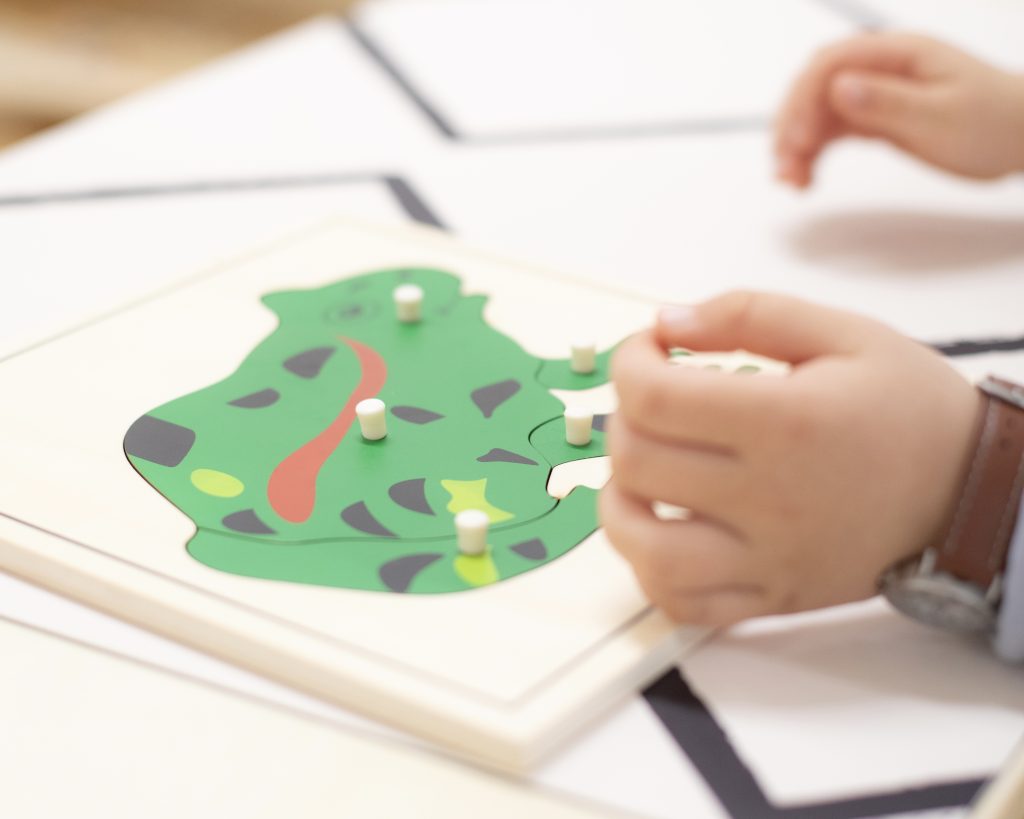
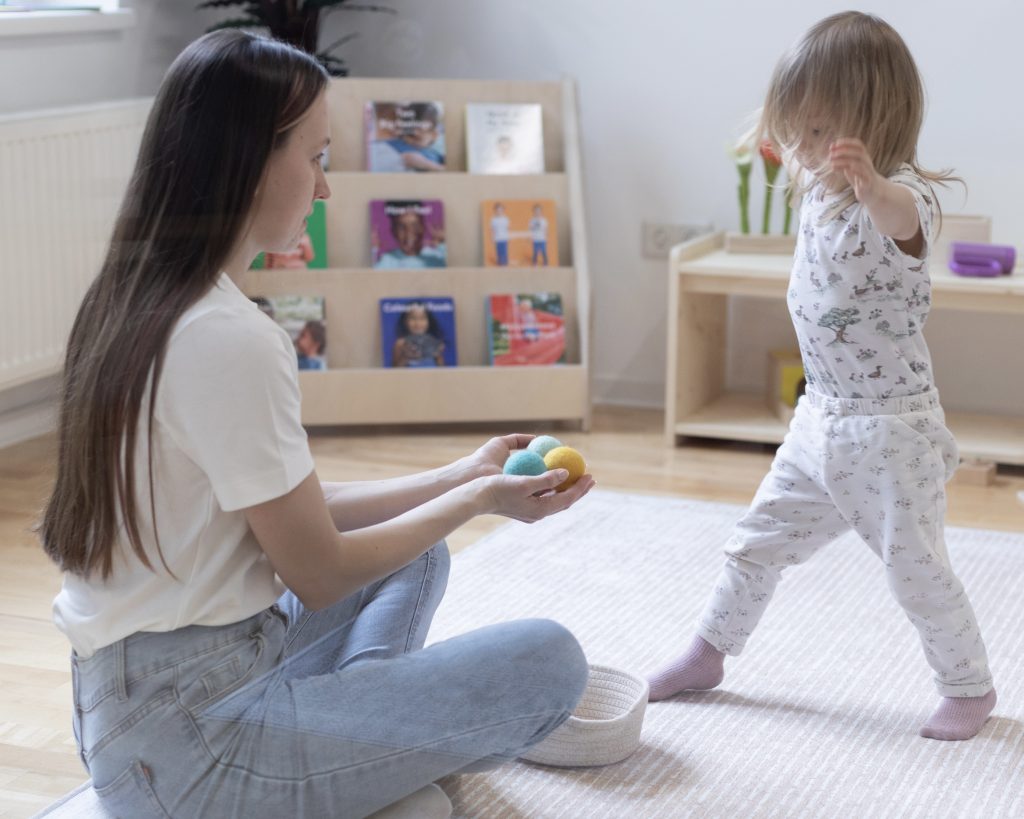
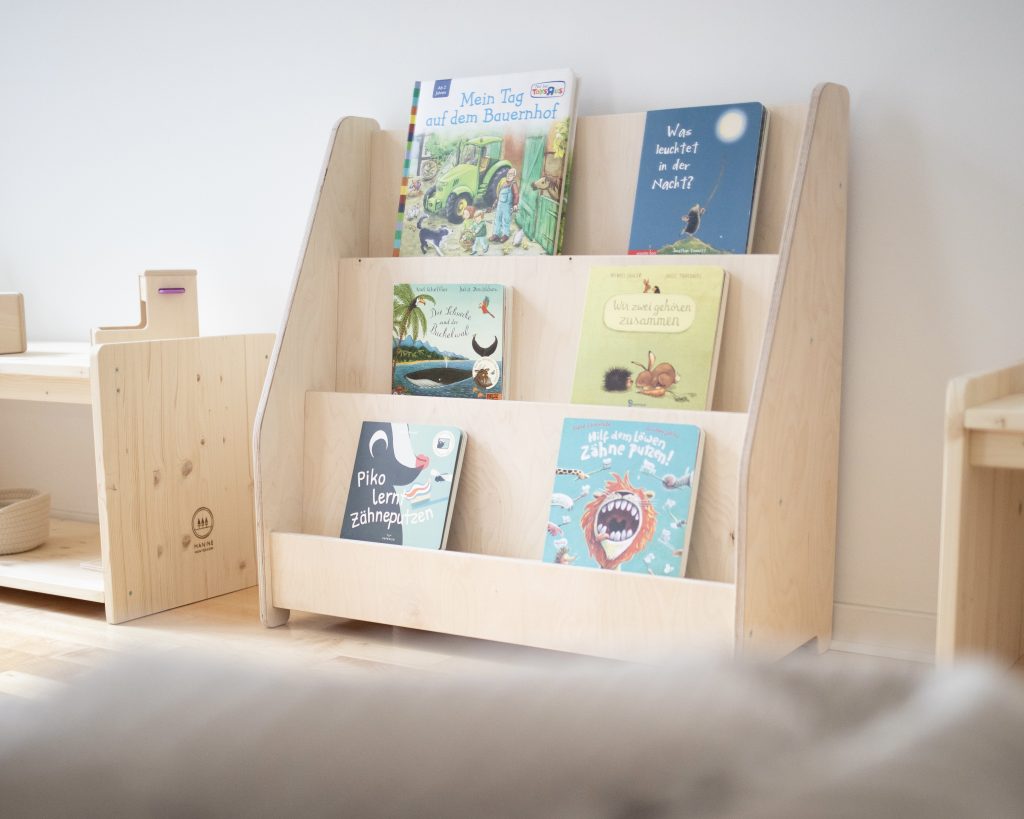
What makes the difference in comparison with traditional education?
Child-led learning
Montessori schools encourage students to take charge of their learning, selecting activities based on their interests, which promotes longer periods of concentration and self-discipline.
Age mixing
Children of different ages share the same classroom, which enables younger children to learn from older peers and vice versa, fostering natural mentorship and reducing competition.
Assesment
Rather than relying on traditional tests, Montessori educators use detailed observation and documented progress to assess students, focusing on their development over time rather than comparative grades.
Flexibility
Montessori curriculum is designed to adapt to the needs and pace of each child, making learning more personalized and effectively maintaining engagement compared to traditional methods that follow a one-size-fits-all approach.
Materials
Montessori materials, crafted from natural wood, are simple yet sophisticated and self-correcting, promoting sensory-based learning. Traditional classrooms use plastic and digital tools, lacking tactile feedback and self-directed discovery.
What makes the difference in comparison with traditional education?
Child-led Learning
Montessori schools encourage students to take charge of their learning, selecting activities based on their interests, which promotes longer periods of concentration and self-discipline.
Age Mixing
Children of different ages share the same classroom, which enables younger children to learn from older peers and vice versa, fostering natural mentorship and reducing competition.
Assesment
Rather than relying on traditional tests, Montessori educators use detailed observation and documented progress to assess students, focusing on their development over time rather than comparative grades.
Flexibility
Montessori curriculum is designed to adapt to the needs and pace of each child, making learning more personalized and effectively maintaining engagement compared to traditional methods that follow a one-size-fits-all approach.
Materials
Montessori materials, crafted from natural wood, are simple yet sophisticated and self-correcting, promoting sensory-based learning. Traditional classrooms use plastic and digital tools, lacking tactile feedback and self-directed discovery.
Key materials in Montessori education
Key materials in Montessori education
Practical life activities are fundamental in Montessori education, helping children develop motor skills, independence, and coordination. These materials include:
- Pouring Exercises: Small pitchers, jugs, and cups for practicing pouring water or other substances, enhancing hand-eye coordination and control.
- Buttoning Frames: Frames with various fastenings like buttons, zippers, and snaps that children use to practice dressing skills.
- Cleaning Tools: Child-sized brooms, mops, and dustpans for learning basic cleaning and care for their environment.
Sensorial materials are designed to refine the five senses and help children understand and categorize their world. Examples include:
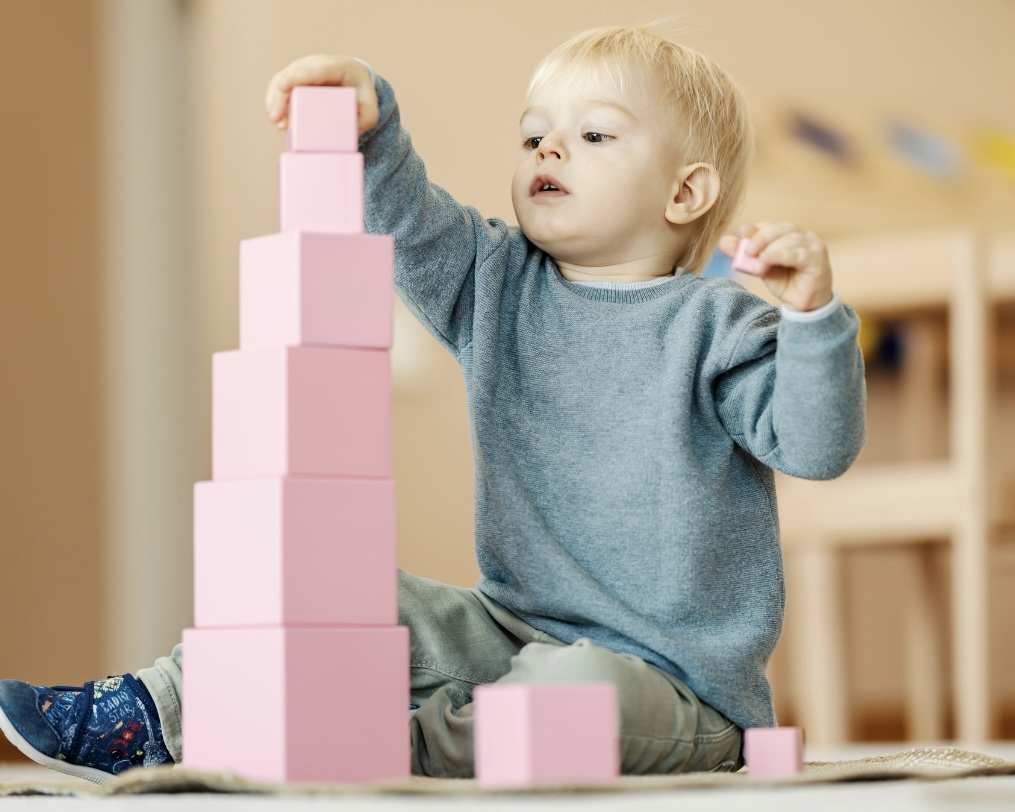
- Pink Tower: A series of ten pink cubes of varying sizes that children stack, promoting visual discrimination of size and enhancing fine motor skills.
- Brown Stair: Ten wooden prisms that vary in width but not in length, teaching children about different dimensions.
- Color Tablets: A set of tablets in various shades, helping children distinguish and classify colors.
Language materials support the development of reading, writing, and communication skills. Key materials include:
- Sandpaper Letters: Wooden tablets with letters made from sandpaper, allowing children to trace the shapes with their fingers, reinforcing the connection between the physical movement and the visual form of each letter.
- Moveable Alphabet: A set of letters that children use to form words, sentences, and stories, encouraging creative writing and phonetic understanding.
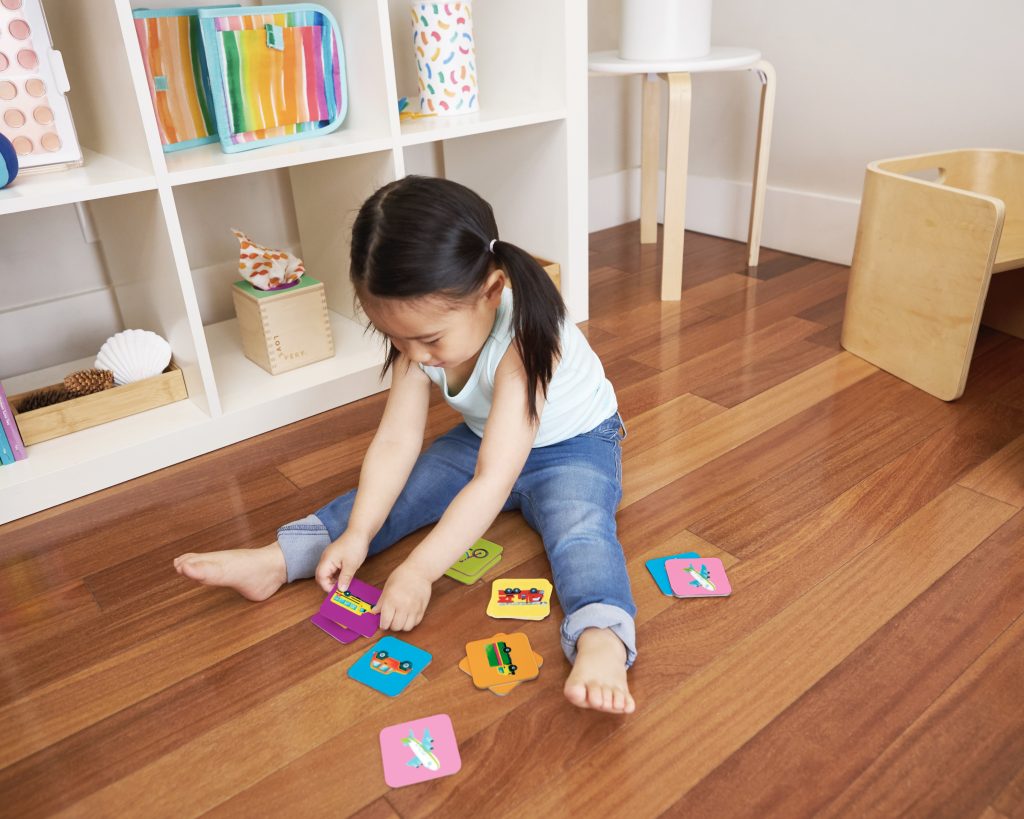
- Classified Cards: Sets of cards with pictures and corresponding words, helping children expand their vocabulary and comprehension.
Montessori mathematics materials introduce abstract concepts through concrete manipulation, fostering a deep understanding of numbers and their relationships. Notable materials are:
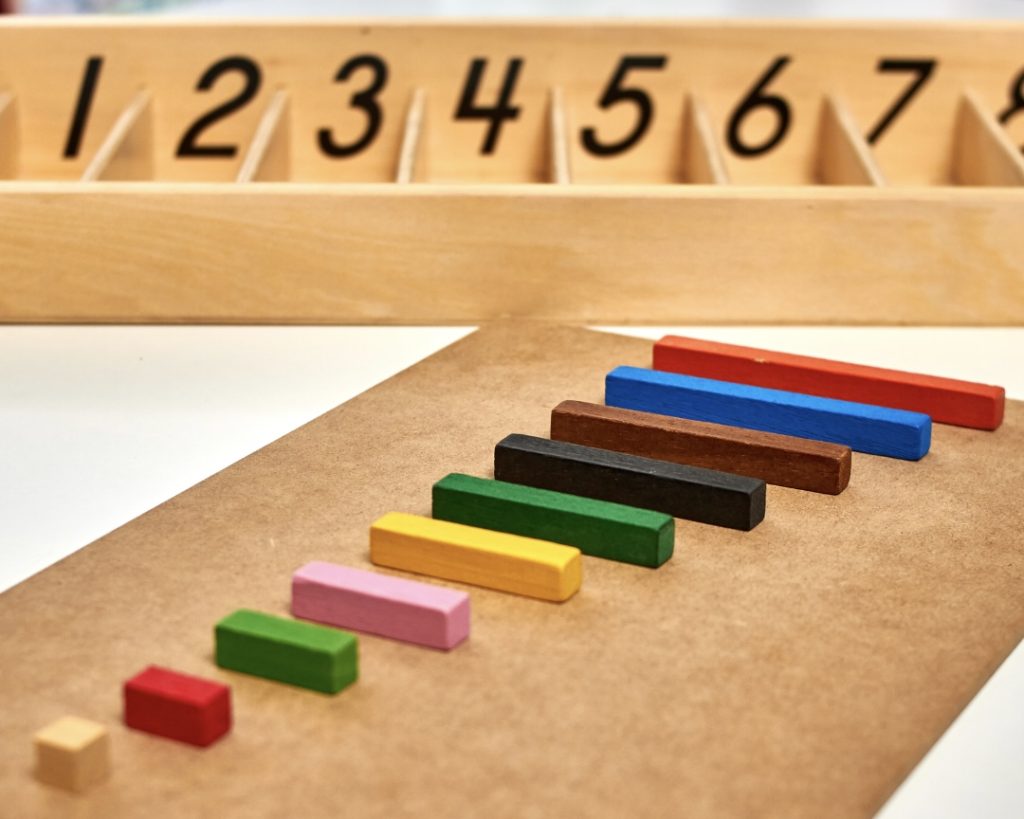
- Number Rods: Rods of varying lengths, each representing a number from 1 to 10, used to teach counting and number sequencing.
- Golden Beads: Beads grouped into units, tens, hundreds, and thousands, which children use to perform arithmetic operations and understand the decimal system.
- Stamp Game: Small tiles representing units, tens, hundreds, and thousands, which children use for addition, subtraction, multiplication, and division.
Cultural and scientific materials broaden a child’s understanding of the world and its various cultures, fostering a sense of global citizenship. These materials include:
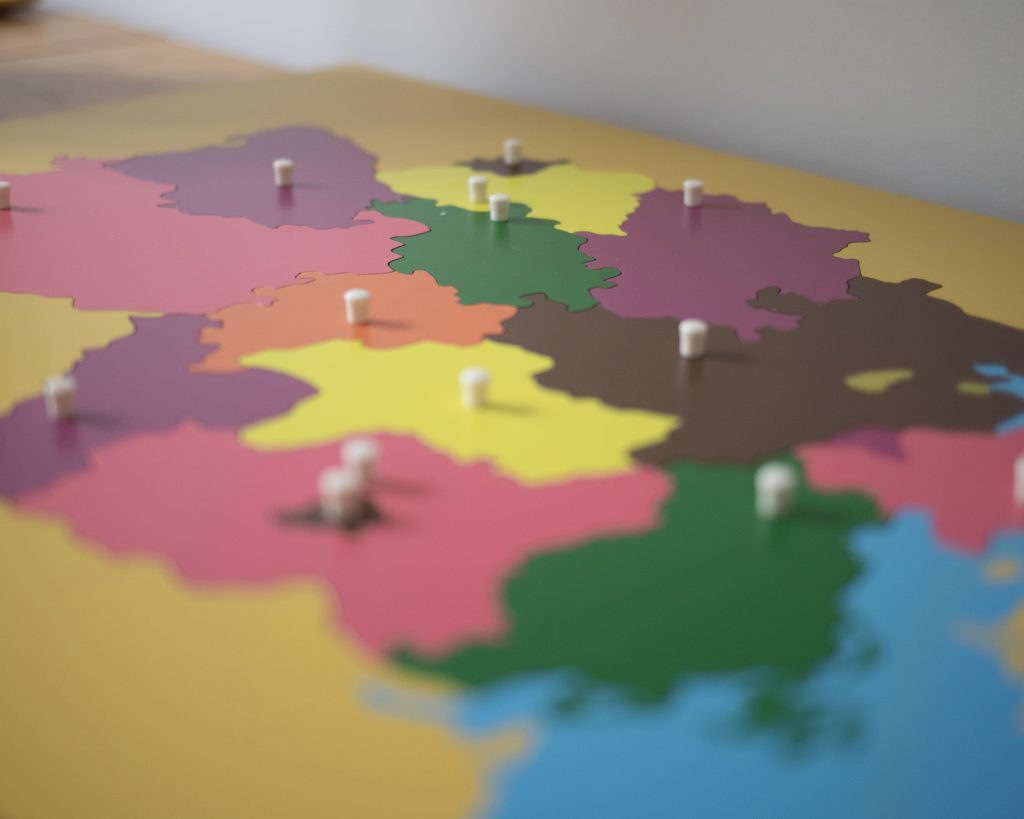
- Geography Puzzles: Puzzle maps of continents, countries, and regions, helping children learn about geography and spatial relationships.
- Botany and Zoology Cards: Detailed images and information about plants and animals, promoting biological classification and understanding.
- Physics and Chemistry Kits: Simple, safe experiments and demonstrations that introduce children to basic scientific concepts and inquiry.
The design of Montessori classrooms: Creating an optimal learning environment
Child-centered layout
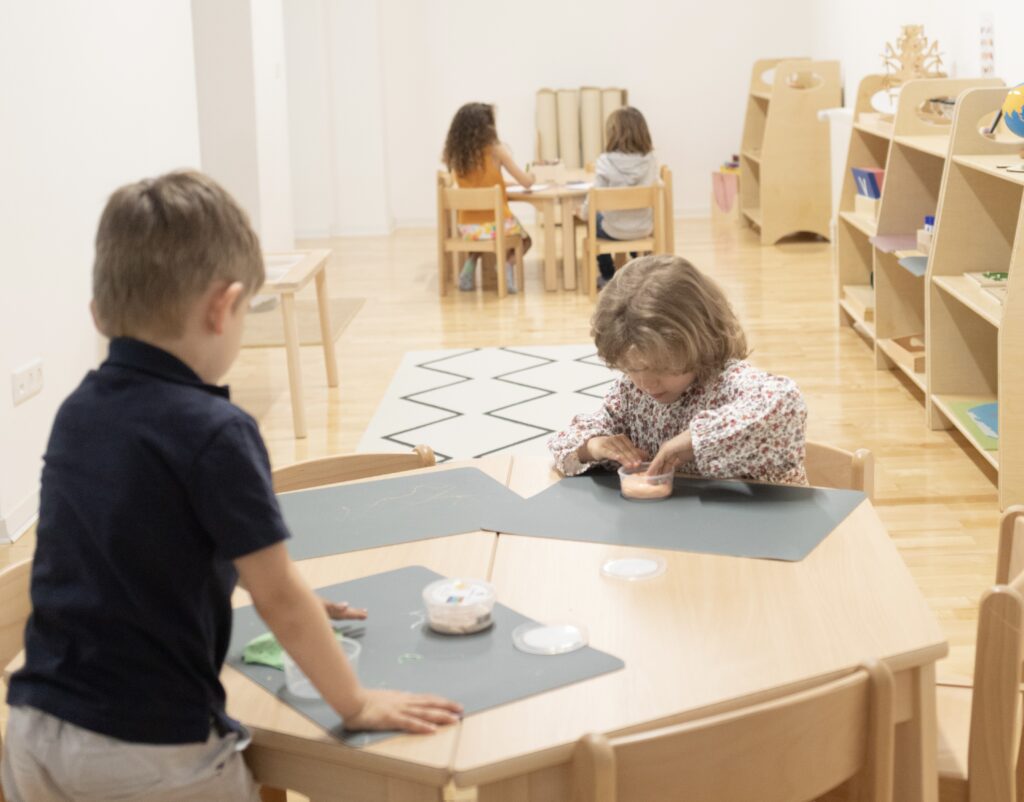
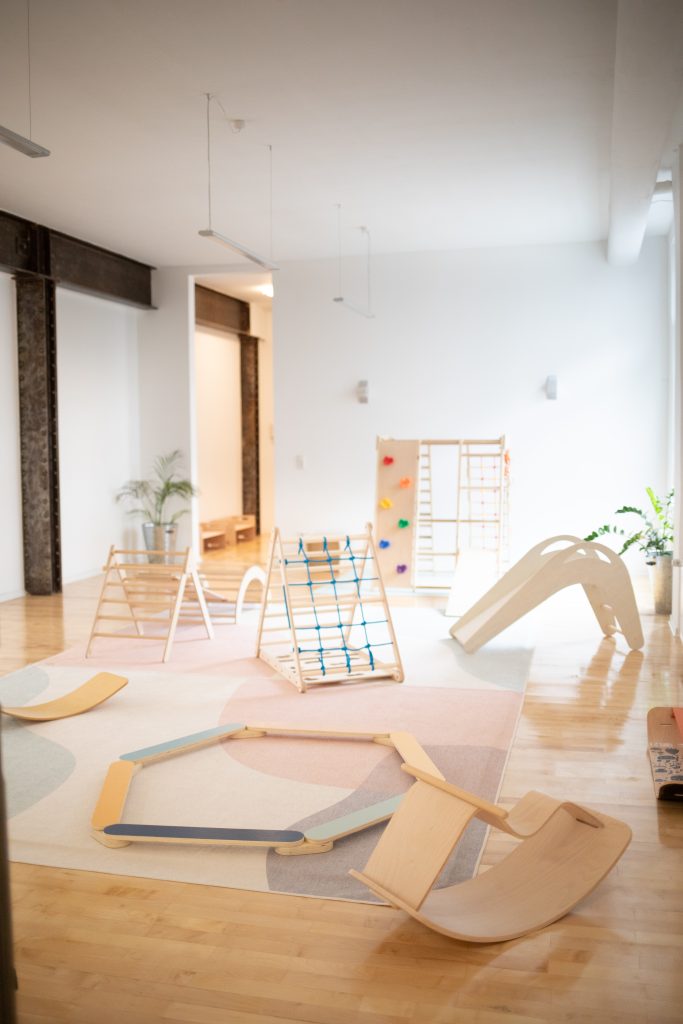
Montessori classrooms are designed from the child’s perspective. This means everything is scaled to a child’s size to promote accessibility and independence. Tables, chairs, and shelves are child-sized, allowing children to navigate the space comfortably and confidently. The layout is open and uncluttered, facilitating free movement and exploration.
Organized and aesthetic Environment
An orderly and aesthetically pleasing environment is a hallmark of Montessori classrooms. Materials are arranged neatly on open shelves, each item having a specific place. This organization helps children develop a sense of order and responsibility as they learn to return items to their designated spots. The use of natural materials, such as wooden furniture and tools, creates a warm, inviting atmosphere that encourages focus and calmness.
Prepared learning areas
Montessori classrooms feature distinct areas to support various developmental needs. The Practical Life Area develops daily living skills with functional items. The Sensorial Area enhances sensory perception with materials like color tablets. The Language Area fosters language skills using sandpaper letters and alphabets. The Mathematics Area transitions children from concrete to abstract math with number rods and beads. The Cultural Area introduces geography, science, history, and the arts through globes and maps.
Natural light and beauty
Montessori classrooms are designed to be beautiful and harmonious, often featuring large windows to allow natural light to flood the space. The use of plants and natural materials enhances the connection to nature, creating a serene and inviting atmosphere. This emphasis on beauty and aesthetics helps children develop an appreciation for their environment.
Integration of nature
Whenever possible, Montessori classrooms incorporate natural elements, both indoors and outdoors. Access to gardens or natural play areas helps children connect with nature, engage in physical activity, and develop a sense of responsibility towards the environment. Indoor spaces often feature plants and natural materials to bring elements of the outdoors inside.
Minimalistic and functional decor
The decor in Montessori classrooms is minimalistic and functional, avoiding overstimulation. Walls are typically adorned with child-created artwork or educational displays that are relevant to the current learning themes. The simplicity in decor helps maintain focus and reduces distractions, allowing children to concentrate on their activities.
Accesibility and independence
Every aspect of the classroom design promotes accessibility and independence. Materials are placed on low, open shelves that children can reach without adult assistance. Workspaces are flexible, allowing children to choose where they want to work, whether it’s at a table, on a rug, or in a cozy reading nook. This setup encourages children to take responsibility for their learning and environment.
The design of Montessori classrooms: Creating an optimal learning environment
Child-centered layout
Montessori classrooms are designed from the child’s perspective. This means everything is scaled to a child’s size to promote accessibility and independence. Tables, chairs, and shelves are child-sized, allowing children to navigate the space comfortably and confidently. The layout is open and uncluttered, facilitating free movement and exploration.
Organized and aesthetic Environment
An orderly and aesthetically pleasing environment is a hallmark of Montessori classrooms. Materials are arranged neatly on open shelves, each item having a specific place. This organization helps children develop a sense of order and responsibility as they learn to return items to their designated spots. The use of natural materials, such as wooden furniture and tools, creates a warm, inviting atmosphere that encourages focus and calmness.
Prepared learning areas
Montessori classrooms feature distinct areas to support various developmental needs. The Practical Life Area develops daily living skills with functional items. The Sensorial Area enhances sensory perception with materials like color tablets. The Language Area fosters language skills using sandpaper letters and alphabets. The Mathematics Area transitions children from concrete to abstract math with number rods and beads. The Cultural Area introduces geography, science, history, and the arts through globes and maps.
Natural light and beauty
Montessori classrooms are designed to be beautiful and harmonious, often featuring large windows to allow natural light to flood the space. The use of plants and natural materials enhances the connection to nature, creating a serene and inviting atmosphere. This emphasis on beauty and aesthetics helps children develop an appreciation for their environment.
Integration of nature
Whenever possible, Montessori classrooms incorporate natural elements, both indoors and outdoors. Access to gardens or natural play areas helps children connect with nature, engage in physical activity, and develop a sense of responsibility towards the environment. Indoor spaces often feature plants and natural materials to bring elements of the outdoors inside.
Minimalistic and functional decor
The decor in Montessori classrooms is minimalistic and functional, avoiding overstimulation. Walls are typically adorned with child-created artwork or educational displays that are relevant to the current learning themes. The simplicity in decor helps maintain focus and reduces distractions, allowing children to concentrate on their activities.
Accessibility and independence
Every aspect of the classroom design promotes accessibility and independence. Materials are placed on low, open shelves that children can reach without adult assistance. Workspaces are flexible, allowing children to choose where they want to work, whether it’s at a table, on a rug, or in a cozy reading nook. This setup encourages children to take responsibility for their learning and environment.
Ensuring quality: The Montessori teacher certification
Training Programs
Montessori teacher training is conducted through accredited institutions such as the Association Montessori Internationale (AMI) and the American Montessori Society (AMS), among others. These programs provide comprehensive, in-depth coursework and hands-on training focused on Montessori philosophy and educational techniques.
Levels of certification
The certification is tiered according to the age group the teacher plans to instruct, including Infant and Toddler, Primary, Elementary, and Adolescent. Each certification level involves specialized courses and practical training that cater to the developmental stages and needs of those specific age groups.
Curriculum
The curriculum for certification includes a broad range of topics such as Montessori philosophy, child psychology and development, classroom management, lesson planning, and the use of Montessori materials. Teachers also learn how to create inclusive environments that respect and nurture diversity among students.
Practical Requirements
As part of their training, prospective Montessori teachers are required to complete a certain number of hours of classroom-based training typically under the supervision of a certified Montessori educator. This hands-on experience is crucial for understanding how to apply Montessori methods in real-world settings.
Continuing Education
To maintain their certification, Montessori teachers must often participate in ongoing professional development. This continuous learning helps educators stay updated on new research, refine their teaching practices, and further develop their understanding of Montessori education principles.

Ensuring quality: The Montessori teacher certification
Training Programs
Montessori teacher training is conducted through accredited institutions such as the Association Montessori Internationale (AMI) and the American Montessori Society (AMS), among others. These programs provide comprehensive, in-depth coursework and hands-on training focused on Montessori philosophy and educational techniques.
Levels of Certification
The certification is tiered according to the age group the teacher plans to instruct, including Infant and Toddler, Primary, Elementary, and Adolescent. Each certification level involves specialized courses and practical training that cater to the developmental stages and needs of those specific age groups.
Curriculum
The curriculum for certification includes a broad range of topics such as Montessori philosophy, child psychology and development, classroom management, lesson planning, and the use of Montessori materials. Teachers also learn how to create inclusive environments that respect and nurture diversity among students.
Practical Requirements
As part of their training, prospective Montessori teachers are required to complete a certain number of hours of classroom-based training typically under the supervision of a certified Montessori educator. This hands-on experience is crucial for understanding how to apply Montessori methods in real-world settings.
Continuing Education
To maintain their certification, Montessori teachers must often participate in ongoing professional development. This continuous learning helps educators stay updated on new research, refine their teaching practices, and further develop their understanding of Montessori education principles.
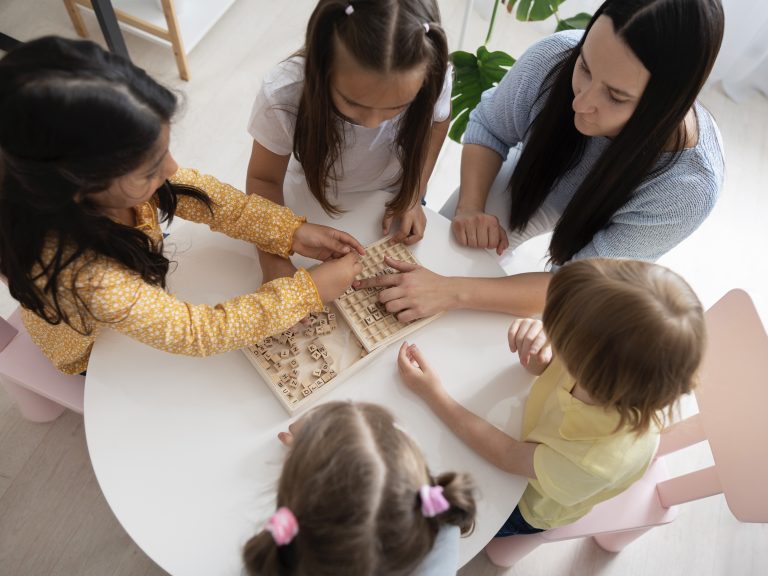
How to implement Montessori education at home
How to implement Montessori education at home
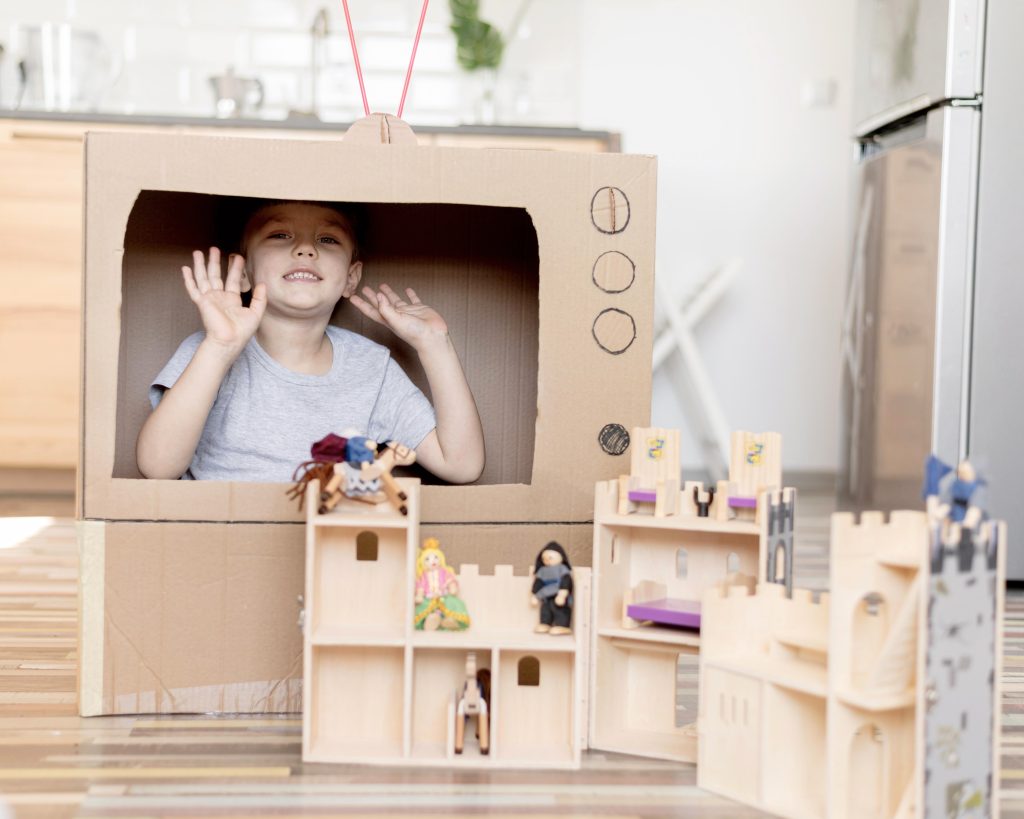
A key aspect of Montessori education is the prepared environment, designed to be child-friendly and promote independence. Here’s how to set up such an environment at home:
- Child-Sized Furniture: Use tables, chairs, and shelves that are accessible to your child, allowing them to reach and use materials independently.
- Organized Spaces: Keep toys, books, and educational materials organized and within reach. Use low shelves and baskets to make it easy for children to find and put away their items.
- Functional Areas: Designate specific areas for different activities, such as a reading nook, a craft corner, and a play area. Each area should be neat, inviting, and well-organized.
Practical life activities are crucial in Montessori education, helping children develop fine motor skills, coordination, and independence. Here are some examples you can implement at home:
- Cooking and Baking: Involve your child in meal preparation tasks like washing vegetables, measuring ingredients, stirring, and setting the table. Provide child-sized utensils to make the activities manageable.
- Cleaning Tasks: Encourage your child to participate in cleaning activities such as sweeping, dusting, wiping surfaces, and watering plants. Use child-sized cleaning tools to make these tasks accessible and enjoyable.
- Personal Care: Teach your child to dress themselves, brush their teeth, and comb their hair. Create a dressing area with a low mirror and accessible clothing to promote independence.
Montessori education emphasizes self-directed learning, where children choose activities based on their interests. Here’s how to support this at home:
- Choice of Activities: Offer a variety of educational materials and activities that cater to your child’s developmental stage and interests. Rotate toys and materials periodically to keep the selection fresh and engaging.
- Uninterrupted Play Time: Allow your child extended periods of uninterrupted play to explore activities deeply and develop concentration. Avoid rushing them from one activity to another.
- Observation: Observe your child to understand their interests and learning style. Provide materials and activities that align with their natural curiosities and developmental needs.
While it’s not necessary to buy all the Montessori materials, incorporating some key items can enhance learning. Here are some examples:
- Sandpaper Letters and Numbers: Help your child learn letters and numbers through tactile exploration. They can trace the shapes with their fingers, reinforcing their understanding.
- Practical Life Kits: Assemble kits for activities like pouring, spooning, and transferring objects using everyday household items like small pitchers, bowls, and spoons.
- DIY Montessori Materials: Create simple Montessori materials at home, such as homemade sensory bins, sorting games, and nature exploration kits.
Montessori education focuses on fostering independence and self-sufficiency. Here are some ways to encourage this at home:
- Accessible Clothing: Arrange your child’s wardrobe so they can easily choose and put on their clothes. Use lower drawers and open shelving.
- Self-Care Stations: Set up areas where your child can wash their hands, brush their teeth, and take care of personal hygiene independently. Provide step stools if necessary.
- Problem Solving: Encourage your child to solve problems independently by providing the tools and support they need. Avoid immediately stepping in to offer solutions; instead, guide them through the process.
Myth-Busting about Montessori Education
Myth-Busting about Montessori Education
- Myth: Montessori education is often associated exclusively with preschool.
- Reality: Montessori programs are available for all age groups, from infants to adolescents. Many Montessori schools offer elementary, middle, and even high school programs.
- Myth: Some believe that because children are allowed to choose their activities, Montessori schools lack structure.
- Reality: Montessori classrooms have a clear structure designed to foster independence and self-discipline. Children are guided by a set of classroom rules that promote respect for the environment and others, and they are accustomed to following a consistent daily routine.
- Myth: The Montessori method is sometimes seen as too relaxed, focusing more on social development than on academic achievements.
- Reality: Montessori education is deeply committed to academic excellence. Children work at their own pace, which can often lead to advanced academic performance because they are not held back by a standardized curriculum.
- Myth: Montessori schooling is perceived as being only for wealthy families.
- Reality: While some private Montessori schools can be expensive, there are many affordable options, including public Montessori programs that are free or low-cost. Financial aid and scholarships are also available at many schools.
- Myth: There’s a misconception that Montessori education only works for children who are naturally self-driven.
- Reality: Montessori education benefits a wide range of children, including those who might struggle in traditional learning environments. The Montessori method fosters curiosity and motivation through its child-centered approach, making learning engaging for all students.
- Myth: Because Montessori students can choose activities individually, some think this limits social interaction.
- Reality: Montessori classrooms are vibrant communities where children frequently engage in group activities and collaborative projects. The mixed-age setting also enhances social learning, allowing older students to mentor younger ones and vice versa.
- Myth: Critics argue that the Montessori environment, being too nurturing, doesn’t prepare children for the ‘real world’.
- Reality: Montessori education emphasizes practical life skills, problem-solving, and adaptability—skills that are crucial for success in the real world. Students often leave Montessori settings more adaptable, independent, and capable of handling life’s challenges.
- Myth: There is a misconception that Montessori education is a part of the Catholic Church or that it integrates Catholic teachings into its curriculum.
- Reality: Montessori education is secular and not affiliated with any religious organization. It was developed by Maria Montessori, who was indeed Catholic, but her educational method is designed to be universally applicable, focusing on the child’s development rather than religious instruction. While some Montessori schools may operate within a religious framework due to their hosting institutions, the core Montessori principles themselves are not tied to any specific religion.
FAQ
Montessori education is a child-centered educational approach developed by Dr. Maria Montessori. It emphasizes hands-on learning, self-directed activity, and collaborative play. Classrooms are designed to meet children’s natural developmental needs and encourage independence.
Montessori education is a child-centered educational approach developed by Dr. Maria Montessori. It emphasizes hands-on learning, self-directed activity, and collaborative play. Classrooms are designed to meet children’s natural developmental needs and encourage independence.
Unlike traditional education which often focuses on direct instruction and standardization, Montessori education promotes learning through exploration and discovery in a supportive, multi-age classroom environment. It prioritizes individual learning pace and developmental milestones over age-specific benchmarks and grades.
Montessori is beneficial for most children, including those with special learning needs or gifted children, as it tailors learning experiences to individual capabilities and paces. However, the best fit depends on individual learning styles and the specific needs of the child.
Montessori programs can start as early as infancy. Most Montessori schools have programs for toddlers beginning around 18 months to 3 years and continue through elementary and sometimes up to middle and high school.
A typical day includes long periods of uninterrupted learning where children engage with materials of their choosing, group activities that foster social development, and individual instruction with the teacher as needed. The environment promotes self-discipline and a natural progression of activities throughout the day.
Yes, Montessori teachers typically undergo specialized training and certification to learn about Montessori philosophy and methods, classroom management, and the use of Montessori materials. This training is different from that of traditional teachers, focusing more on guiding than instructing.
The cost of Montessori education can vary widely depending on the location, the specific school, and the level of education (e.g., preschool vs. elementary). While some Montessori schools can be more expensive than traditional public schools, there are also many affordable options, and some public schools offer Montessori programs free of charge.
Montessori materials are specialized educational tools designed to be self-correcting and to encourage exploration and learning through direct sensory experience. Examples include sandpaper letters for learning to write and bead chains for counting and understanding mathematical concepts.
Montessori education excels in accommodating different learning styles and paces. Its flexible curriculum allows children to explore subjects more deeply or move on as they master new skills, making it well-suited to address a range of intellectual, emotional, and developmental differences.
The core principles include respect for the child, the absorbent mind, sensitive periods, prepared environment, and autoeducation. These principles guide the learning environment to nurture the development of independence, concentration, and a lifelong love of learning.