Unlike conventional teaching roles, a Montessori teacher doesn’t lead from the front of the classroom. Instead, they observe, guide, and inspire. In the Montessori curriculum, the teacher’s job isn’t to deliver information but to cultivate curiosity and independence.
Rooted in the Montessori teaching method, these educators carefully prepare the learning environment to match each child’s developmental needs. They trust the child’s natural drive to learn and support it gently and respectfully. Isn’t that the kind of education we all wish we had?
A Montessori teacher empowers children to explore at their own pace, make meaningful choices, and grow into confident, capable individuals. So, if you’re wondering what a Montessori teacher really does, you’re about to discover a role that’s far more profound than just delivering lessons.
Montessori teacher defined: Who are they exactly?
So, what is a Montessori teacher, and why is this role so different from the one you’re probably used to? A Montessori educator is not the center of attention in the classroom. Instead of leading lessons from the front, they serve as a guide, an observer, and a facilitator of learning.
Imagine a classroom where children move freely, choose their own activities, and engage deeply — all without waiting for instructions. That’s only possible because the Montessori teacher has carefully prepared the environment, observed each child’s interests and developmental stage, and stepped back to let learning unfold naturally. Sounds different from the usual teacher role, doesn’t it?
Montessori teachers lead from behind. They support each child’s growth without interruption, respecting their pace and choices. AMI highlights the importance of the teacher’s calm presence — guiding children toward independence, not dependency.
Instead of controlling the classroom, the Montessori educator trusts the process. They quietly observe, subtly redirect when needed, and celebrate moments of discovery. It’s not about teaching facts — it’s about nurturing a lifelong love of learning.
Depending on the child’s stage of development, the role of the Montessori teacher evolves. Let’s explore how they guide learning in preschool and how their approach shifts in the elementary years.
The role of a Montessori educator in preschool settings
What exactly does a Montessori teacher do in a preschool classroom? At first glance, you might not even notice them — and that’s by design. The magic of Montessori early childhood education lies in what happens quietly in the background: thoughtful planning, careful observation, and a deep respect for each child’s rhythm.
Let’s start with the environment. One of the most important Montessori teacher responsibilities is preparing a calm, beautiful, and purposeful space. Everything in the classroom has a place and a reason — from child-sized furniture to hands-on materials that spark curiosity. This environment is not just pretty; it’s an essential part of learning.
Next comes self-guided learning. Instead of giving direct instructions, the Montessori teacher in preschool invites the child to explore. Want to pour water from one jug to another? Or match color tablets by shade? Go for it! The teacher introduces materials, then steps back, watching closely, always ready to help, but never interrupting the child’s concentration.
Observation is another superpower. Montessori educators don’t rely on rigid lesson plans. They observe children carefully, tracking progress and offering just the right lesson at the right time. This means every child gets an individualized learning experience.
And what about independence? It’s the heartbeat of Montessori. Preschoolers in these classrooms learn to tie their own shoes, clean up after themselves, and even prepare snacks. With gentle guidance, children grow into confident, capable humans. Socially, they learn to solve conflicts, wait their turn, and help their peers — all without the teacher stepping in every time.
As Austin Children’s Academy puts it, Montessori teachers “do not lecture” — they prepare, observe, and support. Their influence helps children become peaceful, independent, and engaged learners.
In the world of Montessori preschool, the teacher doesn’t just teach — they transform. Wouldn’t you say that’s a role worth celebrating?

The evolving role of Montessori teachers at the elementary level
As children grow, so does the role of their teacher. What changes when a Montessori teacher in elementary school steps into the picture? The essence remains the same — guiding rather than lecturing — but the focus shifts toward more complex thinking, emotional maturity, and real-world connections.
Elementary-aged children are full of questions: Why do volcanoes erupt? How do governments work? Can I write my own story? And that’s exactly what the Montessori guide is there to nurture — not with rigid lesson plans but by sparking curiosity and encouraging deep, meaningful exploration.
At this stage, the Montessori educator’s role becomes more about connecting ideas across subjects. A single lesson might blend history, science, and literature, helping children see the world as an interconnected whole. The teacher offers “great lessons” to ignite imagination and then steps aside as students pursue their own research, projects, and discoveries. Isn’t that the kind of learning we all wish we had?
But it’s not just about academics. A Montessori teacher in elementary school also plays a crucial part in supporting emotional development. They guide students through conflict resolution, help them navigate friendship challenges, and encourage personal responsibility — all while modeling empathy, respect, and calm decision-making.
According to AMI USA, the teacher creates a space where older children feel safe to take intellectual and emotional risks. This approach helps children become engaged, reflective, and motivated learners — not just for school but for life.
So, while the tools and topics evolve, the mission remains the same: to support each child’s full potential — academically, emotionally, and socially.
How Montessori educators facilitate learning: Methodologies and tools
Have you ever wondered how children in a Montessori classroom seem so focused, independent, and excited to learn? It’s not magic — it’s the Montessori teaching method in action. And behind it all stands a well-prepared, observant teacher who knows exactly when to step in… and when to step back.
Montessori prepared environment
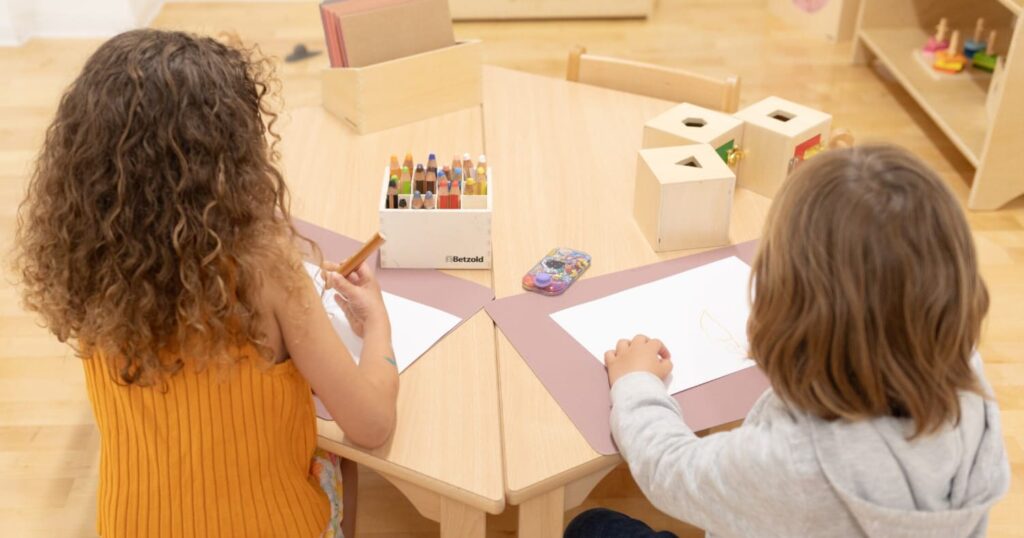
Let’s start with the Montessori prepared environment. This is more than just tidy shelves and tiny furniture. Everything in the classroom is carefully chosen and arranged to support independence, concentration, and exploration. There are no flashy posters or overwhelming decorations — just purposeful beauty that invites learning. Curious how this looks in real life? Imagine a space where every material is at a child’s level, each item has its own place, and students move freely with confidence. Or visit our Montessori Family Center.
Montessori materials
Next come the tools of the trade: Montessori materials. These hands-on learning tools aren’t just toys — they’re designed to engage the senses and build real understanding. For example:
- Sensorial materials like the Pink Tower and Knobbed Cylinders help children refine visual discrimination.
- Math materials such as the Golden Beads let children literally see and feel the concept of place value.
- Practical life tools — like child-sized brooms, pitchers, or dressing frames — teach real-world skills and foster independence.
- Language materials such as the Moveable Alphabet allow even pre-readers to build words and express ideas.
Freedom within limits
One of the most powerful principles Montessori teachers follow is freedom within limits. Sounds contradictory? It’s not. Children choose their own activities, but within a structure set by the teacher. This balance gives them a sense of control while maintaining harmony and purpose in the classroom. Isn’t that a recipe for real confidence?
So, next time you see a child deeply focused in a Montessori classroom, remember: they’re not just “playing.” They’re learning with purpose — thanks to a teacher who knows how to make learning come alive.

Why Montessori teachers matter: Impact on child development
What makes a Montessori teacher so important in a child’s journey? It’s not just about teaching facts or keeping the classroom quiet — it’s about shaping the way children see themselves and the world. The impact of Montessori education goes far beyond test scores. It touches the core of how a child grows, thinks, and interacts with others.
Let’s talk about independence and confidence. Montessori teachers are trained to trust the child, even the tiniest one, to make choices, take risks, and learn through doing. When a three-year-old pours their own water or solves a math problem with hands-on materials, something powerful happens: they begin to believe in themselves. And isn’t self-confidence one of the most important gifts we can give our kids?
Then there’s the love of learning — that magical spark we all want our children to keep. Because Montessori teachers don’t push or pressure, children develop their own motivation. According to AMI, this approach encourages curiosity and initiative, two key ingredients for lifelong learning. The classroom becomes a place of discovery, not stress.
And what about those essential academic and social-emotional skills? Montessori teachers don’t just guide reading and math. They also help children learn how to work in groups, resolve conflicts peacefully, and express emotions respectfully. Montessori educators are seen as gentle leaders who help children become thoughtful citizens of the world, not just smart students.
The importance of Montessori teachers lies in their ability to support the whole child. They neither rush nor judge. They quietly create the conditions for children to thrive — emotionally, socially, and intellectually.
So, if you’ve ever wondered why so many parents choose Montessori, here’s your answer: it’s the teacher. The guide. The quiet observer who helps each child become exactly who they’re meant to be.

Challenges Montessori tutors face (and how to overcome them)
Being a Montessori teacher might look peaceful and effortless, but make no mistake: It comes with its own unique set of challenges. From handling misconceptions to balancing structure and freedom, these educators need patience, insight, and a deep trust in the method. So what are the real Montessori teacher challenges, and how do they rise above them?
Misconceptions about the Montessori method
Let’s start with the big one: misconceptions about the Montessori method. Some people think it’s “just letting kids do whatever they want.” But as any trained Montessori teacher will tell you, freedom in the classroom is always paired with responsibility and structure. One of the teacher’s key jobs is to help children understand the boundaries that make meaningful freedom possible. It’s not chaos — it’s calm, intentional exploration.
Diverse learning styles
Another challenge? Adapting to diverse learning styles. In every classroom, you’ll find a wide range of personalities and paces — from the quiet observer to the energetic talker. Montessori teachers meet each child where they are, using observation as their compass. Teachers respond to the needs of each child individually rather than applying a one-size-fits-all approach. It takes time, reflection, and trust in the process, but the results speak for themselves.
Freedom vs. discipline
And then there’s the daily balancing act: freedom vs. discipline. How do you let children make choices without letting the classroom spiral into noise and distraction? The secret lies in consistency and modeling. Montessori teachers don’t control with punishments — they guide with quiet authority, clear expectations, and respectful redirection. Isn’t that a more peaceful way to learn?
So, what practical strategies help overcome these challenges?
- Ongoing observation and journaling
- Regular reflection and team collaboration
- Open communication with parents to clear up Montessori myths
- Deep training in Montessori classroom management techniques
- A strong connection with the child, built on mutual respect
Being a Montessori teacher isn’t always easy, but it is deeply rewarding. With each challenge comes an opportunity to grow, adapt, and make a lasting impact. And honestly, it’s what great teaching is all about.

Conclusion: The heart behind the Montessori method
So, what have we learned about the Montessori teacher? They’re not just educators — they’re mentors, observers, guides, and role models. From preparing rich learning environments to gently encouraging independence, their impact on children is profound and lasting.
We’ve explored how their role shifts from early childhood to elementary school, how they use unique Montessori tools and methods, and how they support both academic and emotional growth. We’ve also seen the challenges Montessori teachers face — and how they overcome them with patience, creativity, and unwavering respect for each child.
Still wondering what a Montessori teacher is and why they matter so much? They’re the heartbeat of every Montessori classroom — quietly nurturing self-confidence, curiosity, and a deep love of learning.
👉 Ready to learn more or see Montessori in action? Visit the Montessori Family Center to dive deeper into the method, meet experienced educators, and find programs that bring the philosophy to life.
FAQ: Common questions about Montessori educators
Curious about what it takes to become a Montessori teacher or how Montessori classrooms really work? You’re not alone! Here are answers to the most common questions parents, educators, and curious minds ask — all in one place.
Q1. How much do Montessori teachers make?
The salary of a Montessori teacher depends on location, level of experience, and the school’s type (public, private, or Montessori-specific). In the U.S., entry-level Montessori educators typically earn between $30,000 to $45,000 annually, while experienced certified teachers can earn $50,000 or more. Lead teachers and administrators in well-established schools may earn significantly more.
Q2. Are Montessori teachers certified differently from traditional teachers?
Yes! Montessori teacher certification is unique and typically offered through organizations like AMI (Association Montessori Internationale) or AMS (American Montessori Society). Unlike traditional certifications, these programs emphasize hands-on learning, observation skills, and the Montessori philosophy.
Q3. Can you teach Montessori without certification?
While it’s possible to work in a Montessori-inspired setting without certification, true Montessori teaching requires specialized training. Schools accredited by AMI or AMS usually hire only certified teachers to preserve the integrity of the Montessori method. Want to teach authentically? Certification is the way to go.
Q4. Can you teach Montessori at home?
Absolutely! Many parents successfully bring Montessori principles into their homes. With the right materials, a Montessori-prepared environment, and some guidance, you can nurture independence, focus, and curiosity in your child’s everyday life — no classroom required! Follow this guide: Montessori parenting: A complete guide to teaching and setting up Montessori at home.
Q5. What is the difference between a Montessori teacher and a traditional teacher?
A Montessori teacher is a guide, not a lecturer. They observe more than they speak, allowing children to take the lead in their learning. In contrast, traditional teachers often follow set curricula and lead group instruction. Montessori educators adapt to each child’s pace, interests, and developmental stage.
Q6. How do Montessori teachers manage classroom discipline?
Montessori classroom management is based on mutual respect, clear boundaries, and natural consequences. Instead of punishments or rewards, Montessori teachers model calm behavior and gently redirect when needed. The focus is on helping children understand the impact of their actions and make better choices.
Q7. What ages do Montessori teachers work with?
Montessori teachers can work with children as young as infants (0–3 years) up to adolescents (12–18 years). Each age group requires different training and certification. The most common levels are Early Childhood (3–6 years) and Elementary (6–12 years).
Q8. What are the main responsibilities of a Montessori teacher?
Key Montessori teacher responsibilities include preparing the classroom environment, observing children, offering individualized lessons, guiding independence, and fostering social-emotional growth. Unlike traditional teaching roles, Montessori educators spend more time facilitating than instructing.
Q9. How long does it take to become a certified Montessori teacher?
Most Montessori certification programs take about 1 to 2 years to complete. This includes academic coursework, practical classroom experience, and supervised teaching. Many programs also offer part-time or online options to accommodate working adults.
Q10. Is there a demand for Montessori teachers?
Yes — and it’s growing! With more parents seeking alternatives to traditional education, the demand for qualified Montessori teachers continues to rise globally. Certified educators often find opportunities in private schools, public Montessori programs, and international institutions.
References and further reading
Explore these trusted sources to deepen your understanding of the Montessori teacher role, Montessori training, and the educational philosophy that supports it.
Official organizations and teacher training resources:
- Montessori Educators – AMI
- Become an AMI Teacher – AMI
- Become a Montessori Educator – AMS
- The Montessori Tutor – AMI USA
Articles and educational blogs:
- The Role of the Montessori Educator – Keystone Montessori
- Why a Montessori-Trained Pedagogue Matters – Austin Children’s Academy
- A Montessori Educator’s Role in the Classroom – Flagstaff Montessori
- Montessori Pedagogue Career Guide – Teacher.org
Background and general info: