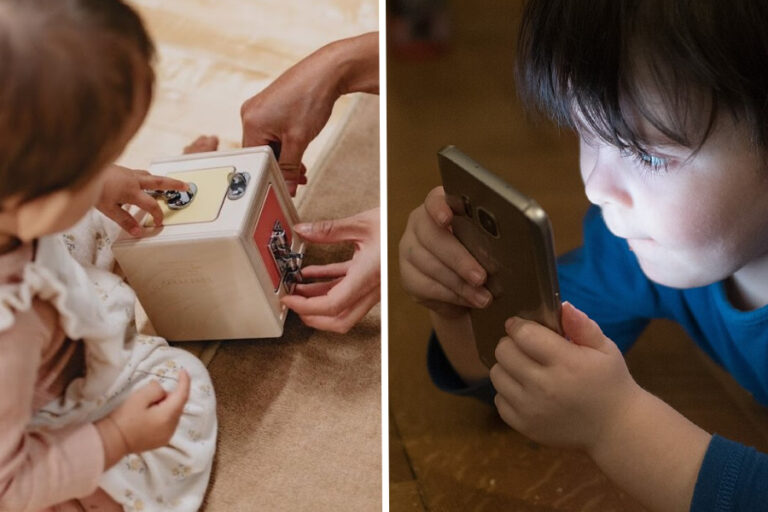
How do toys and technological devices like smartphones and tablets shape our children’s development? In today’s digital age, parents face the challenge of balancing toys vs touchscreens — traditional play with modern technology. Toys encourage creativity, motor skills, and imagination, while touchscreen devices can provide educational benefits when used wisely. But how much screen time is too much? At what age should children start using digital devices?
In this article, we’ll dive into the impact toys and touchscreens have on child development and provide practical tips for parents. From reducing screen time to introducing gadgets at the right age, we’ll help you make informed decisions that nurture your child’s growth. Follow this link for more Montessori parenting tips. Ready to empower your parenting journey? Let’s explore how to strike the perfect balance between play and technology!
The alarming trend: Touchscreens replacing toys
Did you know that children are now spending more time glued to digital devices than playing with traditional toys? According to this study by MCG, tablets, smartphones, and gaming devices are becoming the go-to choice for kids, often pushing aside building blocks, puzzles, and outdoor games. But is this toys vs touchscreens shift harmless, or could it be quietly harming their development?
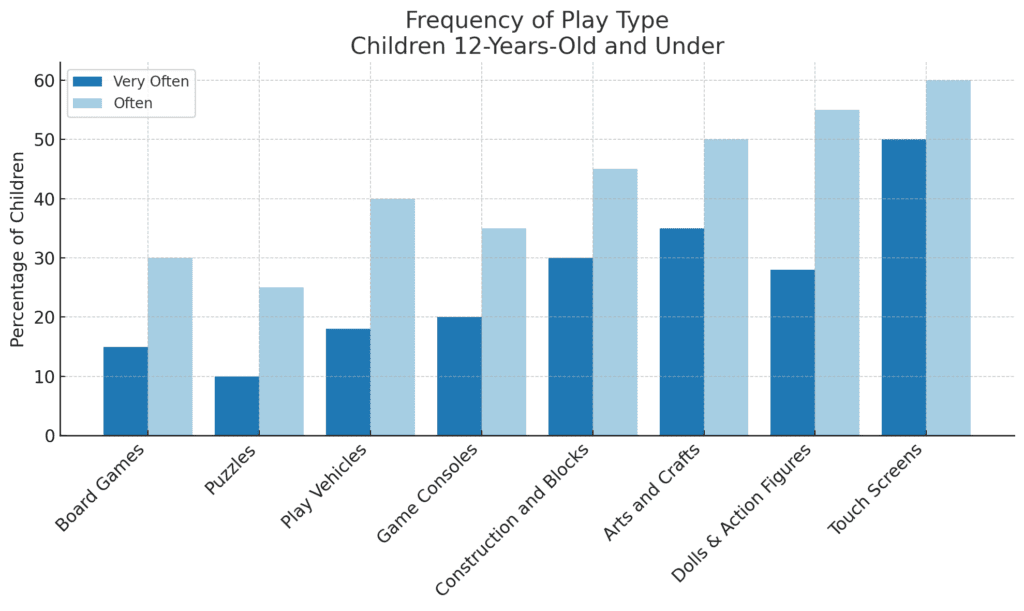
Frequency Of Play Type Children 12-Years-Old And Under by MCG
While touchscreens can offer interactive learning experiences, the drawbacks are hard to ignore. Excessive screen time has been linked to reduced social interaction, shorter attention spans, poor sleep patterns, and even delays in physical and emotional growth. Have you noticed your child reaching for a tablet instead of a puzzle or skipping outdoor play for another round of video games? These aren’t just small changes — they’re part of a growing trend that demands immediate attention.
Why does this matter? Here is a brief explanation. Traditional toys play a crucial role in sparking creativity, developing fine motor skills, and fostering problem-solving abilities. Imaginative play teaches children how to think critically, interact with others, and explore the world around them in ways no gadget can replicate. By replacing these activities with screen time, we unintentionally allow technology to rob our children of these vital experiences. What do they get instead?
Toys vs touchscreens: The hidden dangers of touchscreen devices
Touchscreen devices are everywhere — smartphones, tablets, and even smart toys. While these tools seem harmless and can even be educational, have you ever wondered what prolonged use is doing to your child’s development? Recent research on how young children’s play is shaped through common iPad applications highlights alarming consequences, particularly in early childhood, that all parents need to be aware of.
One of the most concerning effects of excessive touchscreen use is its impact on physical development. Over-reliance on touchscreens can delay the development of fine motor skills, making it harder for children to perform tasks like writing, drawing, or even tying their shoes.
But it’s not just their physical skills at risk — touchscreens can also take a toll on emotional and cognitive development. The same toys vs touchscreens study shows that children who spend too much time on devices may struggle with attention spans and problem-solving skills. Why? Because touchscreens often replace the open-ended, imaginative play that encourages critical thinking. Are we unknowingly letting screens do the thinking for them?
Another hidden danger lies in social development. Touchscreen use is often a solitary activity, leading to reduced interaction with peers and caregivers. Have you ever seen a group of kids sitting together, but each staring at their own screen? When children miss out on face-to-face interactions, they lose opportunities to develop empathy, communication skills, and emotional resilience.
Then there’s the impact on overall health. Excessive use of touch screens has been linked to poor sleep habits, eye strain, and even posture issues. How often do we see kids hunched over a tablet instead of running outside or sitting up straight while reading a book? These small habits can lead to bigger health concerns down the road. But why has this shift happened?
Why technological devices take over childhood play
The rise of touchscreens in children’s lives is not a random phenomenon — it’s a reflection of societal changes, parenting challenges, and the inherent allure of digital devices. Parents turn to technology as a practical solution to modern life’s demands, while children are drawn to the captivating stimulation digital devices provide. Let’s explore these two sides of the toys vs touchscreens story to understand why gadgets have become so popular.

The parent perspective: convenience and social pressures
For many parents, introducing smartphones, tablets, and other technological devices into their children’s lives feels almost inevitable. A study published in BMC Public Health highlights how modern parenting pressures often lead to increased reliance on technology to manage children’s behavior or provide educational opportunities.
Here are some key factors influencing parents’ choices:
- Convenience in a busy world: Parents often turn to devices to entertain or occupy their children during stressful or hectic situations, such as while cooking, working from home, or running errands.
- Pressure to fit in: Social norms encourage parents to ensure their children have access to technology, fearing they might fall behind in a tech-driven world.
- Managing public behavior: Devices are frequently used as a quick fix to calm children in public spaces, reducing disruptions and avoiding judgment from others.
- Belief in educational benefits: Many parents view devices as valuable learning tools, exposing their children to apps and programs that promise to enhance cognitive or academic skills.
While these choices can feel practical, they may unintentionally lead to overuse, shifting children away from traditional forms of play and development.
The child perspective: The pull of endless stimulation
Why do children gravitate toward touchscreens so strongly? The answer lies in how these devices are designed to capture and hold attention. Research from Frontiers in Psychology reveals that the interactive and highly stimulating nature of digital screens can shape how children engage with the world.
When children engage with touchscreen devices, their brains release dopamine, often called the “feel-good hormone.” This chemical creates a sense of reward and pleasure, making screens incredibly enticing. Unlike traditional toys, screens are designed to capture and hold attention through constant stimulation, which can override a child’s natural inclination for slower-paced, imaginative play. That’s why digital devices are irresistible to kids:
- Immediate gratification: Touchscreens provide instant responses — bright colors, sounds, and animations that reward interactions — creating a sense of accomplishment.
- Dynamic content: Apps and games are packed with ever-changing visuals and challenges, keeping children entertained far longer than static toys.
- Gamification elements: Many games and programs use reward systems like points or virtual prizes, making children want to keep playing.
- Accessibility of entertainment: Unlike traditional toys, gadgets offer a wide variety of activities — videos, games, and educational apps — all in one place, making them highly appealing.
These features make touchscreen devices hard to resist, often overshadowing toys that rely on imagination and creativity.
As we see, both parents and children have valid reasons for embracing touchscreens, but the overreliance on devices comes at a cost. The question arises: how do we protect our children from the risks without banning technology entirely? The solution lies in balance — introducing screen time limits, encouraging hands-on activities, and fostering real-world experiences that support holistic development. One powerful way to achieve this balance is by reintroducing the timeless value of traditional toys into children’s lives.
The advantages of traditional toys over touch screens
In today’s digital age, traditional toys remain a cornerstone of healthy childhood development. These playthings offer unique benefits that directly counteract the challenges associated with excessive touchscreen use. Let’s explore how toys address these issues and provide a more enriching play experience:

- Enhancement of Fine Motor Skills. Traditional toys like building blocks, puzzles, and art supplies require children to manipulate objects, fostering hand-eye coordination and dexterity. Tasks such as threading beads or stacking blocks strengthen the small muscles in the hands — essential for writing and other daily activities. Touchscreens, in comparison, only require simple swiping or tapping, which limits fine motor skill development.
- Promotion of Creativity and Imagination. Open-ended toys such as dolls, figurines, and building sets encourage imaginative play, helping children create their own worlds and narratives. This kind of play develops problem-solving skills and cognitive flexibility. Touchscreens, on the other hand, often present pre-programmed scenarios that can stifle creativity by reducing opportunities for open-ended exploration.
- Facilitation of Social Interaction. Traditional toys like board games or cooperative building sets promote teamwork and face-to-face interaction. Children learn essential social skills, such as sharing, empathy, and communication, through these activities. In contrast, touchscreen devices are often used in isolation, reducing opportunities for social bonding.
- Development of Attention Span and Patience. Traditional toys often require focus and sustained effort, such as completing a jigsaw puzzle or constructing a model. These activities teach patience and resilience, qualities that are less likely to develop with the instant gratification provided by touchscreens.
- Encouragement of Physical Activity. Toys like balls, jump ropes, and bikes promote physical play, essential for healthy growth and motor skill development. Regular physical activity combats issues like poor posture and obesity, which are often linked to prolonged screen time.
- Reduction of Sleep Disruptions. Traditional toys do not emit blue light, which can interfere with melatonin production and disrupt sleep cycles. Touchscreens, particularly when used before bed, can lead to poor sleep quality and restlessness in children. Replacing evening screen time with quiet play using traditional toys helps establish healthier sleep routines.
- Development of Problem-Solving Skills. Building toys like LEGO sets or mechanical kits requires children to follow instructions and troubleshoot issues, fostering critical thinking and problem-solving skills. Touchscreens often guide children too much, limiting the need for independent thinking.
- Prevention of Sensory Overload. Traditional toys provide a calm, predictable environment for play, reducing the risk of sensory overload caused by the flashing lights and loud noises often associated with touchscreen apps. Calmer play environments help children regulate emotions and focus better.
- Promotion of Long-Term Memory Retention. Interactive play with toys requires active participation and engagement, which strengthens long-term memory retention. Touchscreens, in turn, often involve passive consumption, which is less effective for learning.
- Emotional Regulation and Stress Relief. Traditional toys like playdough, sand, or sensory bins offer tactile experiences that help children calm down and manage stress. These activities promote emotional regulation, unlike the overstimulating effects of many digital games and apps.
While touchscreens offer convenience and entertainment, traditional toys provide a depth of developmental benefits that screens cannot match. They address many of the physical, cognitive, and emotional challenges posed by screen use. Does it mean that touch screens should be banned entirely? Let’s figure it out!
Screen time limits by age: Protecting your child’s development
Today, when screens are a constant presence, setting clear limits on device usage is essential for safeguarding your child’s healthy development. The table below, inspired by recommendations from HuffPost, outlines ideal screen time limits for each age group and sheds light on the developmental risks associated with exceeding those limits:
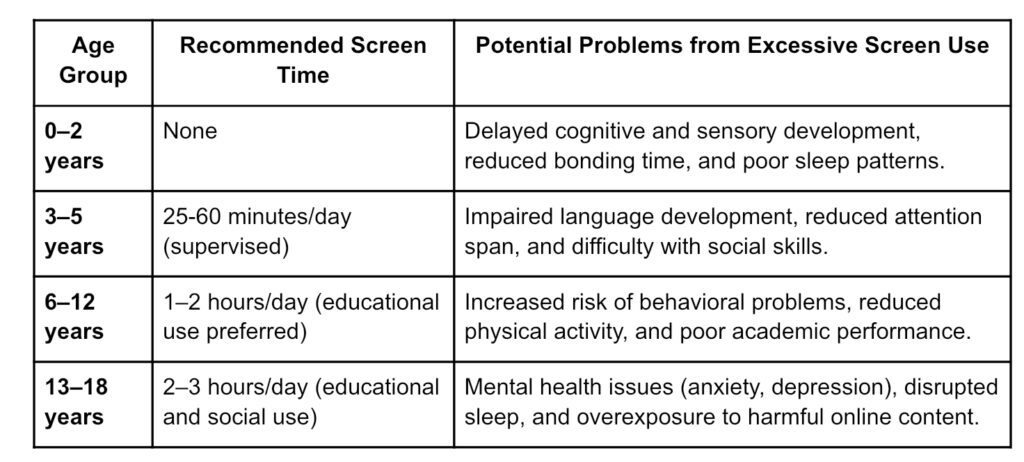
It’s important to recognize that the potential problems outlined in the table may vary from one child to another. Children with specific conditions, such as ADHD, sensory processing challenges, or other physical or mental health considerations, may experience the effects of screen time differently. For example, some children with hyperactivity may find screens even more overstimulating, while others may use them as a calming tool. As always, it’s essential for parents to tailor screen time guidelines to their child’s unique needs and consult with professionals if necessary to ensure a balanced and supportive approach.
Let’s take a closer look at how excessive screen time impacts children at different stages of development:
- Infants and Toddlers (0–2 years): At this critical stage, a child’s brain undergoes rapid growth, forming essential neural connections through physical exploration and interactions with caregivers. Introducing screens too early can delay this process, as screens do not offer the same sensory and relational stimulation as real-world experiences. Excessive screen use can interfere with the development of motor skills and hand-eye coordination, as babies miss out on crucial activities like crawling, grasping, and playing with physical objects. Furthermore, prolonged exposure to screens can reduce bonding time with parents, a key element for emotional security, and disrupt sleep due to the blue light emitted by devices. Poor sleep during these formative years can further hinder cognitive development.
- Preschoolers (3–5 years): For children in this age group, excessive screen time can lead to developmental delays, especially in language acquisition and communication skills. Preschoolers learn language through active interaction — listening to stories, asking questions, and engaging in conversations. Passive screen activities fail to provide the reciprocal engagement needed for effective language development. Additionally, the constant stimulation from screens can reduce attention spans, making it harder for children to focus on tasks or engage in imaginative play. Social development can also suffer, as children may miss opportunities to learn critical skills like sharing, turn-taking, and empathy during play with peers or caregivers.
- Elementary School Children (6–12 years): As children enter school, their developmental focus shifts to building academic skills, fostering friendships, and establishing healthy habits. Excessive screen time during these years can disrupt this balance. Academic performance may decline as children spend more time on entertainment-based screen activities rather than homework or reading. Physical health also becomes a concern, as sedentary screen use replaces active play, increasing the risk of obesity, poor posture, and related issues. Behavioral problems, including irritability and difficulty following rules, can arise due to overexposure to fast-paced, overstimulating content on devices. These challenges can also negatively impact family dynamics and peer relationships.
- Teenagers (13–18 years): Teenagers are particularly vulnerable to the negative effects of excessive screen time, given their increased independence and reliance on digital devices for both education and socializing. Unregulated screen use can contribute to significant mental health issues, including heightened levels of anxiety and depression, as teens compare themselves to others on social media or become overwhelmed by cyberbullying. Sleep disruption is another major issue, as many teens use their devices late into the night, leading to fatigue, mood swings, and impaired academic performance. Additionally, overexposure to harmful online content, such as inappropriate material or misinformation, can have long-term consequences for their worldview and emotional well-being.
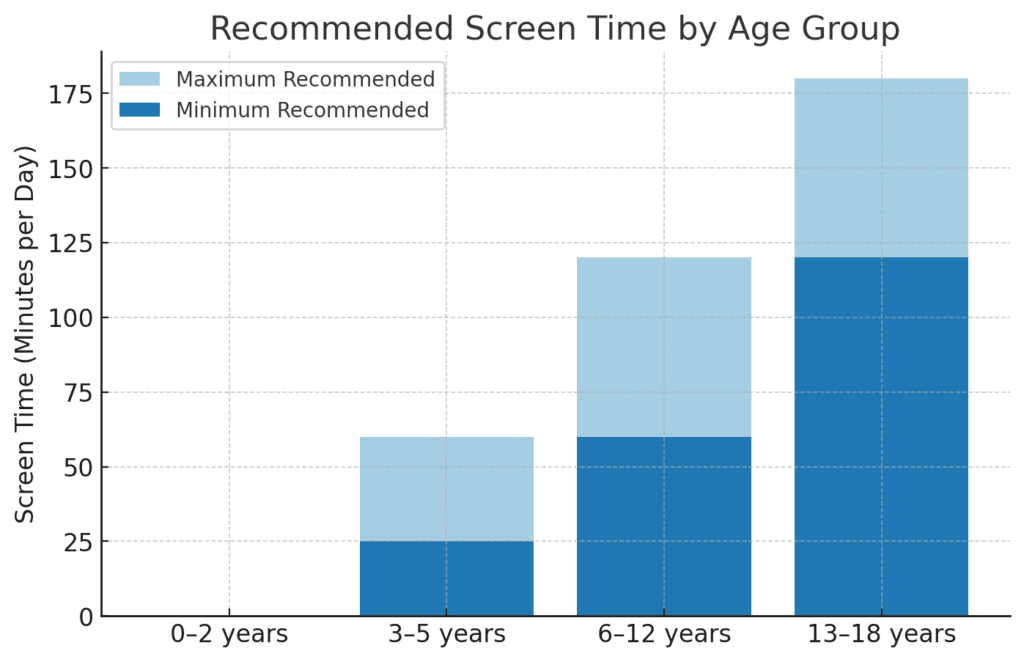
Recommended Screen Time by Age Group
Understanding the impact of excessive screen time on each stage of childhood development highlights one important truth: balance is key. But how can we guide our children toward healthier habits and create a nurturing environment that supports their growth? Let’s explore practical, age-appropriate strategies to achieve this balance.
How to reduce, replace, and control screen time for every age group
Managing screen time may feel challenging, but with the right strategies, you can create a balanced routine that supports your child’s development. The key is not to eliminate screens entirely (except for the youngest children) but to replace excess screen time with enriching, real-world activities and teach mindful usage. How can you achieve this? Let’s break it down for each age group and discover practical, age-appropriate solutions.
Toys vs touchscreens: Advices for infants and toddlers (0–2 years)
For infants and toddlers, the best strategy is simple: eliminate screen time altogether. At this critical stage, children need hands-on exploration, sensory experiences, and interaction with caregivers to support their rapid brain development. You can replace their screen time with these activities:
- Focus on interactive play: Offer tactile toys like stacking blocks, soft books, or sensory balls that encourage curiosity and motor skill development.
- Prioritize bonding activities: Spend time singing songs, reading picture books, or engaging in face-to-face games like peek-a-boo. These interactions strengthen emotional bonds and stimulate language development.
- Create screen-free routines: Replace screens with predictable daily activities such as tummy time, outdoor walks, or even helping with simple chores.
Lead by example! Avoid using devices in front of your baby and create a screen-free environment at home.
Toys vs touchscreens: Advices for preschoolers (3–5 years)
Preschoolers are naturally curious and full of energy. While limited supervised screen time can introduce educational content, it’s important to keep their playtime hands-on and imaginative:
- Introduce creative outlets: Replace passive screen use with drawing, crafting, or role-playing games. A box of crayons and some paper can spark hours of creativity!
- Encourage physical play: Outdoor activities like running, jumping, or riding a tricycle channel their energy while building coordination and strength.
- Use toys that promote problem-solving: Offer puzzles, building blocks, or pretend-play kits to develop cognitive and social skills.
Set a consistent limit of 25 to 60 minutes of supervised screen time daily. Use timers or visual schedules to help your child understand and respect these boundaries.
Toys vs touchscreens: Advices for elementary school children (6–12 years)
Children in this age group often start using screens for homework or educational purposes, but recreational screen time can quickly spiral out of control. How can you strike a balance?
- Encourage extracurricular activities: Sports, music lessons, or art classes are excellent ways to keep children engaged offline.
- Foster family time: Replace evening screen sessions with board games, reading together, or family walks.
- Introduce hobbies: Teach them skills like gardening, cooking, or knitting to nurture patience and creativity.
Establish clear screen-free zones, such as the dining table and bedrooms, and involve your child in setting realistic limits for their daily screen use.
Toys vs touchscreens: Advices for teenagers (13–18 years)
For teenagers, screens are often a central part of their social and academic lives. However, helping them manage their screen time is crucial to avoiding negative effects like poor sleep and mental health struggles. Here is what to do:
- Promote offline social activities: Encourage face-to-face interactions with friends through shared hobbies or outdoor adventures.
- Introduce mindful screen use: Teach teens to prioritize meaningful content, such as educational videos or productive apps, over mindless scrolling or gaming.
- Balance academics and leisure: Replace excessive recreational screen use with study groups, reading, or volunteering opportunities.
Work together to set device-free hours, especially during meals and before bedtime. Apps that track screen time can help teens become more aware of their usage and take ownership of their habits.
Reducing and managing screen time doesn’t have to be a battle — it can be an opportunity to bond, discover new activities, and nurture your child’s potential. Start small, celebrate progress, and always remain flexible. Remember, every family is different, and finding what works best for you and your child is key.
Final words: Choose the right toys vs touchscreens balance
Given the potential negative impact of gadgets, setting limits on screen time has become more important than ever. But does this mean we need to ban technological devices entirely? Not at all — except, of course, for infants and toddlers, where the best approach is no screens at all. For older children, it’s not about taking touchscreen devices away but creating a balanced environment that nurtures their physical, mental, and emotional growth.
How can we achieve this balance? By setting thoughtful boundaries, parents can guide their children toward healthier habits that avoid the pitfalls of excessive screen use. With the right approach, screen time can be part of a well-rounded routine that promotes long-term well-being and supports their overall development. Isn’t that what every parent hopes for? Let’s work together to make it happen. Visit our Montessori Family Center for expert tips, resources, guidance, and, of course, various courses to help you create a balanced and enriching environment for your child!

Toys vs Touchscreens FAQ: Managing screen time for healthy child development
To help you navigate the challenges of screen time and support your child’s growth, we’ve compiled answers to the most frequently asked questions about reducing, replacing, and controlling screen time. These toys vs touchscreens tips offer additional insights and practical solutions for parents.
1. What are the recommended screen time limits by age?
The recommended limits vary based on age:
0–2 years: No screen time, as children in this age group need hands-on exploration and caregiver interaction.
3–5 years: 25–60 minutes per day of supervised, high-quality educational content.
6–12 years: 1–2 hours per day, prioritizing educational use.
13–18 years: 2–3 hours per day, with a focus on mindful, balanced usage.
Setting these limits helps prevent developmental delays and health issues.
2. Why is screen time harmful to infants and toddlers?
For infants and toddlers, excessive screen time can interfere with brain development, motor skills, and bonding with caregivers. It may also disrupt sleep patterns due to the blue light emitted by devices. At this critical stage, real-world sensory experiences are essential for growth.
3. How does excessive screen time affect social skills in preschoolers?
Excessive screen time limits opportunities for interactive play, which is crucial for developing social skills like sharing, turn-taking, and empathy. Children in this age group learn best through active engagement with caregivers and peers, which screens cannot replicate.
4. What are some practical ways to reduce screen time for elementary school children?
For children aged 6–12, try these strategies:
– Replace screen time with hobbies like reading, sports, or art.
– Establish screen-free zones, such as the dining table or bedrooms.
– Encourage family activities, like board games or outdoor play.
These changes can improve academic performance, social interactions, and physical health.
5. Can screen time cause mental health issues in teenagers?
Yes, excessive screen time, especially on social media, can lead to anxiety, depression, and poor self-esteem. Teens may compare themselves to others online, face cyberbullying, or experience sleep disruptions from late-night device use. Setting boundaries and encouraging offline activities can help protect their mental health.
6. What are some fun alternatives to screens for kids of all ages?
Depending on the age group, consider:
– Infants and toddlers: Sensory toys, interactive play, and outdoor walks.
– Preschoolers: Crafting, puzzles, and pretend-play activities.
– Elementary children: Sports, board games, and STEM kits.
– Teenagers: Volunteering, learning a musical instrument, or joining clubs.
These activities not only reduce screen time but also foster creativity, social skills, and physical health.
7. How can parents encourage mindful screen use?
Start by modeling healthy habits yourself—limit your own screen time and focus on engaging with your child. Use apps that track usage, encourage tech-free family time, and teach kids to prioritize educational or creative activities on devices over passive consumption.
8. How can I ensure my child has healthy sleep habits with screens in the home?
Set a rule for no screens at least one hour before bedtime. Blue light from devices disrupts melatonin production, making it harder for children to fall asleep. Encourage calming activities like reading or storytelling instead.
9. Is there such a thing as “good” screen time?
Yes, screen time that involves educational apps, creative projects, or virtual learning can be beneficial when used in moderation. The key is ensuring that screen activities are age-appropriate, interactive, and balanced with offline experiences.
10. How do I balance screen time with traditional play?
To balance screen time with traditional play:
– Introduce a daily schedule that includes time for outdoor play, creative activities, and family interaction.
– Use a timer to limit screen sessions.
– Highlight the value of imaginative play with toys and activities that engage the mind and body.
A balanced approach ensures your child benefits from the best of both worlds.
By addressing these common concerns, you can take confident steps toward reducing screen time and fostering a healthier environment for your child’s growth. Have additional questions? Reach out or explore more resources for practical tips and expert advice!