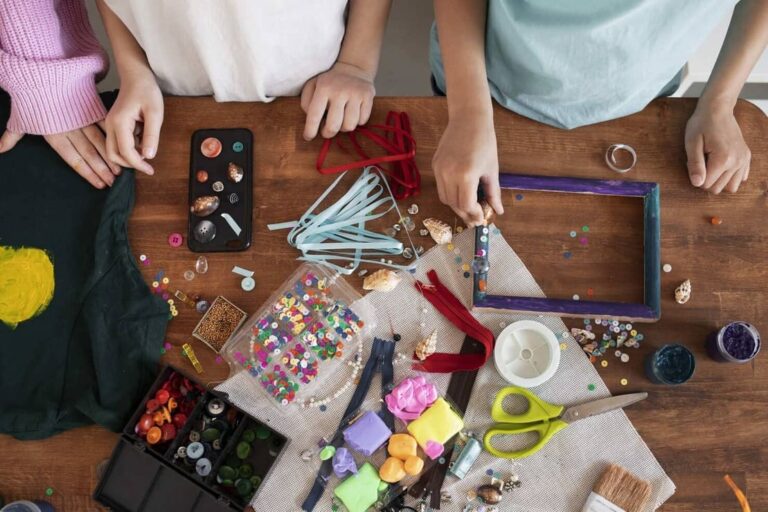
Crafting with young kids is a joyful way to spend time together while nurturing their creativity, fine motor skills, and problem-solving abilities. This guide covers creative ideas, essential materials, and an easy flow to make crafting fun and successful with children up to 6 years old.
Why crafting is great for young kids
Crafting supports kids’ development by:
• Enhancing fine motor skills: Cutting, gluing, and painting help strengthen little hands.
• Building creativity: Making things lets kids express their imagination and unique ideas.
• Encouraging patience and focus: Crafting helps kids learn to concentrate on one task.
• Supporting sensory exploration: Different textures, colors, and shapes let kids experience the world.
Essential craft materials for kids ages 1-6
1. Paper and cardstock: Colorful paper for cutting, gluing, and drawing.
2. Glue: Non-toxic glue sticks are safe and easy to manage.
3. Safety scissors: For cutting practice (age-appropriate).
4. Markers, crayons, and colored pencils: Basics for decorating and drawing.
5. Paints and brushes: Water-based paints are ideal for young kids.
6. Pipe cleaners and popsicle sticks: Easy to handle for making animals, letters, and shapes.
7. Beads and buttons: Great for older toddlers and preschoolers to practice fine motor skills.
8. Googly eyes and pom-poms: Perfect for creating fun characters and animals.
9. Glitter glue: Adds sparkle without the mess of loose glitter.
10. Recycled materials: Use items like cardboard tubes, bottle caps, and egg cartons to spark creativity.
Craft ideas by age group
For toddlers (Ages 1-3):
Focus on sensory-based activities and simple crafts that involve exploring textures and colors.
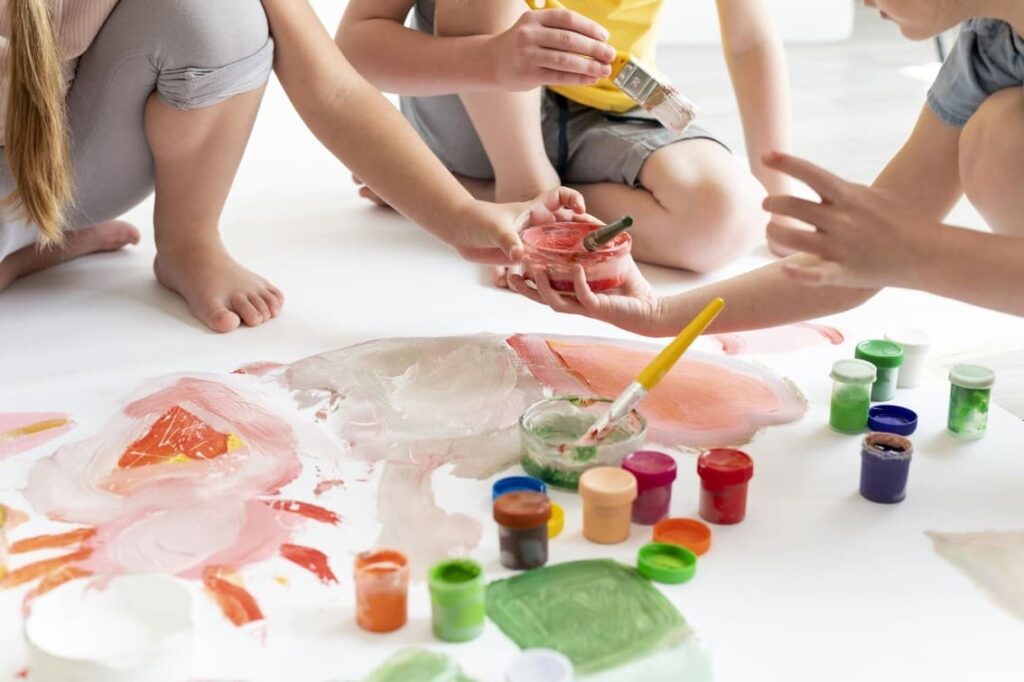
• Finger painting: Toddlers love exploring colors and feeling the paint with their hands.
• Paper tearing collage: Let them tear pieces of colored paper and glue them to create a fun collage.
• Nature collages: Gather leaves, sticks, and flowers to glue on paper for a nature-inspired creation.
For preschoolers (Ages 3-4):
Introduce simple, structured projects while allowing for creativity.
• Paper plate animals: Create animal faces with paper plates, markers, and googly eyes.
• Shape stamping: Use sponges cut into different shapes and let kids dip them in paint to make colorful prints.
• Handprint art: Use washable paint to make handprint animals or flowers on paper.
For early elementary kids (Ages 5-6):
Provide more advanced projects that require following steps and using more detailed materials.
• DIY bookmarks: Use cardstock and markers to make personalized bookmarks.
• Popsicle stick puppets: Draw or paint faces on paper, glue them to sticks, and create a puppet show.
• Recycled figures: Use small boxes, bottle caps, and markers to create a masterpiece.
Step-by-Step flow for crafting with kids
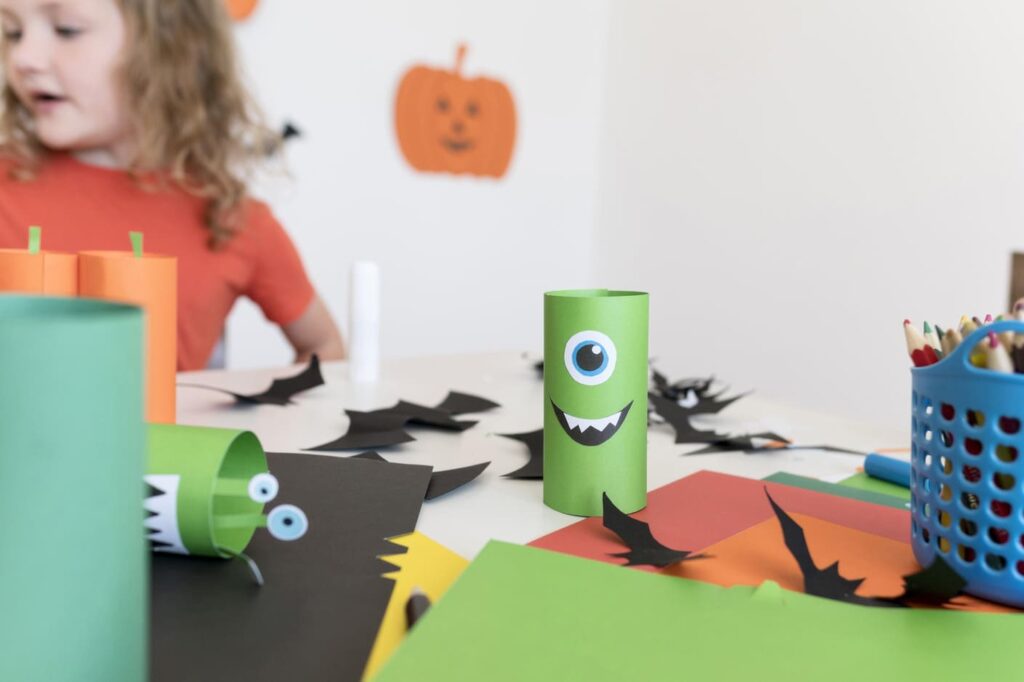
1. Set up a kid-friendly craft space: Cover your table with newspaper or a mat for easy cleanup.
2. Gather materials in advance: Have everything ready to keep the focus on crafting.
3. Introduce the Project: Explain what you’ll be making, and show an example if possible.
4. Begin crafting together: Guide young kids through each step while allowing them to explore freely.
5. Encourage personal touches: Let kids add their unique details to make the craft their own.
6. Cleanup together: Teaching cleanup is part of the crafting process and builds responsibility.
7. Display the finished craft: Show pride in their work by putting it on display.
Project example: Paper plate animal faces
Materials needed:
• Paper plates
• Markers or crayons
• Glue stick
• Googly eyes
• Construction paper for ears and noses
• Safety scissors
Steps:
1. Pick an animal: Let your child choose an animal to make.
2. Color the plate: Use crayons or markers to color the plate as the animal’s face (e.g., brown for a bear, pink for a pig).
3. Cut out features: With safety scissors, cut out ears, a nose, and other features from construction paper.
4. Add details: Glue on ears and nose, add googly eyes, and draw on details like whiskers or a mouth.
5. Display or play: Use the plate as a mask, a wall decoration, or a puppet!
Tips for successful crafting with kids
• Set expectations: Crafts may look different than expected—embrace their creativity!
• Praise their effort: Focus on effort and creativity rather than perfection.
• Talk about colors, shapes, and textures: Make crafting a learning experience.
• Keep it simple: Stick to basic steps for younger children.
• Follow their lead: If they want to create something different, let their imagination flow!

Storing and displaying crafts
• Make a craft wall or bulletin board: A dedicated space for showcasing their artwork.
• Take photos of each project: Keep a digital record if you don’t have space to save everything.
• Create a Scrapbook: A fun project that also lets you save some of their favorite creations.
Crafting with young kids is all about creativity, bonding, and making memories. By keeping materials handy, starting with simple projects, and letting kids be creative, every crafting session will be a chance to learn, grow, and enjoy together.
In the Montessori Family Center, our Montessori indoor playground in Düsseldorf, we offer various activities in the playroom for children to help them develop creativity alongside their parents. Additionally, during Montessori lessons at the Center, teachers guide children through activities like finger painting and crafts, fostering exploration and self-expression in a safe and supportive environment.
FAQ
1. What age group is best for crafting activities?
Crafting is beneficial for children from 1 to 6 years old, with activities tailored to their developmental stage. Toddlers enjoy sensory-based crafts, preschoolers can handle simple structured projects, and early elementary kids benefit from more detailed, step-by-step activities.
2. What materials are safe for young children to use?
Safe materials include non-toxic glue sticks, washable paints, markers, crayons, and safety scissors with rounded tips. For toddlers, avoid small items like beads and opt for larger, easy-to-handle materials like pom-poms and pipe cleaners.
3. How can I encourage my child’s creativity during crafting?
Provide a variety of materials and allow your child to explore freely. Avoid strict instructions, encourage them to think creatively, and praise their effort and unique ideas rather than focusing on the final product.
4. How do I keep my child engaged in crafting activities?
Keep sessions short and varied, choose projects based on their interests, and allow for breaks. Using themes they enjoy (e.g., animals, seasons) can make crafting more engaging.
5. How can crafting help with my child’s development?
Crafting enhances fine motor skills, creativity, problem-solving, patience, and focus. It also supports sensory exploration, helping children experience and understand different textures, colors, and shapes.
6. What if I’m not very crafty myself?
You don’t need to be an expert! Focus on enjoying the experience together. Use simple materials like paper, glue, and crayons, and look for easy guides or videos online. The goal is to have fun and encourage creativity, not to achieve perfection.